Drying nylon filament means holding the spool at a controlled temperature, well below its softening point, for several hours so the water it has absorbed from the air evaporates before it reaches the hot nozzle. The temperature and time come from the filament’s technical data sheet, and they vary more than most guides admit: Prusa’s knowledge base says at least 4 hours below 90 °C for polyamide in general, Bambu Lab lists 80 °C for 8–12 hours in a forced-air drying oven for its PA6-CF and PAHT-CF, and Polymaker’s current data sheet for PolyMide CoPA gives 100 °C for 8 hours.
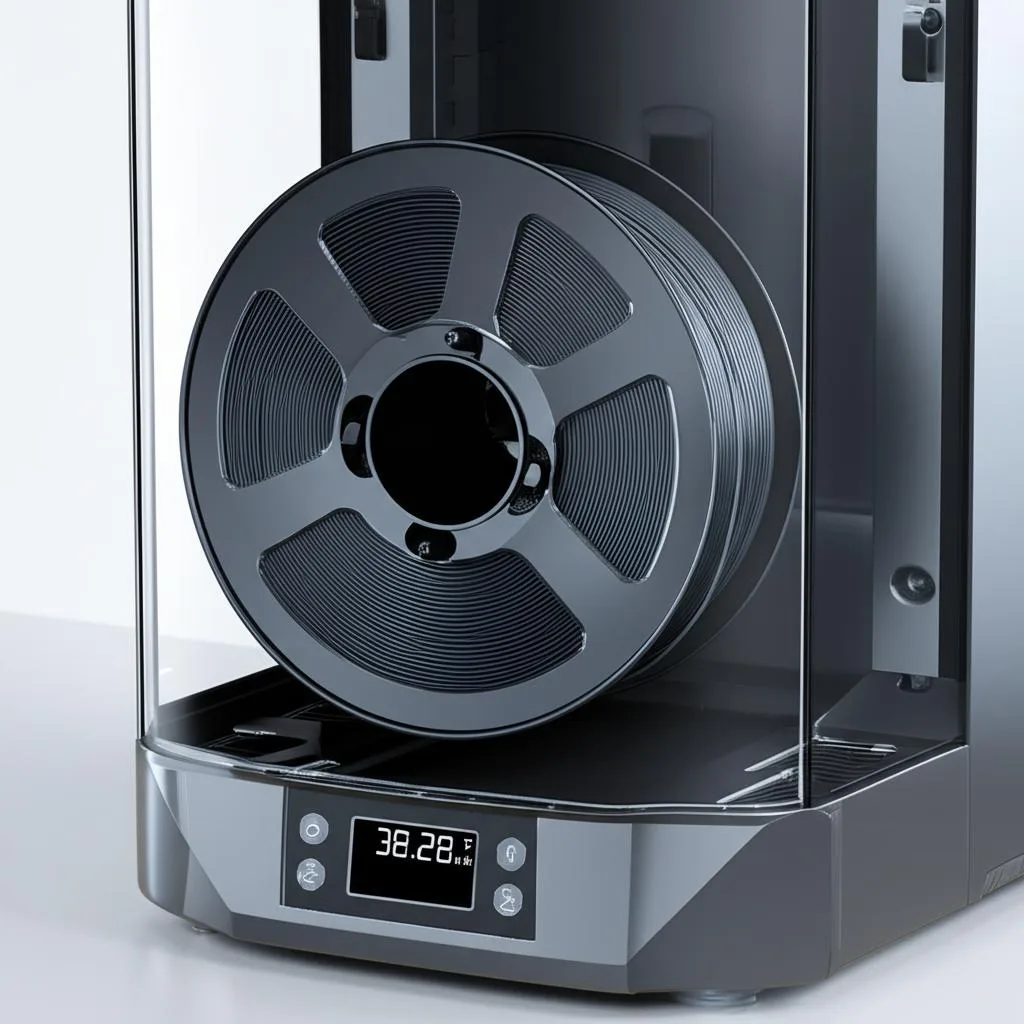
Use a filament dryer or a forced-air (convection) drying oven that holds a steady temperature, keep the spool away from the heating element, and move it straight into a sealed box with desiccant, or print directly from the dryer. Both Polymaker and Bambu Lab ask for storage below 20% relative humidity. A kitchen oven is a poor substitute: Bambu Lab’s data sheet says kitchen and microwave ovens are not compatible and can damage the filament. Every value in this guide comes from the manufacturer documents linked at the end.
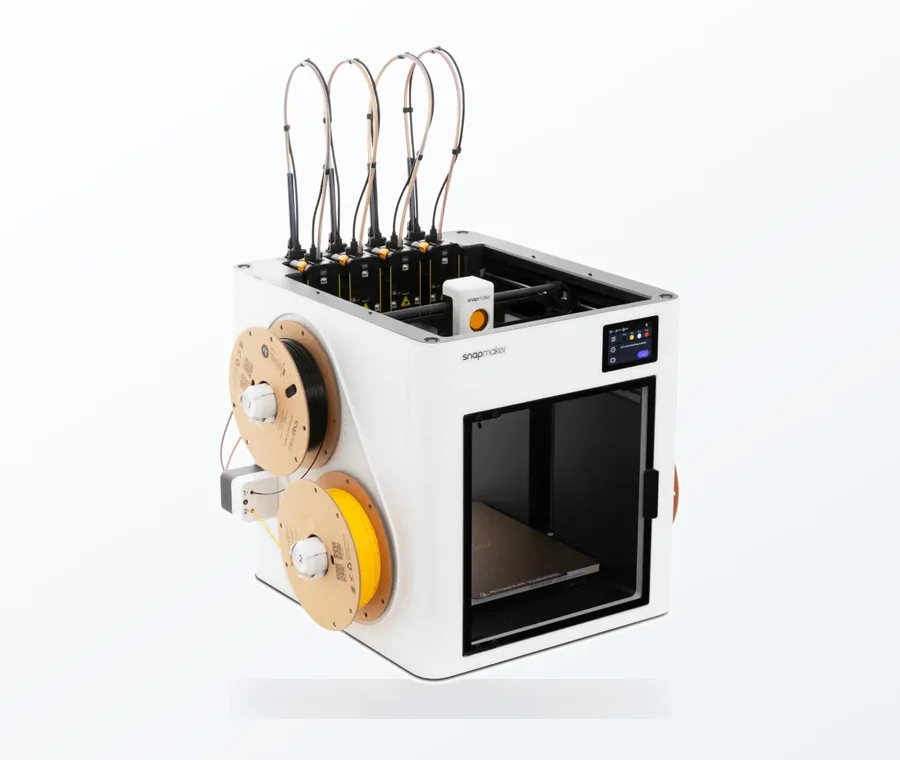
The consumer toolchanger 3D printer: the SnapSwap 4-toolhead system swaps heads in 5 seconds for true multi-color and multi-material printing, with smart calibration and auto filament loading.
- 4 toolheads · 5 s swap
- Up to 500 mm/s · 20,000 mm/s²
- 270 mm cube build volume
- Multi-color & multi-material
Drying nylon in six steps
- Find the drying temperature and time in the technical data sheet (TDS) for your exact filament, not a generic chart.
- Check that the spool and your dryer can take that temperature. If either can’t, re-spool or use a lower setting for longer.
- Weigh the spool on a kitchen scale and note the figure.
- Dry at the TDS temperature for the full TDS time, with the spool away from the heater and air moving around it.
- Weigh it again while still warm. A spool that is still losing weight between checks is still drying.
- Seal it in a dry box with fresh desiccant straight away, or print from a heated dryer.
Nylon drying temperatures from manufacturer data sheets
These are the values printed by each manufacturer for its own product. They are not interchangeable: a temperature that is right for one polyamide blend can soften another, or its spool.
| Filament | Drying setting | Storage | Source |
|---|---|---|---|
| Polyamide in general (Prusa guidance) | At least 4 hours, below 90 °C | Airtight, with desiccant | Prusa Knowledge Base |
| Polymaker PolyMide CoPA | 100 °C for 8 h | Below 20% RH | Polymaker TDS V5.4 |
| Bambu Lab PA6-CF | Forced-air drying oven 80 °C, 8–12 h; X1-series heated bed 90–100 °C, 12 h | Container below 20% RH, sealed with desiccant | Bambu Lab TDS |
| Bambu Lab PAHT-CF | Forced-air drying oven 80 °C, 8–12 h; X1-series heated bed 90–100 °C, 12 h | As above | Bambu Lab filament guide |
| Prusament PA11 Carbon Fiber | Not listed in the TDS; Prusa’s general polyamide advice applies | Dry box | Prusament TDS |
Data sheets change between versions, so read the one for the spool you actually bought. If your brand publishes no drying value at all, Prusa’s general rule (at least 4 hours, below 90 °C) is a reasonable starting point. Start at the lower end of that range if you don’t know how the spool will cope.
How to tell nylon filament is wet
Prusa’s knowledge base describes the main sign: moist polyamide makes bubbles, which leads to uneven layers and a poor surface. At the nozzle you may hear popping or crackling and see a strand that looks frothy instead of glossy. In the part itself, look for pitted or rough walls, stringing that retraction tuning doesn’t fix, and layers that split apart. Split layers can have other causes too; our guide to weak layer adhesion covers the rest.
Nylon picks up water faster than the plastics most people start with. Bambu Lab’s filament guide lists the saturated water absorption at 25 °C and 55% humidity as 2.35% for its PA6-CF and 0.88% for PAHT-CF, against 0.43% for its PLA, and marks drying before use as required for both nylons. Prusa measured its PA11 Carbon Fiber at 24 °C and 22% humidity: it absorbed 0.20% of its weight in 24 hours and 0.50% in 7 days. Prusa’s knowledge base warns that badly stored polyamide can absorb water weighing up to 10% of the filament’s weight. That’s why the scale test works. An 800 g spool at 0.5% holds about 4 g of water, which a kitchen scale can show. Weigh the spool when it’s new, and note the weight after each drying cycle.
Filament dryer, drying oven, heated bed or kitchen oven
| Method | Strengths | Risks and limits |
|---|---|---|
| Dedicated filament dryer | Made for spools, often lets you print straight from it | Check the maximum temperature in its manual; if it can’t reach the TDS value, drying may take much longer or stay incomplete |
| Forced-air drying oven | Even temperature, and it’s the method Bambu Lab specifies | Cost and size; keep the spool away from the heater |
| Printer heated bed (with the spool covered) | No extra equipment; Bambu Lab lists it for its X1 printers | Slow (12 h in Bambu Lab’s table), ties up the printer, and heat is uneven unless the spool is turned |
| Food dehydrator | Moves air, low cost | Built for food, not a temperature spec; use it only if it actually reaches the TDS value and holds it |
| Kitchen or microwave oven | Already in the house | Bambu Lab says these are not compatible and can damage filament; household ovens can overshoot the set temperature, and the spool ends up near the element |
Bambu Lab’s PA6-CF data sheet spells out what the oven has to do: it needs a large enough chamber and an even temperature, and the filament must be kept away from the heater. A small appliance that cycles hard between on and off does neither. Whatever you use, put a separate thermometer next to the spool for the first run instead of trusting the dial.
Check the spool before you heat it
The spool can fail before the filament does. Bambu Lab’s PA6-CF sheet rates its PC+ABS spool to 90 °C, and its drying-oven setting of 80 °C stays below that. At Polymaker’s 100 °C for CoPA, a plastic spool from another brand could soften or warp, and a deformed spool can jam in the holder or tangle during the print. If your data sheet asks for more heat than the spool is rated for, wind the filament onto a heat-resistant spool first, or dry at a lower temperature for longer and confirm the result with the scale.
Keeping nylon dry during storage and printing
Drying only resets the clock. Polymaker says CoPA “should always be stored and used under dry conditions (relative humidity below 20%)”, and Bambu Lab gives the same limit for its PA6-CF, both for storage and for printing. In practice that means:
- A sealed box or bag with desiccant for every opened spool, with a cheap hygrometer inside so you can see the humidity instead of guessing.
- Fresh or regenerated desiccant. Saturated silica gel no longer does anything, so dry or replace it according to its maker’s instructions.
- Printing from the box or a heated dryer on long jobs, with the filament running through a PTFE tube to the extruder, so the spool isn’t sitting in room air for the whole print.
- Removing soluble or same-material supports promptly. Polymaker warns that CoPA supports should come off before the part absorbs too much moisture, or they can bond permanently to the model.
For printing settings, enclosure and bed adhesion once the spool is dry, see our guide to printing nylon without warping.
Wet filament vs wet parts: what moisture does to nylon
There are two separate effects. Wet filament prints badly, because the water turns to steam in the hot end and leaves bubbles and weak layers. Finished nylon parts also take up water over time, and that changes how they behave. Polymaker’s CoPA data sheet shows the size of it. Specimens tested dry had a Young’s modulus of 2703 MPa and a tensile strength of 78.0 MPa in the X-Y direction. After 48 hours in 60 °C water, at an average moisture content of 6.16%, those figures dropped to 724 MPa and 34.3 MPa, while notched impact strength rose from 6.9 to 27.7 kJ/m². That’s an extreme soak test, not room storage, but it shows the direction: moisture makes nylon softer and tougher, and less stiff.
So you dry filament to print it well. How a finished part behaves in service is a separate design question. If a part must stay stiff in humid conditions, compare the manufacturer’s wet and dry data before you choose the material; fiber-filled grades are covered in our carbon fiber vs glass fiber comparison.
Common nylon drying mistakes
- Using one “nylon temperature” for every brand. The table above runs from below 90 °C to 100 °C, for different blends. Read the TDS for your spool.
- Stopping early. The manufacturers’ times are 8–12 hours for a reason. A short cycle can dry the outer turns and leave the inner ones wet.
- Letting it cool in room air. A warm, dry spool left on the bench starts absorbing again at once. Seal it or print from the dryer.
- Blaming the filament for a clog. Steam and bubbles make extrusion erratic, but a real blockage needs clearing; see our guide to a clogged nozzle.
- Tuning retraction around wet filament. If stringing disappears after drying, the retraction was never the problem. If it stays, work through retraction settings with dry filament.
Frequently asked questions
How long does it take to dry nylon filament?
Plan on a working day rather than an hour. The manufacturer figures in this guide run from at least 4 hours (Prusa’s general polyamide advice) to 8 hours (Polymaker CoPA at 100 °C) and 8–12 hours (Bambu Lab PA6-CF and PAHT-CF at 80 °C). Heated-bed drying on Bambu Lab X1 printers is listed at 12 hours. Weighing the spool before and after tells you whether it has finished.
Can I dry nylon filament in my kitchen oven?
It isn’t recommended. Bambu Lab’s data sheet says kitchen and microwave ovens are not compatible for drying its nylon and can damage the filament, and it asks for an oven with an even temperature and the spool kept away from the heater. Household ovens often overshoot the dial setting. A filament dryer or a forced-air drying oven is the safer choice.
What humidity should I store nylon filament at?
Polymaker and Bambu Lab both specify below 20% relative humidity, for storage and while printing. That usually means a sealed box or bag with active desiccant and a hygrometer to check it. Ordinary room air is usually well above that, so an open spool on a shelf will pick up moisture again.
Does new, sealed nylon filament need drying?
Not always, but don’t assume it’s dry. A spool fresh from a sealed bag with desiccant may print cleanly, while one that sat in a warehouse or arrived with a damaged bag may not. Bambu Lab’s filament guide marks drying as required for its nylon grades, so for those the answer is yes. For others, weigh the spool, print a small test and dry it if you hear popping or see bubbles. Once the bag is open, the spool needs to go back into dry storage.