Carbon fiber filament is an ordinary plastic, such as PLA, PETG or nylon, filled with short chopped carbon fibers that make it stiffer. The fibers are abrasive, so every part the filament rubs against has to be hard enough to survive. At minimum that means a hardened steel (or carbide) nozzle, ideally 0.6 mm, and hardened extruder gears. Nylon-based grades also need a hotend that runs reliably at 260–300 °C and an enclosure. Brass and stainless steel nozzles wear out quickly; Bambu Lab tells users not to use them for carbon or glass fiber.
This guide goes through the hardware part by part: nozzle, extruder gears and feed path, hotend, then the enclosure, bed and dryer. It ends with a diagnosis table for the failures that carbon fiber prints are known for: warping, splitting layers, clogs and brittle filament snapping. Values come from Bambu Lab and Prusa documentation linked at the end. For choosing between carbon and glass fiber in the first place, see carbon fiber vs glass fiber.
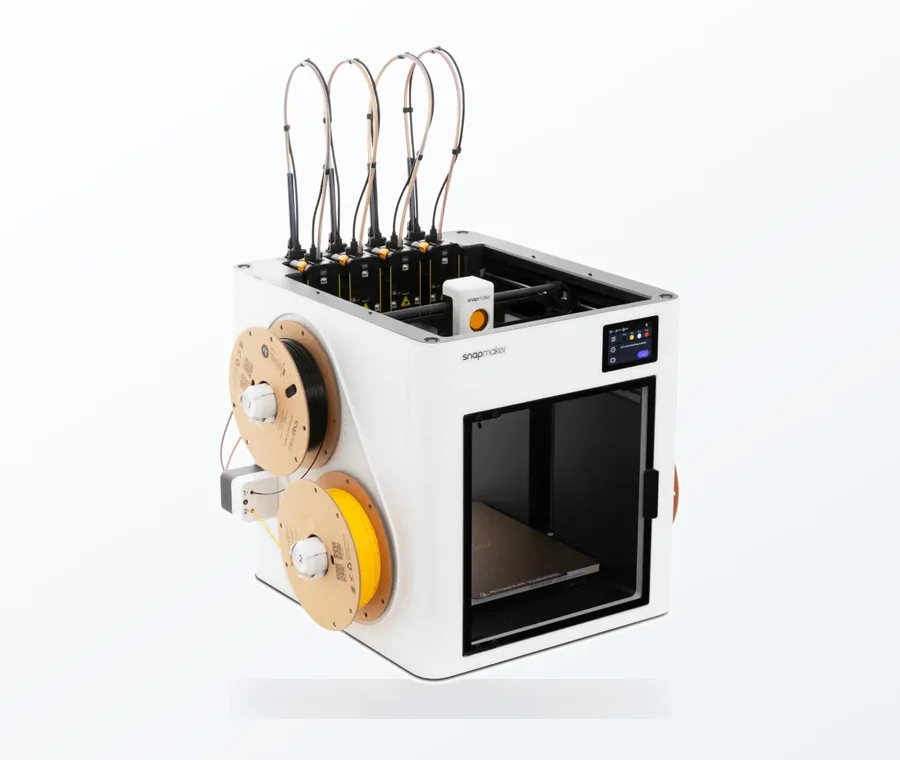
The consumer toolchanger 3D printer: the SnapSwap 4-toolhead system swaps heads in 5 seconds for true multi-color and multi-material printing, with smart calibration and auto filament loading.
- 4 toolheads · 5 s swap
- Up to 500 mm/s · 20,000 mm/s²
- 270 mm cube build volume
- Multi-color & multi-material
Carbon fiber hardware checklist
- Nozzle: hardened steel or tungsten carbide. 0.6 mm first, 0.4 mm if you need detail, never 0.2 mm.
- Extruder gears: hardened steel. Check what your extruder ships with; some come with softer gears.
- Feed path: short and gentle. Rough fibers wear PTFE tubes and multi-material feeders, and brittle grades snap in tight bends.
- Hotend: rated for the base plastic’s temperature. Nylon and PET carbon fiber grades print at 260–300 °C.
- Enclosure: needed for nylon, PC and ABS-based grades; optional for PLA-CF and PETG-CF.
- Dryer: required for nylon-based grades, recommended for the rest.
What each carbon fiber filament needs
The fibers set the nozzle and gear requirements. The base plastic sets everything else: temperature, enclosure and drying. Bambu Lab’s filament guide gives these ranges for its printers (nozzle temperatures ±10 °C). Always check the data sheet for your specific spool.
| Filament | Nozzle temperature | Hardened nozzle | Printer type | Drying |
|---|---|---|---|---|
| PLA-CF | 210–240 °C | Required | Open or enclosed | Recommended |
| PETG-CF | 240–270 °C | Required | Open or enclosed; enclosed recommended | Recommended |
| ABS-GF | 240–280 °C | Required | Enclosed | Recommended |
| PA-CF, PA6-CF, PAHT-CF | 260–300 °C | Required | Enclosed | Required |
| PET-CF | 260–300 °C | Required | Enclosed | Required |
| PPA-CF | 285–320 °C | Required | Enclosed | Required |
Prusa gives a broader range for composites overall: 240–285 °C at the nozzle and 70–110 °C on the bed, depending on the filament.
Nozzle: material and size for carbon fiber
Prusa calls carbon, glass and Kevlar fibers highly abrasive and says a hardened nozzle is necessary. Bambu Lab is more specific: do not use a stainless steel or brass nozzle, because their hardness is insufficient and they wear out quickly. A worn nozzle does not fail all at once; it quietly spoils dimensions and surfaces. Our guide to worn nozzle signs shows how to check one.
- Hardened steel is the usual choice. It conducts heat less well than brass; Prusa suggests raising the hotend temperature by about 5 °C with its hardened nozzle. Treat that as a starting point.
- Tungsten carbide is the option for heavy use. Bambu Lab rates its carbide nozzle at HRA 90 and says it wears significantly less than hardened steel.
- 0.6 mm is Bambu Lab’s first choice for fiber-filled filaments because it clogs less. 0.4 mm is its second choice for detail, with 0.15–0.3 mm layers and a maximum speed of about 100 mm/s. For some of its own carbon fiber and particle-filled filaments, such as PLA-CF and PETG-CF, Bambu Lab recommends 0.4 mm first.
- Never 0.2 mm. Bambu Lab calls the clogging risk extremely high. Prusa gives a 0.4 mm nozzle and 0.2 mm layer height as the minimum and notes that the larger both are, the lower the chance of clogging.
Extruder gears and the filament path
The nozzle is not the only part that wears. The drive gears bite into the filament on every millimeter, and fibers at the surface grind them down too. Bambu Lab says the nozzle and extruder gears need more frequent maintenance with these materials. It sells a hardened steel extruder gear assembly for the X1 and P1 series for filaments like PAHT-CF and PET-CF. It also notes that the P1 series extruder ships with stainless steel gears that can be upgraded. Check what your own extruder uses before committing to a lot of carbon fiber.
- Worn gears slip. The first sign is usually clicking or under-extrusion that gets worse over weeks, often with black dust around the gears. Clean them, and replace them if the teeth look rounded.
- PTFE tubes and feeders wear too. Bambu Lab warns that rough or abrasive filaments, such as carbon fiber or glow filaments, can eventually grind down the PTFE feed channels inside its AMS. It marks PET-CF and PPA-CF as not compatible with the AMS at all.
- Brittle grades snap in bends. Bambu Lab lists certain brands of PET-CF, PA-CF and PAHT-CF as too brittle for its AMS channels. Feed them from a spool holder with as few tight curves as possible.
- Direct drive helps with brittle filament because the path between gears and hotend is short, but a Bowden printer can still print many carbon fiber grades. The trade-offs are in the direct drive conversion guide.
Hotend temperature for nylon and PET composites
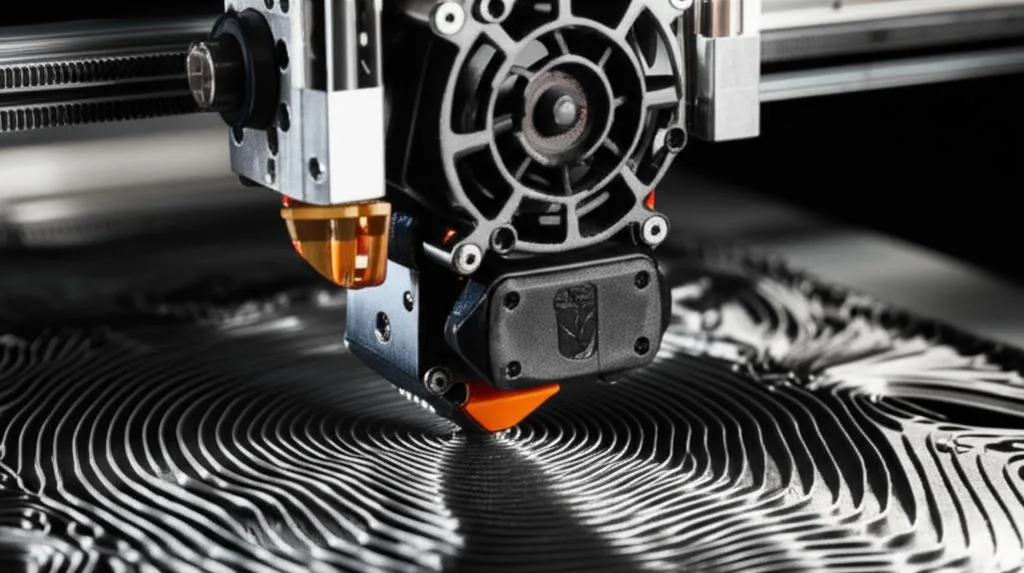
PLA-CF and PETG-CF print within the range of most stock hotends. Nylon, PET and PPA composites do not: at 260–320 °C they run hotter than a PTFE-lined hotend is meant to handle. Check your hotend’s rated maximum temperature, and see all-metal vs PTFE-lined hotends if you are close to the limit.
Start clean. Prusa suggests a cold pull before each composite print. Bambu Lab’s routine is to heat the nozzle to 280 °C and clear residue from the inside with an Allen key and a needle before loading fiber-filled filament, and to repeat that if a clog happens mid-print.
Enclosure, build plate and dryer
- Enclosure. Bambu Lab recommends an enclosed printer for ABS, ASA, PC and PA and their fiber-filled versions, to limit warping and layer separation. PLA and PETG composites do not strictly need one, although it recommends an enclosure for PETG-CF so cold air does not weaken the layers. Building one yourself is covered in the DIY enclosure guide.
- Build plate. Bambu Lab’s bed temperatures on textured PEI: 45–65 °C for PLA-CF, 60–80 °C for PETG-CF, and 100–120 °C for PA-CF, with glue stick for the nylon and PET composites.
- Dryer. Bambu Lab lists drying as required for PA6-CF and PET-CF. Its convection-oven values are 75–85 °C for 8–12 hours for PA6-CF and 60–65 °C for 8 hours for PETG-CF. It warns against kitchen and microwave ovens, whose heat is too uneven. Store dried spools sealed with desiccant.
Common carbon fiber print failures and fixes
Prusa sums up the trade-off: fibers improve dimensional stability and reduce warping, but they worsen layer-to-layer adhesion and raise the risk of clogging. Most carbon fiber failures come from one of those two effects, or from wet filament.
| Symptom | Likely cause | Fix |
|---|---|---|
| Corners lift on nylon or PET composites | Open printer, cold bed, drafts | Enclosure, bed at the top of the range, glue stick |
| Layers split or the part breaks along a layer line | Fibers weaken layer bonding; too much cooling; wet filament | Upper end of the temperature range, less part cooling, dry the spool |
| Nozzle clogs partway through a print | Small nozzle or thin layers; residue from earlier material | 0.6 mm nozzle, thicker layers, clean the nozzle before loading |
| Under-extrusion that gets worse over weeks | Worn extruder gears or a worn nozzle | Inspect both; fit hardened parts |
| Filament snaps before the extruder | Brittle grade in a tight bend or long tube | Shorter, straighter feed path; avoid multi-material feeders not rated for it |
| Popping, bubbles, rough or fuzzy surface | Moisture in the filament | Dry it at the maker’s temperature, store sealed |
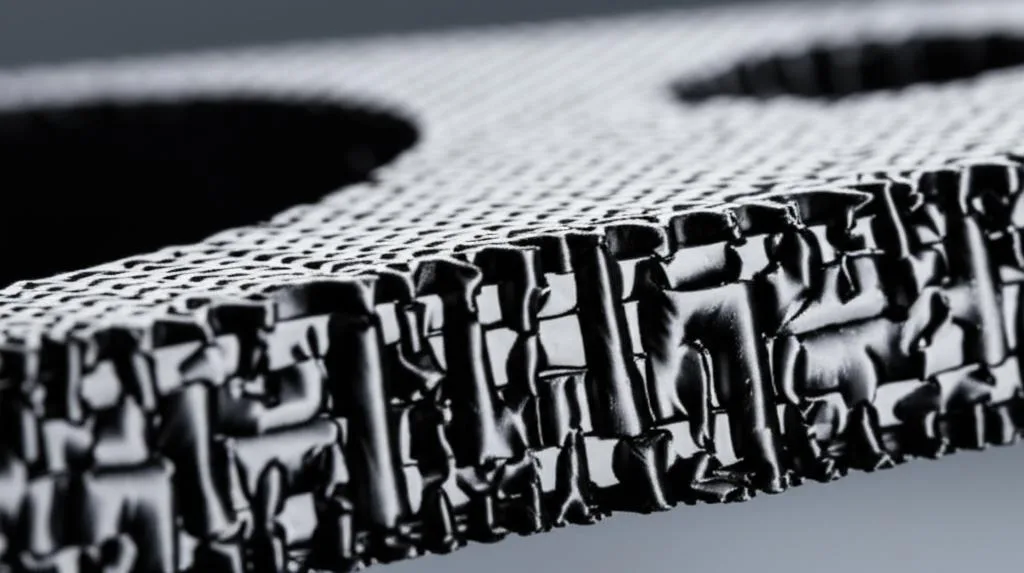
If splitting between layers is your main problem, work through weak layer adhesion before changing hardware. Temperature, cooling and orientation matter more there than the fiber itself.
Common carbon fiber hardware mistakes
- Upgrading the nozzle but not the gears. Softer gears wear too, and the result looks like a flow problem.
- Trying “just one spool” on brass. The nozzle can be worn by the end of it, and you will then chase quality problems on your normal filament.
- Running a fiber filament through a 0.2 mm nozzle for fine detail. Pick a filament without fibers instead.
- Printing PA-CF on an open printer with a PTFE-lined hotend. Both limits apply at once: warping from the open frame, and a hotend running near or past its rating.
- Skipping the dryer for nylon composites. No hardware upgrade makes up for wet nylon.
Frequently asked questions
Do I need a hardened nozzle for carbon fiber PLA?
Yes. Bambu Lab marks a hardened steel nozzle as required for PLA-CF, the same as for nylon-based carbon fiber. The base plastic being easy to print does not change how abrasive the fibers are.
Do I need hardened extruder gears for carbon fiber?
For occasional prints, softer gears will work for a while, but they wear. Bambu Lab says extruder gears need more frequent maintenance with fiber-filled filaments and sells hardened steel gears for them. If you print carbon fiber regularly, fit hardened gears along with the nozzle.
Can a Bowden printer print carbon fiber filament?
Many can, as long as the nozzle is hardened and the hotend reaches the needed temperature. The weak points are brittle grades that snap in the tube, and rough filament wearing the PTFE tube over time. Keep the tube short and without tight bends.
What nozzle size is best for carbon fiber filament?
Bambu Lab recommends a 0.6 mm hardened steel nozzle as the first choice because it clogs less. A 0.4 mm nozzle gives more detail with a somewhat higher clog risk. Avoid 0.2 mm with any fiber-filled filament.
Sources
- Bambu Lab Wiki: Filament guide (printer, nozzle, AMS and build plate compatibility)
- Bambu Lab Wiki: Filament drying recommendations
- Bambu Lab: Hardened steel extruder gear assembly (product description)
- Prusa Knowledge Base: Composite materials filled with carbon, Kevlar or glass
- Prusa Research: Hardened steel nozzle E3D V6 0.4 mm