An all-metal hotend is worth it if you want to print materials that need more than about 240–245 °C at the nozzle, the limit E3D gives for its PTFE-lined Lite6. In Prusa’s filament table that means polycarbonate (270–275 °C), most nylons (up to 285 °C), many ASA and composite filaments, and the hotter end of PETG. If you only print PLA, TPU and PETG at moderate temperatures, a healthy PTFE-lined hotend already covers you and the upgrade mostly adds tuning work.
What changes after the switch: the PTFE tube no longer reaches the hot zone, so the temperature ceiling is set by the metal parts and the thermistor (300 °C for a standard E3D V6), retraction usually has to come down (Micro Swiss caps it at 4 mm on a Bowden printer), and the heatsink has to stay well cooled to avoid heat creep jams. Figures here come from E3D, Prusa and Micro Swiss documentation, linked at the end.
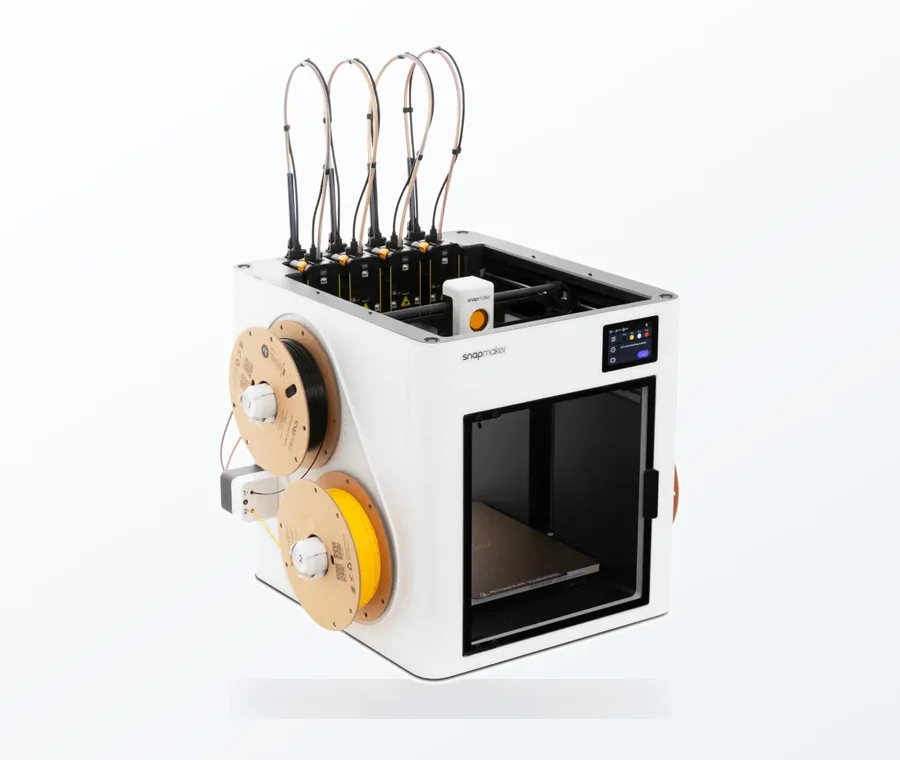
The consumer toolchanger 3D printer: the SnapSwap 4-toolhead system swaps heads in 5 seconds for true multi-color and multi-material printing, with smart calibration and auto filament loading.
- 4 toolheads · 5 s swap
- Up to 500 mm/s · 20,000 mm/s²
- 270 mm cube build volume
- Multi-color & multi-material
Quick decision: do you need an all-metal hotend?
- Yes, if you want to print PC, nylon (PA) or other filaments whose recommended nozzle temperature is above your PTFE-lined hotend’s limit.
- Probably, if you print ABS, ASA or PETG near the top of their range and keep running into the PTFE limit.
- No, if you print PLA, PETG and TPU within a PTFE-lined hotend’s rating. E3D itself markets the PTFE-lined Lite6 for standard materials such as PLA and ABS and highlights its performance with flexible filaments.
- Not for abrasives alone. Carbon fibre and glow-in-the-dark filaments wear out the nozzle. That calls for a hardened or other wear-resistant nozzle, not necessarily a different hotend.
PTFE-lined vs all-metal: where the difference is
In a PTFE-lined hotend, the PTFE tube runs down through the heat break towards the nozzle, so filament slides through a slippery liner right into the hot zone. The liner is the weak point: E3D says the Lite6’s PTFE liner limits it to 240–245 °C (the article quotes both figures), and that it cannot print engineering plastics such as nylon and polycarbonate.
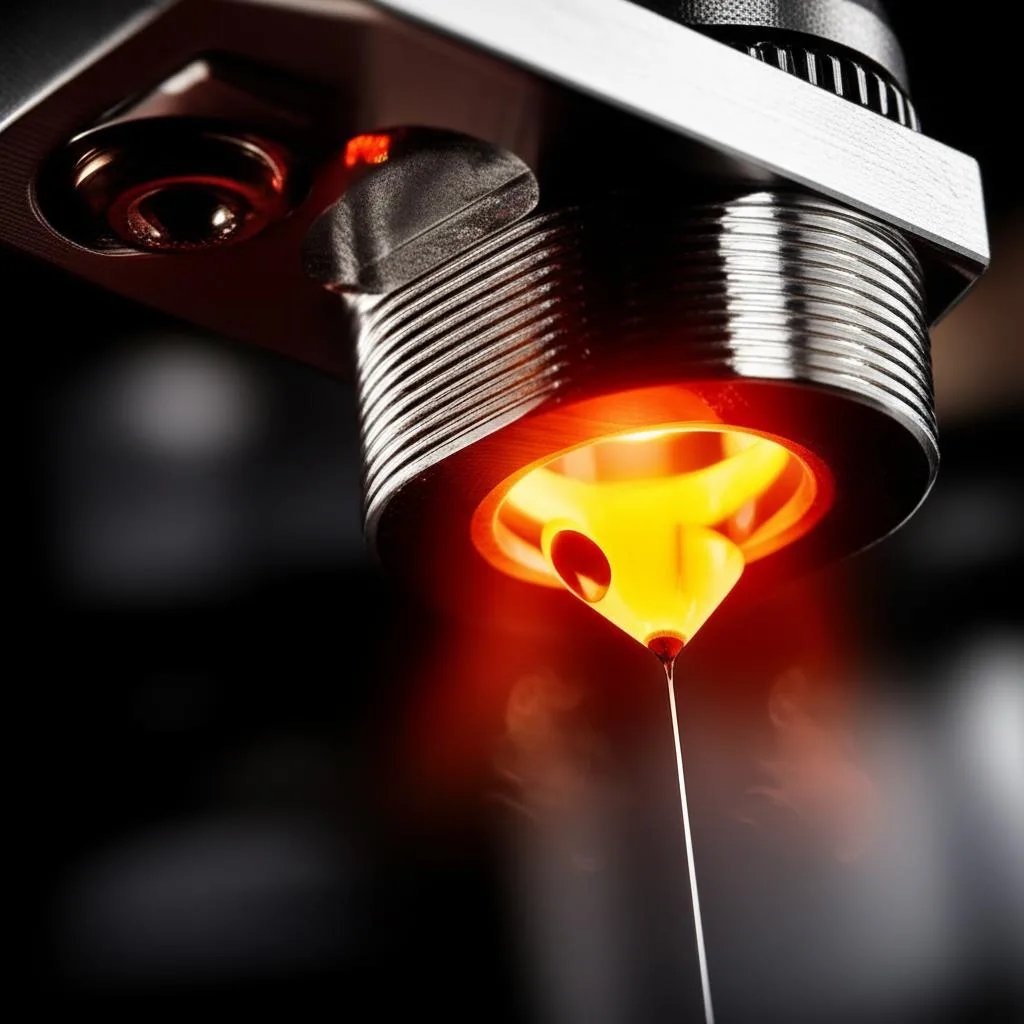
In an all-metal hotend the PTFE tube stops at the top of the heat break. On the E3D V6 you push it in until it bottoms out on the heat break, and E3D states that PTFE is never in any heated area. Filament passes from the PTFE tube into a metal heat break, where it must stay solid until it reaches the melt zone.
| PTFE-lined (e.g. E3D Lite6) | All-metal (e.g. E3D V6) | |
|---|---|---|
| Temperature limit | 240–245 °C, set by the PTFE liner | 300 °C with the standard thermistor and aluminium heater block; 500 °C with a plated copper block and PT100/PT1000 sensor |
| Where PTFE sits | Inside the heat break, into the hot zone | Above the heat break only |
| Flexible filaments | E3D highlights good results with flexibles | Workable, but no liner guiding soft filament through the heat break |
| Retraction | Tuned for the stock setup | Usually shorter; Micro Swiss caps its Bowden kit at 4 mm |
| Main failure mode | Liner degrades if run too hot | Heat creep if the heatsink is not cooled well |
| Assembly | Simple | Thermal paste on the heat break, nozzle hot-tightened against the heat break |
E3D’s V6 limits are for the complete hotend: without the silicone sock, it gives 285 °C as the maximum operating temperature with its standard thermistor and 485 °C with a PT100. A brass nozzle has its own limit, so check both before printing hot.
Nozzle temperatures by material vs a 245 °C PTFE limit
Prusa’s filament material guide lists recommended nozzle temperatures for many brands. The ranges below span the brands in that table (values for Prusa’s MK3S profile); your filament maker’s data sheet always takes priority.
| Material | Nozzle range in Prusa’s table | PTFE-lined hotend (240–245 °C)? |
|---|---|---|
| PLA | 185–230 °C | Yes |
| Flexible (TPU and similar) | 220–260 °C | Most; hottest grades exceed it |
| PETG | 215–270 °C (Prusament PETG: 250 °C) | Only at the lower end |
| ABS | 230–255 °C | Borderline |
| ASA | 220–275 °C (Prusament ASA: 260 °C) | Often not |
| Nylon (PA) | 240–285 °C | Mostly not |
| Polycarbonate (PC) | 270–275 °C | No |
| Carbon, glass or kevlar composites | 225–290 °C | Depends on the base polymer; also needs a wear-resistant nozzle |
| PEI 1010 | 430 °C | No; needs specialised high-temperature hardware and a heated chamber |
Printing right at the ceiling also leaves no margin for purging or clearing a clog, which is done hotter than normal printing. If the filaments you use sit at or near your hotend’s limit, that alone is a good reason to upgrade.
Heat creep on an all-metal hotend: causes and fixes
Prusa defines heat creep as parts of the hotend above the heater block getting too hot, so the filament softens too high up and forms a plug instead of melting only in the nozzle. The printer keeps moving but stops extruding, and the extruder often clicks. Its causes and fixes, from Prusa’s heat creep article:
| Cause | Fix |
|---|---|
| Room above 35 °C (30 °C for some filaments), or a closed, unventilated enclosure with PLA | Ventilate or open the enclosure for PLA; direct extra airflow at the heatsink |
| Weak heatsink cooling: dusty fins, fan too slow or mounted backwards | Clean the fins with compressed air; check fan direction and speed (Prusa’s MK3 expects 4000–4400 RPM) |
| Poor thermal contact in the heat break | Thermal paste on the heat break threads |
| Very low flow: thin layers and slow printing | Layer height of 0.15–0.20 mm, speed up about 10% |
| Nozzle or bed hotter than needed | Lower the bed by 5–10 °C; don’t overheat the nozzle |
| Filament left sitting in a hot hotend | Unload the filament after the print while the hotend is still hot |
The hotend fan on an all-metal hotend is not optional: it is what keeps the top of the heat break cold. If a jam does happen, our guide to clearing a clogged nozzle covers pushing out a heat creep plug.
Retraction and temperature changes after the upgrade
The usual explanation is that long retractions pull softened filament up into the metal heat break, where it can set and jam. Micro Swiss’s installation instructions for its Creality CR-6 SE all-metal kit (a Bowden printer) ask for two slicer changes:
- Reduce retraction to 3.5 mm at 35 mm/s, with 4 mm as the maximum.
- The nozzle temperature might need to go up by 5–10 °C.
Those are Bowden values for one kit. On a direct-drive extruder, retraction is normally much shorter already, so treat any value as a starting point: print a retraction test and use the shortest distance that controls stringing. Our PLA retraction guide walks through the test. Then run a temperature tower, since the melt zone behaves differently from your old hotend.
Upgrading to an all-metal hotend: step-by-step
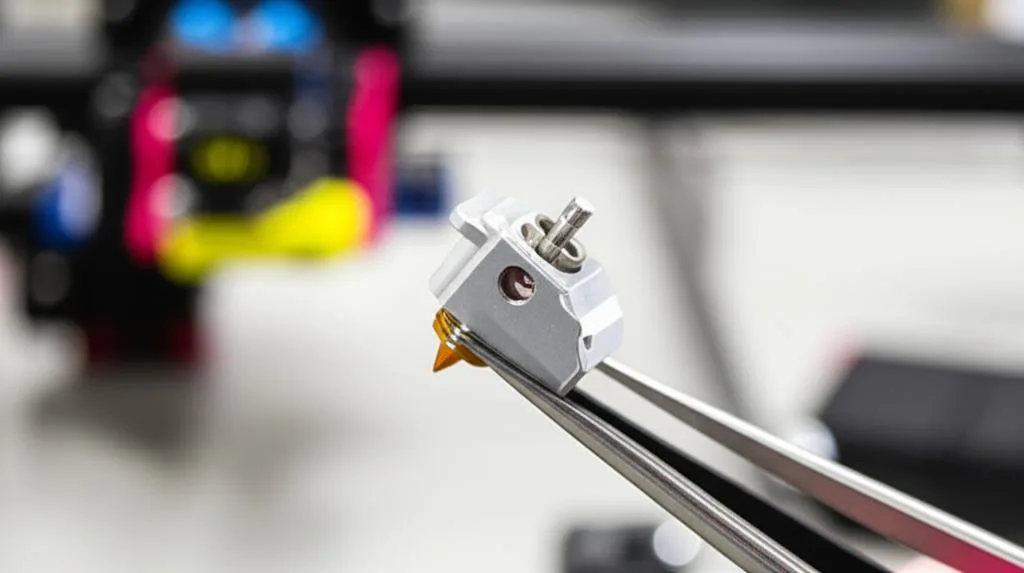
Follow the instructions for your specific kit. This order combines the steps that E3D and Micro Swiss documentation have in common.
- Check fit and firmware first. Confirm the hotend is made for your printer or carriage, and that your firmware allows the temperature you plan to print at. A 300 °C hotend does not help if the firmware stops the heater lower.
- Remove filament hot, then work cold. Micro Swiss purges and unloads at 235 °C, takes the stock nozzle out, then lets the hotend cool and unplugs the printer before any disassembly.
- Assemble the heat break. E3D applies thermal paste only to the long (cold) section of the heat break, never the short hot section.
- Fit the nozzle loosely. The nozzle must seal against the heat break, not the heater block. E3D warns that a nozzle fastened up against the heater block at this stage risks not sealing during hot tightening.
- Reinstall heater cartridge and thermistor without overtightening the thermistor screw, then mount the hotend and route the wires away from moving and hot parts.
- Install the PTFE tube so it bottoms out where the kit specifies, at the top of the heat break on a V6 or inside the cooling block on the Micro Swiss kit.
- Hot-tighten the nozzle. Micro Swiss heats to 220 °C and tightens with the heater block held in a spanner; E3D’s temperature and torque depend on the nozzle material. Our nozzle change guide lists the E3D values. Micro Swiss also notes the heater cartridge can loosen after the first heat-up, so check it again.
- Tune. Run a PID autotune for the new heater block (see PID tuning for hotend and bed), then adjust retraction and temperature as described above.
Common all-metal upgrade mistakes
- Keeping the old retraction settings. A long Bowden retraction tuned for the old hotend can exceed Micro Swiss’s 4 mm maximum.
- Paste on the hot side. E3D limits thermal paste to the long cold section of the heat break.
- Tightening only cold. Both E3D and Micro Swiss tighten the nozzle at temperature to prevent leaks.
- Assuming it makes abrasive filaments safe. Wear resistance comes from the nozzle. E3D’s own brass V6 nozzle is not abrasion resistant. See carbon vs glass fibre filament for nozzle requirements.
- Printing PLA in a hot, closed enclosure. Prusa lists this as a classic heat creep cause.
- Ignoring the thermistor limit. A standard E3D V6 thermistor setup is rated to 300 °C; going to 500 °C needs a plated copper block and PT100 or PT1000 sensor.
Frequently asked questions
Is an all-metal hotend better for PLA?
Not by itself. PLA prints well below the 240–245 °C limit of a PTFE-lined hotend, and Prusa singles out PLA in closed, unventilated enclosures as a heat creep risk. An all-metal hotend is worth it for PLA users only if they also want to print hotter materials.
What temperature can a PTFE-lined hotend handle?
E3D gives 240–245 °C for its PTFE-lined Lite6, and warns that going above it degrades the liner. Other PTFE-lined hotends may be rated differently, so check your printer maker’s specification before raising the temperature.
Do I need to change retraction after installing an all-metal hotend?
Usually yes. Micro Swiss asks for 3.5 mm at 35 mm/s, 4 mm maximum, on a Bowden printer after installing its all-metal kit. Direct-drive printers already use shorter retractions; tune with a retraction test either way.
How hot can an all-metal hotend go?
It depends on the whole assembly. E3D rates the V6 at 300 °C with its standard thermistor and aluminium heater block, and at 500 °C only with a plated copper heater block and a PT100 or PT1000 sensor. Your nozzle and firmware limits also apply.
Sources
- E3D Classics Support: V6 HotEnd (temperature limits and assembly)
- E3D: Lite6, the PTFE-lined hotend (temperature limit and materials)
- Prusa Knowledge Base: Filament material guide
- Prusa Knowledge Base: Extrusion stopped mid-print (heat creep)
- Micro Swiss: Installation instructions for the Creality CR-6 SE all-metal hotend (PDF)