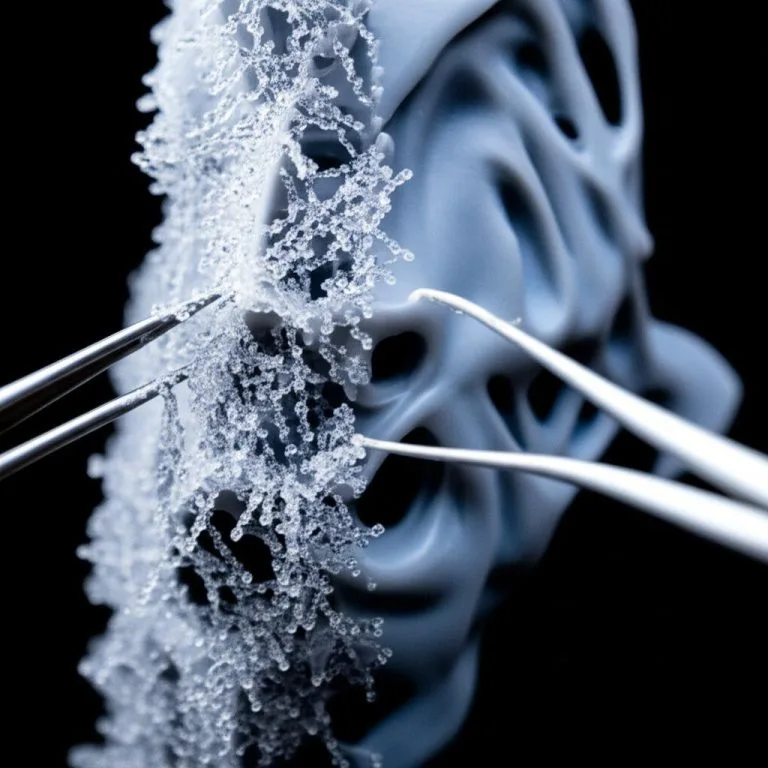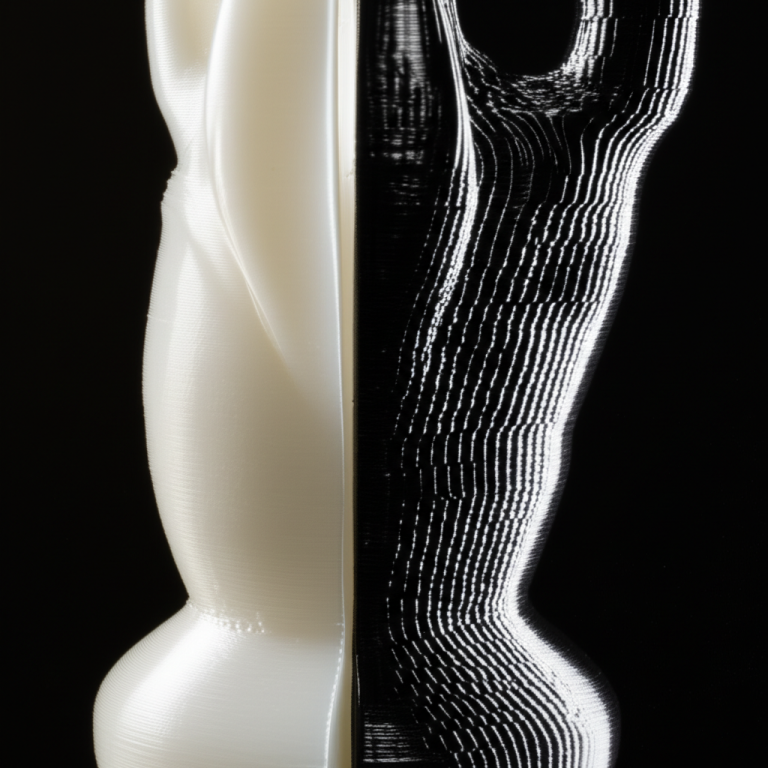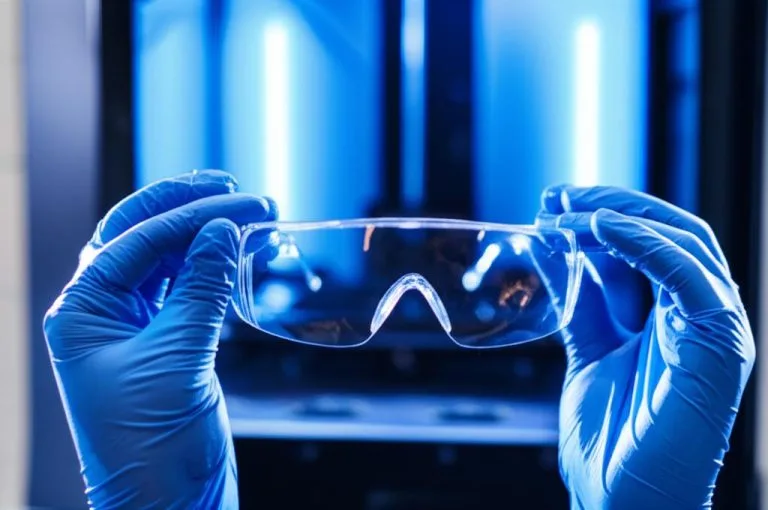

A resin print leaves the build plate coated in liquid resin, and its outer skin is not fully polymerised either: oxygen from the air reacts with the radicals at the surface and stops the chains there from linking up. That is why a part can feel tacky even after it looks clean. The fix is a sequence, not a single step: wash in fresh solvent, dry the part completely, then cure it.
For the numbers: Formlabs publishes IPA wash times of 2 to 20 minutes depending on the resin, and warns that surfaces may turn tacky once the IPA holds more than 5% dissolved resin. Anycubic suggests 1-2 minutes in a 405 nm curing station for a miniature and 5-10 minutes for a large part, against 2-3 hours in sunlight. Treat those as starting points: published post-cure figures for one manufacturer’s own materials run from 5 minutes with no heat to 240 minutes at 60 degrees C, so your resin’s data sheet outranks any generic time.
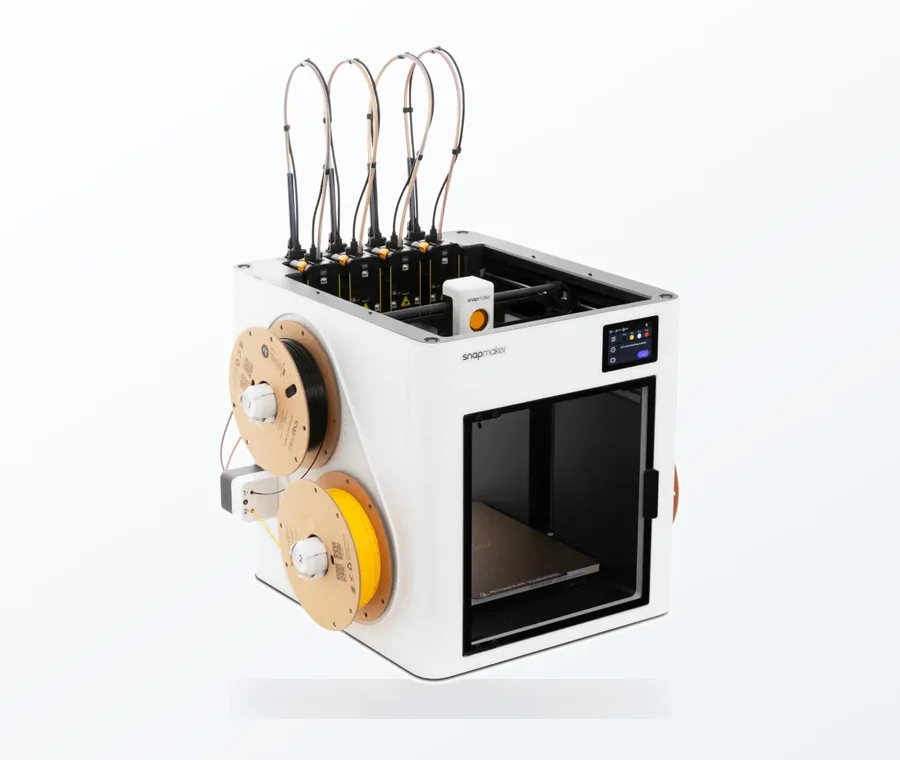
The consumer toolchanger 3D printer: the SnapSwap 4-toolhead system swaps heads in 5 seconds for true multi-color and multi-material printing, with smart calibration and auto filament loading.
- 4 toolheads · 5 s swap
- Up to 500 mm/s · 20,000 mm/s²
- 270 mm cube build volume
- Multi-color & multi-material
The wash and cure sequence in seven steps
- Gloves and sealed goggles on before you touch the plate, somewhere the air moves.
- Let the plate drip back into the vat, then remove the part.
- Wash once in used solvent to take off the bulk.
- Wash again in clean solvent, for the time your resin’s sheet gives.
- Drain and dry the part fully. No heat guns or hair dryers on an alcohol-wet print.
- Remove supports, then cure every side evenly at 405 nm.
- Check by touch. Still tacky means back to step 3, not more UV.
Why resin prints stay sticky
Four causes produce the same symptom, and they need different fixes.
- The uncured resin film. Anycubic’s safety data sheet lists its UV sensitive resin as insoluble in water and soluble in alcohol, which is why alcohol washing works and a plain water rinse does nothing for a standard resin.
- Oxygen inhibition. In free-radical photopolymerisation, oxygen reacts with the radicals that would otherwise extend the polymer chains, producing species that take no further part in the reaction. Air keeps feeding oxygen to the outermost skin, which is why a print can be hard underneath and greasy on top.
- Saturated solvent. Once the bath carries enough dissolved resin, washing redeposits it. Formlabs puts a number on this: parts may come out tacky if washed in IPA holding more than 5% resin.
- Curing a wet part. Alcohol or water left on the surface leaves a cloudy white film with tack underneath it.
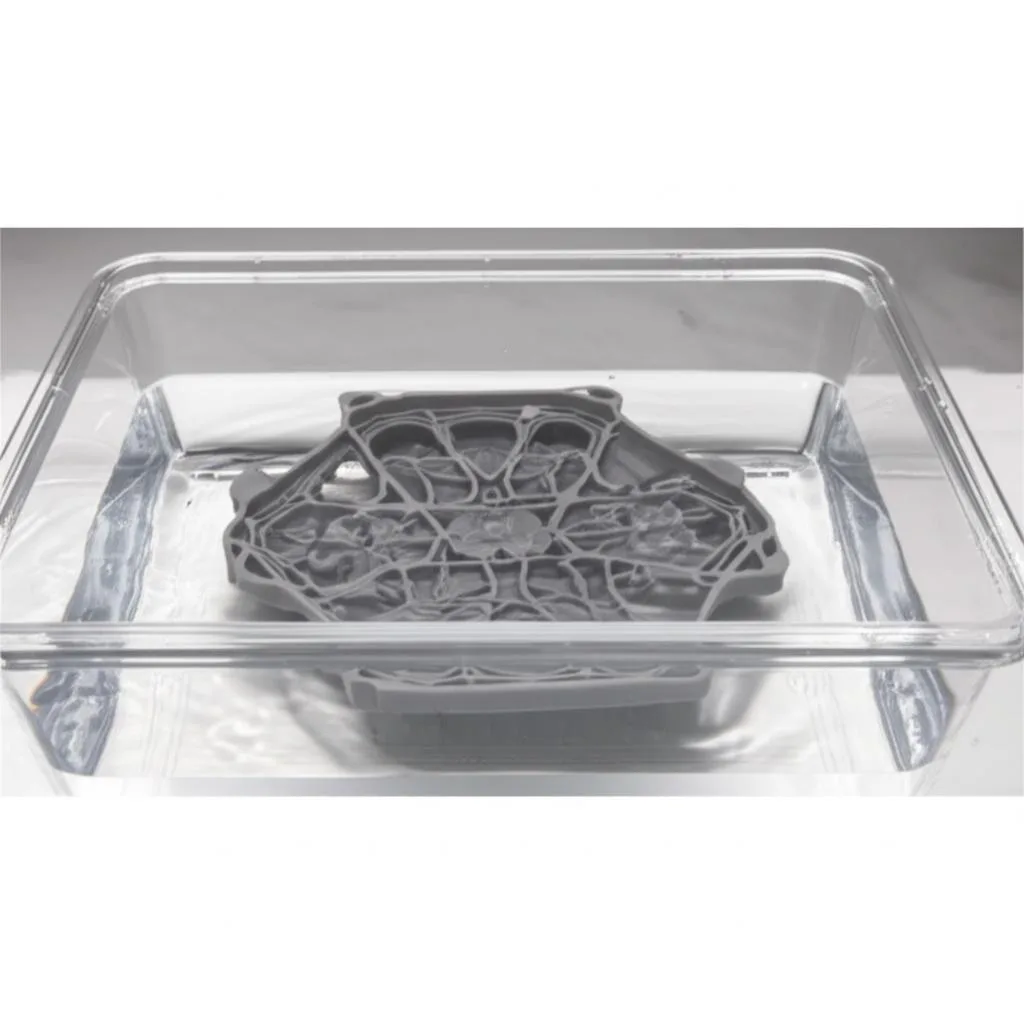
IPA, ethanol or water-washable resin
Isopropyl alcohol is the default because it dissolves standard resin quickly and evaporates cleanly. It is also the most hazardous thing on the bench. The NIOSH Pocket Guide gives IPA a flash point of 53 degrees F, a recommended exposure limit of 400 ppm over 8 hours with a 500 ppm short-term limit, and an IDLH value of 2000 ppm, with eyes, skin and the respiratory system as target organs. A flash point that low means an open wash tub in a warm room gives off ignitable vapour, so keep heaters and hot-air tools away. Ethanol behaves similarly. Formlabs also supports TPM, but notes it leaves a waxy texture on some resins and needs an alcohol rinse afterwards.
Water-washable resins swap the solvent for tap water and remove the fire risk, which matters in a small room. They do not remove the waste problem: the rinse water holds uncured resin, which carries an aquatic hazard classification, so it cannot go down the drain either. Cured properties also differ, so read the sheet rather than assuming a water-washable resin behaves like the standard version.
Wash times and when to change the solvent
There is no single wash time, and longer is not better: several resins have a published maximum soak. Formlabs’ Form Wash guidance shows how wide the spread is inside one product range.
| Material (Formlabs) | Published IPA wash time | Stated limit |
|---|---|---|
| High Temp | 5 minutes | Max 6 minutes total in solvent |
| Black / Clear / Grey / White Resin V4, Castable, Model | 10 minutes | – |
| Durable V2, ESD, Silicone 40A | 20 minutes | Durable V2: 20 minutes total, no more |
| Tough 1000, Tough 2000, Rigid 10K, Flexible 80A V1 | 10 minutes + 10 minutes | Second cycle in fresh solvent |
| Permanent Crown | – | Max 3 minutes total in IPA |
- Two baths, dirty then clean. The first cycle removes the bulk, the second finishes the job in fresh solvent.
- Add time for awkward geometry. Formlabs asks for longer washes on hollow, concave, large or long parts and internal channels, and about 5 minutes extra when the bucket is already loaded.
- Watch saturation, not the calendar. Cloudy, syrupy solvent and parts that feel slick out of the bath mean it is spent.
Drying before the cure
A film of alcohol or water on the surface when the UV comes on gives a chalky white bloom that extra curing will not remove.
- Air dry until the surface looks matte and no solvent smell is left. Hollow parts and internal channels stay wet long after the outside looks dry.
- Compressed air or a cold fan speeds this up and clears droplets from lattices and undercuts.
- Do not use a heat gun or hair dryer on a print still wet with alcohol. Anycubic gives this warning explicitly, and the flash point above is why.
Cure times by method, as starting points
Cure time depends on the resin, the part’s size and wall thickness, and the lamp’s power and wavelength, so any fixed number below is a place to begin. Consumer resins are formulated around 405 nm, the wavelength the printer’s own LCD uses, so a generic UV torch of unknown output may simply be the wrong light.
| Method | Published starting point | What to watch |
|---|---|---|
| 405 nm curing station or UV nail lamp | Anycubic: 1-2 min miniature, 3-5 min average, 5-10 min large | Rotate the part; shadowed faces cure last |
| Sunlight | Anycubic: 2-3 h for a miniature, up to 10 h for a large part | Weather and one-sided exposure make it unrepeatable |
| Heated chamber, manufacturer settings | Formlabs: 15 min at 60 C for Clear Resin V4, 60 min at 60 C for Durable V2, 240 min for Castable Resin | Thick, bulky parts heat slowly and need longer |
| High-temperature post-cure, engineering resins | Formlabs: Rigid 10K thermal post-cure 125 min at 90 C | Only where the maker specifies it; thin parts distort |
| Water bath cure | Formlabs: Flexible 50A 30 min at 70 C, Silicone 40A 45 min at 60 C, fully submerged | Room-temperature water, UV-transparent container |
That last row is worth borrowing for any tacky part. Water blocks air from the surface, so the oxygen-inhibited skin cures properly. Formlabs specifies submerged curing for two of its own materials, which makes it a sanctioned technique rather than a workaround. Its footnote calls for room-temperature water in a UV-transparent container, so use glass or clear acrylic that you are happy to contaminate.
Over-curing: brittleness, yellowing and distortion
Manufacturers disagree here, and the disagreement is informative. Formlabs states that over-curing is acceptable for its materials unless a specific material says otherwise. Anycubic warns that over-curing makes a part brittle and prone to cracking, and that clear and light-coloured resins are more likely to yellow. Both can be true: a validated chamber running a published cycle is not the same as a windowsill for a weekend.
- Brittleness comes from pushing cross-linking past the point where the material still has some give. Cure time is one suspect among several; our guide to brittle resin prints covers the rest.
- Yellowing shows first on clear and pale resins. Uncontrolled sunlight is the usual cause, because it continues long after the part is cured.
- Distortion is usually heat rather than light. Published cycles reach 90 degrees C for some engineering resins, and thin walls and long spans can sag there. Cure flat parts lying flat, and pick an unheated setting for decorative prints where the maker offers one.
- Flexible and elastic resins are the most sensitive, because stiffness is what you are trying not to gain. See our notes on flexible resin settings and curing.
Start at the shortest published time for your resin, check tack by hand with gloves on, and add short increments only if needed.
Sticky, cloudy or brittle: what to fix
| Symptom | Likely cause | Fix |
|---|---|---|
| Slick or greasy straight out of the wash | Solvent saturated with resin, or wash too short for the geometry | Rewash in fresh solvent, add time for hollows and channels |
| Tacky after a full cure, part hard underneath | Oxygen inhibition at the surface, or uneven exposure | Cure again submerged in water in a UV-transparent container; rotate the part |
| White bloom or cloudy patches after curing | Alcohol or water still on the surface when the UV came on | Wash, drain hollow sections, dry fully, then cure |
| Warping or sagging during curing | Chamber heat, or one-sided sunlight heating | Use an unheated setting, support thin parts flat, keep them off hot windowsills |
| Brittle parts that snap under light load | Over-cure, or a resin chosen for detail rather than toughness | Cut back to the shortest published cure; keep prints out of sunlight |
Handling, PPE and waste
Uncured resin is the hazardous part of this process, and washing is when you handle most of it. Anycubic’s safety data sheet classifies its UV sensitive resin as H315 causes skin irritation, H319 causes serious eye irritation, H335 may cause respiratory irritation and H411 toxic to aquatic life with long lasting effects, with precautionary statements P271 use only outdoors or in a well-ventilated area and P280 wear protective gloves, eye protection and face protection.
- Gloves and goggles, every time. The sheet asks for gloves such as butyl rubber tested to EN 374, US F739 or AS/NZS 2161.1, and goggles conforming to EN 166 or US NIOSH. Our resin PPE checklist covers glove materials.
- Ventilate the wash area, not just the printer. The sheet asks for local exhaust plus general extraction, and eyewash within reach. See our guide to resin printer ventilation.
- Nothing resin-contaminated goes down the drain, including rinse water from water-washable resin. The sheet is explicit that the product must not be poured into sewers or drainage ditches.
- Cure the waste before you bin it. Resin-soaked towels, failed prints and the sludge from a used solvent container are all still reactive. Leaving them under UV until they are hard turns liquid waste into solid waste, which is far easier to dispose of. The method, including the alcohol itself, is in our guide to disposing of resin and used IPA.
Common wash and cure mistakes
- Answering stickiness with more UV. If the cause is a resin film or a spent bath, curing bakes the residue onto the part.
- One bath forever. A single container of IPA used from the first print to the last is the usual reason parts stop coming out clean.
- Cutting supports off a fully cured part. Cured resin chips, so remove supports after drying but before curing. Technique is in our guide to resin support removal.
Frequently asked questions
How long should I cure a resin print?
Start with the time on your resin’s data sheet. Anycubic gives 1-2 minutes in a 405 nm curing station for a miniature and 5-10 minutes for a large part, while Formlabs’ settings for its own materials run from 5 minutes with no heat to 240 minutes at 60 degrees C for Castable Resin. Check by touch with gloves on and add short increments.
Can I reuse IPA for washing resin prints?
Yes, until it is loaded with dissolved resin. Formlabs states that parts may become tacky when washed in IPA carrying more than 5% resin, and advises fresh solvent at that point. A two-bath system extends the life of the clean bath.
Why is my print still sticky after washing and curing?
If the part is hard underneath and only the surface is tacky, the cause is likely oxygen inhibition, where air stops the outermost layer polymerising. Curing it submerged in water in a UV-transparent container excludes the air, which is what Formlabs specifies for two of its own resins. If the whole part feels slick, the wash is at fault.
Can I pour water-washable resin rinse water down the sink?
No. The water contains uncured resin, which safety data sheets classify as toxic to aquatic life with long lasting effects and say must not enter sewers or drains. Cure the residue out under UV and dispose of the solids under your local rules for hazardous household waste.