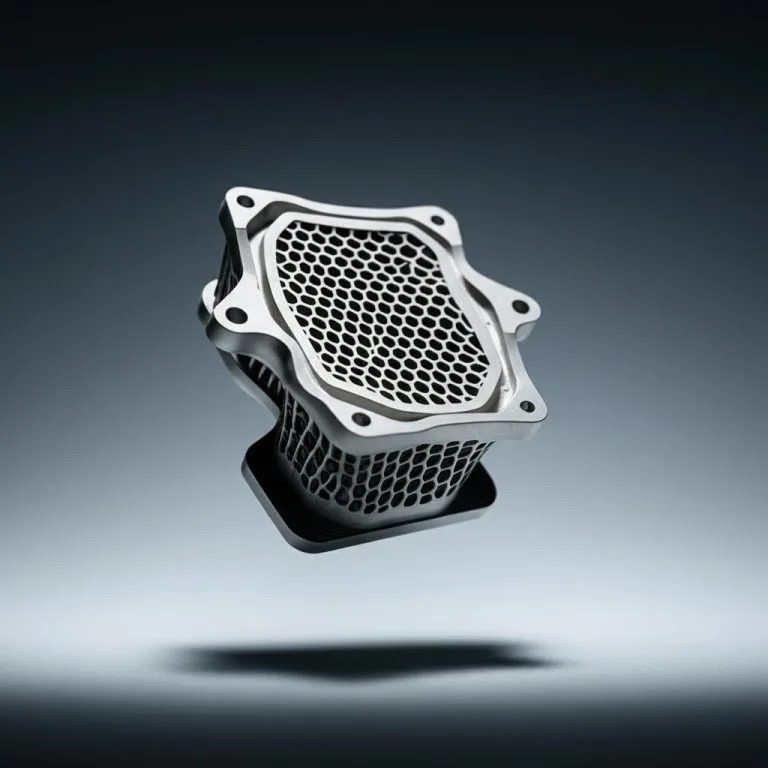
Carmakers do 3D print spare parts for classic and low-volume models, but not the way most hobbyists do. Porsche Classic prints a clutch release lever for the 959 in tool steel by selective laser melting, then puts it through a pressure test of almost three tonnes, a CT scan for internal faults and driving tests. Mercedes-Benz Classic prints an aluminium alloy interior mirror base for the 300 SL Coupé, and SOLIZE and HP produce an R32 Skyline GT-R harness protector for Nissan’s NISMO Heritage Parts program using HP Multi Jet Fusion and PA 11. The common pattern is industrial powder-bed machines, original design data or a 3D scan, and testing against the original part’s specification.
For restorers with a desktop printer, the realistic scope is non-structural plastic parts: trim, clips, covers, knobs, bezels, ducts away from the engine, and jigs and tools. Brakes, steering, suspension, seat belts, fuel system parts and road lighting are out. They either carry life-safety loads or fall under vehicle safety standards; in the US, selling non-compliant regulated equipment is prohibited by 49 U.S.C. 30112. Pick heat-resistant materials: Prusament lists a heat deflection temperature of 55 °C for PLA, against 93 °C for ASA and 113 °C for PC Blend (at 0.45 MPa).
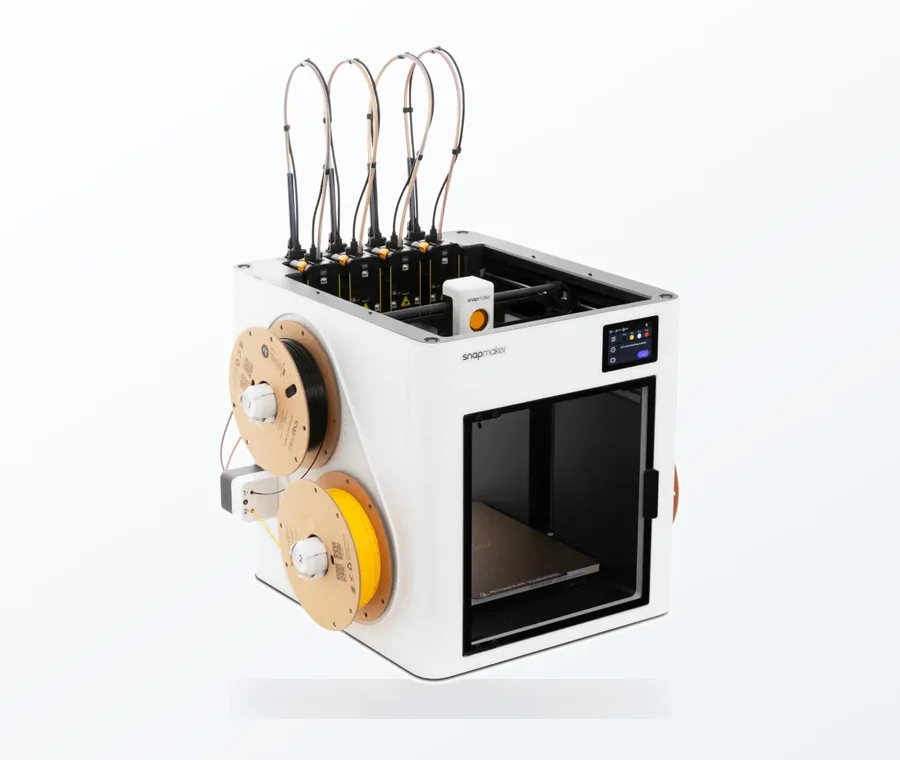
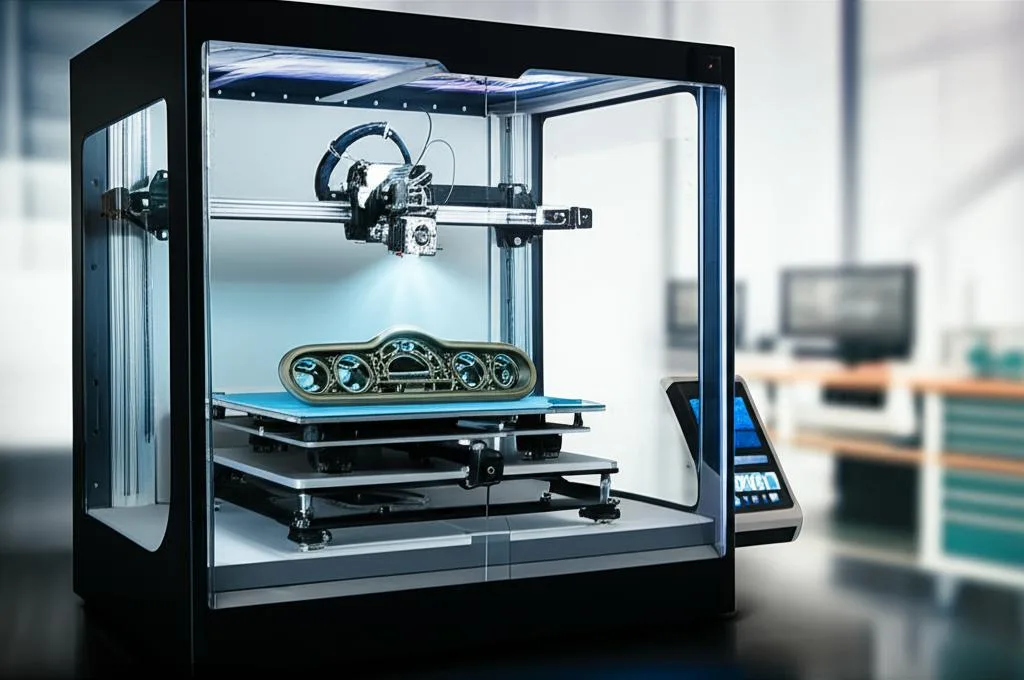
The consumer toolchanger 3D printer: the SnapSwap 4-toolhead system swaps heads in 5 seconds for true multi-color and multi-material printing, with smart calibration and auto filament loading.
- 4 toolheads · 5 s swap
- Up to 500 mm/s · 20,000 mm/s²
- 270 mm cube build volume
- Multi-color & multi-material
Can you 3D print this car part? Quick decision
- Check whether the maker still supplies it, including reproduction parts from programs such as Porsche Classic, Mercedes-Benz Classic or NISMO Heritage.
- If the part failing could cause a crash or injury (brakes, steering, suspension, wheels, seat belts, airbag area, fuel lines), don’t print it.
- If it is road lighting, glazing or another item covered by a safety standard, use a compliant part, not a print.
- If it is cosmetic or lightly loaded, choose a material rated for the heat, UV and fluids at that spot.
- Orient the print so the load doesn’t pull layers apart, test fit, and test in service before trusting it.
- Printing for sale? Check design rights, trademarks and any safety standard first.
What OEM classic parts programs actually print
| Program (announced) | Example parts | Process and material | Published quality steps |
|---|---|---|---|
| Porsche Classic (February 2018) | 959 clutch release lever; eight other parts in production, 20 more under evaluation at the time | Selective laser melting for steel and alloy parts; selective laser sintering (SLS) for plastic parts | Pressure test with almost 3 t, CT examination, test-vehicle and driving tests; fit checked with the part installed |
| Mercedes-Benz Classic (3D printed parts since 2016; range extended December 2018) | 300 SL Coupé (W 198) interior mirror base and tool-kit spark plug holder; sliding sunroof guides for W 110, W 111, W 112, W 123 | Powder-bed laser sintering or melting; aluminium alloy mirror base, plastic spark plug holder | Mercedes-Benz says the parts passed its quality tests and are equivalent in all respects to the original |
| Nissan NISMO Heritage with SOLIZE and HP (March 2021) | Harness protector for the R32 Skyline GT-R | HP Multi Jet Fusion, HP High Reusability PA 11 | Design optimised for the process before production |
| Daimler Buses / Omniplus (May 2022) | Bus and coach spare parts under licence | Industrial printers at certified customer sites or partners | Encrypted print licence per part and quantity; licence expires after printing |
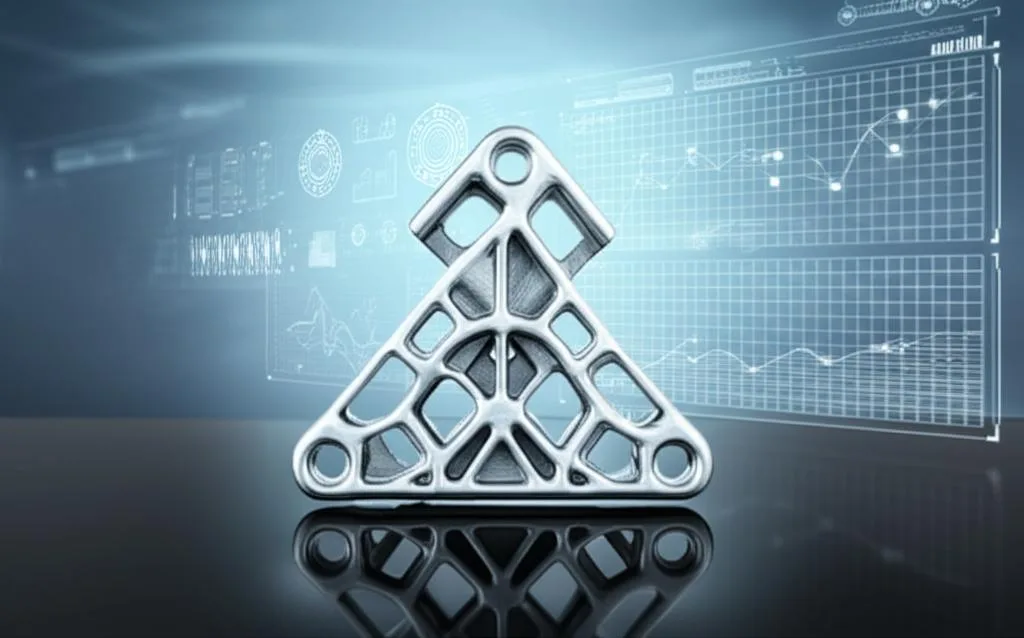
Porsche Classic explains the economics in its 2018 announcement. Its range then covered some 52,000 parts. When stock runs low it first reproduces parts with the original tools, and makes new tools for larger quantities. For parts needed only in very small numbers, new tooling would be inefficient. The 959 release lever was originally grey cast iron, and only 292 cars were built. Porsche says printed parts must meet at least the quality requirements of the original production period, and plastic parts must resist oils, fuels, acids and light where the application needs it. It also notes that 3D design data or a 3D scan of the component is enough to start production.
Mercedes-Benz Classic makes the same point: printing suits small quantities where the original tools no longer exist. Its press release adds a practical detail many restorers run into. For older parts with only two-dimensional drawings, a 3D digital dataset has to be created first. Daimler Group Research in Ulm developed the process. The BMW Group described the same reverse engineering route in 2015: for very old collector’s vehicles, a component may be 3D scanned to produce the data for otherwise unavailable spare parts.
Daimler Buses shows how OEMs handle intellectual property once parts become files. In its 2022 licence model, operators register their printers once, buy an encrypted licence for a part in the quantity they need, and the licence expires after printing. Omniplus said it had designated around 40,000 parts as suitable for 3D printing and was digitising more than 7,000 of them first, with more than 100 of over 1,500 printable components offered as licences from June 2022.
Where printed spare parts hit their limits
- Safety-critical parts need qualification. The OEM examples above pair each printed part with load tests, internal inspection and in-vehicle testing. A desktop user can’t reproduce a CT scan or a three-tonne pressure test, so the safe choice is to leave these parts alone.
- Regulated equipment. In the US, 49 U.S.C. 30112 says a person may not manufacture for sale, sell or import motor vehicle equipment covered by a federal safety standard unless it complies and is certified. Standards cover replacement equipment too: FMVSS 108 applies to lamps and reflective devices for replacement of like equipment, and FMVSS 106 to brake hoses and end fittings. Repair businesses are also barred from knowingly making inoperative any device installed to comply with a standard (49 U.S.C. 30122).
- Design data. Without drawings, you need an accurate scan or careful measurement. Mercedes-Benz notes that even with 2D drawings, a 3D model has to be built first.
- Intellectual property. Copying a shape can infringe design rights, and badges and logos are trademarks. In the UK, unregistered design right protects the shape and configuration of 3D objects for 10 years from the end of the year a design was first sold, or 15 years from creation, whichever ends first. Registering a design gives longer protection. Printing an old part for your own car is a different risk from selling copies, so take advice before you sell.
- Material equivalence. A printed nylon, ASA or PC part is not the original rubber, die-cast or glass-filled moulding. Check the loads, heat and fluids at the fitting location, not just the shape.
This is general information, not legal advice. Rules on vehicle modifications, inspections and roadworthiness vary by country and state, so check with your local authority or inspection body.
Which car parts hobbyists can print, and in what
| Part type | Print it? | Material starting point | Notes |
|---|---|---|---|
| Interior trim, bezels, knobs, clips, covers | Yes | ASA or PC blend; PETG for parts that stay cool | Dashboard areas get hot in the sun; avoid PLA |
| Exterior trim, badge surrounds, grilles (non-structural) | Yes, with care | ASA | UV and heat exposure; secure fixing so parts can’t detach at speed |
| Engine bay covers, brackets for wiring or hoses | Case by case | PC blend or nylon-based filament rated for the temperature | Check the real temperature at the location; stay clear of exhaust and turbo heat |
| Restoration jigs, fixtures, test-fit mock-ups | Yes | PLA or PETG | Good use of cheap material; a mock-up can guide a metal or moulded part |
| Brake, steering, suspension, wheel, seat belt, airbag-area parts | No | – | Life-safety loads; OEM parts are qualified with tests a home user can’t reproduce |
| Road lamps, lenses, reflectors, glazing | No | – | Covered by safety standards (e.g. FMVSS 108 in the US) |
| Fuel system and fluid-carrying parts | No | – | Leak and fire risk; fuel and fluid resistance of hobby filaments is rarely documented |
Heat resistance of common filaments
Heat deflection temperature (HDT, ISO 75) is a useful first filter. Values from Prusament technical data sheets:
- PLA: 55 °C at both 0.45 MPa and 1.80 MPa.
- ASA: 93 °C at 0.45 MPa, 86 °C at 1.80 MPa.
- PC Blend: 113 °C at 0.45 MPa, 93 °C at 1.80 MPa.
For context, in a 2018 study published in the journal Temperature and reported by Science News, cabin air in cars parked in the sun reached 46.7 °C after one hour on days above 38 °C, and surfaces such as dashboards and steering wheels got hotter still. That leaves little margin for PLA. Other brands’ values differ, so check the data sheet for the filament you actually use. Our polycarbonate print settings guide covers the enclosure and bed temperatures PC needs, and outdoor parts benefit from a UV-protective coating.
Layer bonding is the other limit. The same data sheets list interlayer adhesion of 17 MPa for PLA against a filament tensile yield strength of 57 MPa, 11 MPa against 40 MPa for ASA, and 21 MPa against 58 MPa for PC Blend. These are different tests, so don’t treat the ratio as exact, but they show why a clip or bracket should be oriented so the load doesn’t peel layers apart. See model orientation for strength and fixing weak layer adhesion.
How to reproduce an obsolete trim part
- Confirm it isn’t available from the maker, its classic parts program or a licensed reproduction supplier.
- Capture the geometry. Measure a sound original with calipers, or scan it, and note mating features: screw bosses, clip lugs, edge thickness.
- Model in CAD rather than printing a raw scan. Add a little clearance at mating surfaces and thicken thin clip arms where the original relied on a tougher moulding material.
- Print a fast draft in PLA to check fit in the car before using the final material.
- Print the final part in a material rated for the location, oriented so loads run along the layers.
- Finish and test. Sand, prime or coat if needed, fit the part, and check it after the first hot day and a few weeks of use.
- Keep the original or your scan data, and record that the part is a reproduction if the car’s originality matters for value or judging.
If you’re adapting rather than copying, for example a custom gauge pod, our look at functional customisation of car interiors and exteriors has more ideas.
Common mistakes with 3D printed car parts
- Printing interior parts in PLA. With an HDT of 55 °C in Prusament’s data, it can warp on a sunny dashboard.
- Assuming “OEMs print parts, so I can too”. OEM parts come from industrial laser powder-bed machines with CT scans, load tests and driving tests behind them.
- Copying a worn or broken original exactly. Rebuild worn edges and broken clips in CAD instead of scanning the damage into the new part.
- Loading clips across the layers. Layer bonds are the weak direction, so orient flexing clip arms so they bend within the layers, not across them.
- Selling reproductions without checking rights. Shapes, logos and badges can still be protected even on old cars.
Frequently asked questions
Is it legal to 3D print car parts?
It depends on the part, what you do with it and where you live; rules on modifications and roadworthiness vary. Selling parts carries clear restrictions: in the US, regulated safety equipment must comply with federal safety standards and be certified, and in many countries copied shapes and logos can be protected by design rights or trademarks. For anything beyond personal trim parts, check local rules or get advice.
Which car manufacturers 3D print classic spare parts?
Porsche Classic, Mercedes-Benz Classic and Nissan’s NISMO Heritage program (with SOLIZE and HP) have all announced 3D printed spare parts, including a Porsche 959 clutch release lever, a 300 SL Coupé mirror base and an R32 Skyline GT-R harness protector. BMW Group has described 3D scanning very old collector’s vehicle parts to reproduce unavailable components. Daimler Buses sells print licences for bus spare parts.
What is the best filament for car interior parts?
ASA and PC blends are good starting points because of their higher heat deflection temperatures; Prusament lists 93 °C (0.45 MPa) for ASA and 113 °C for PC Blend, against 55 °C for PLA. ASA also suits exterior trim. Check the data sheet for your specific filament, since values vary between brands.
Can I 3D print metal car parts at home?
Not in the way OEMs do. Porsche and Mercedes-Benz use laser powder-bed melting of steel and aluminium alloys, followed by testing. For metal parts, a desktop print is best used as a pattern or mock-up for casting or machining by a specialist, and safety-critical parts should come from qualified suppliers.
Sources
- Porsche Newsroom: Porsche Classic supplies classic parts from a 3D printer (2018)
- Mercedes-Benz Belgium press release: Future meets Classic, genuine replacement parts from the 3D printer (2018, Dutch with English captions)
- HP: SOLIZE and HP enable 3D production of replacement NISMO Heritage parts (2021)
- 49 U.S.C. 30112: Prohibitions on manufacturing, selling and importing noncomplying motor vehicles and equipment (LII)
- Prusament ASA technical data sheet (PDF)