Transforming your 3D printed objects from raw, layered parts into smooth, professional-looking pieces is a common goal for enthusiasts. For ABS (Acrylonitrile Butadiene Styrene) prints, one of the most effective methods for achieving a flawless surface is through acetone vapor smoothing. This post-processing technique gently dissolves the outer layer of the print, resulting in a remarkably even and glossy finish. While the results can be stunning, it’s crucial to approach this method with a strong emphasis on safety.
Why Acetone Smooth ABS Prints?
ABS is a durable and widely used filament, and 3D printing, smoothing with acetone significantly enhances its aesthetic appeal. The layered appearance inherent to FDM prints can be completely eliminated, making the part look more like an injection-molded component. Beyond aesthetics, vapor smoothing can also slightly improve the strength of the print by fusing layers, reducing potential points of failure. This technique is a cornerstone of advanced post-processing for ABS.
Essential Safety Precautions
Acetone is a highly flammable chemical with strong fumes. Proper ventilation and safety gear are non-negotiable. Always work in a well-ventilated area, preferably outdoors or near an open window with a fan. Wear chemical-resistant gloves and eye protection. Keep acetone away from heat sources, open flames, and sparks. Never inhale the vapors directly. Ensure children and pets are nowhere near your workspace.
What You’ll Need:
- Pure Acetone
- A sealed container (glass jar or metal can). Must not be made of ABS plastic!
- A metal or glass platform for your print
- Your ABS 3D print
- Paper towels or cotton balls
- Tweezers or tongs
Step-by-Step Guide to Acetone Vapor Smoothing
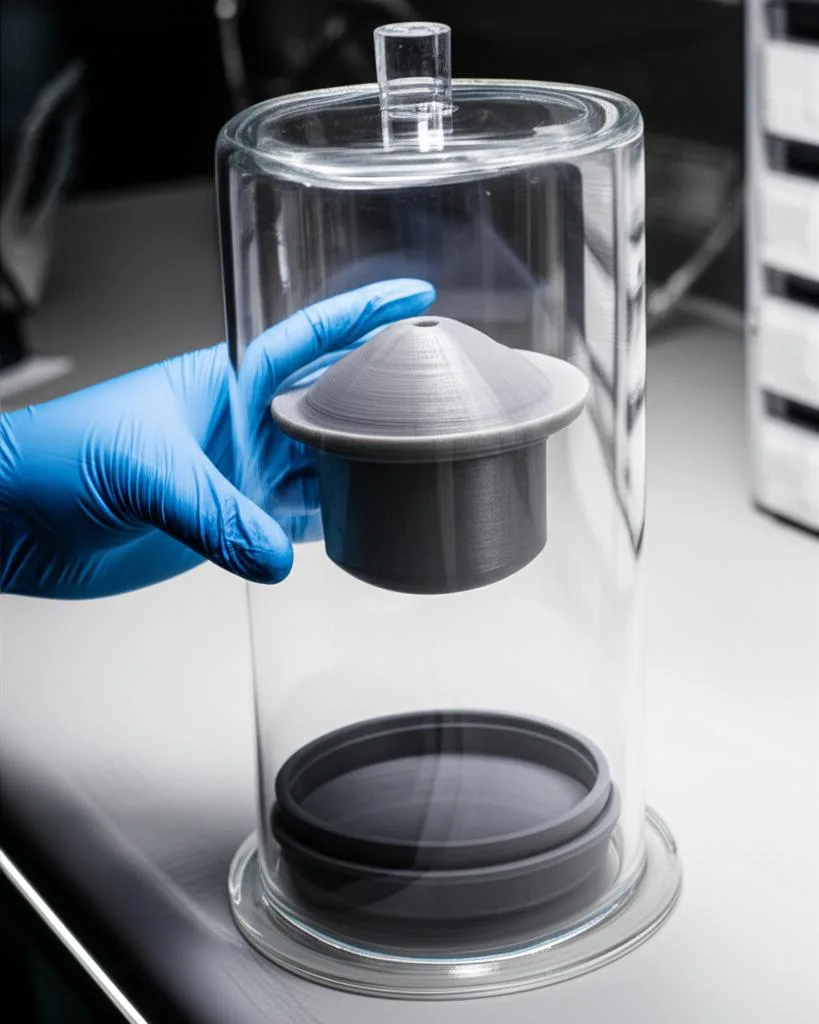
- Prepare the Container: Line the bottom of your sealed container with acetone-saturated paper towels or cotton balls. Ensure the print will not touch the liquid acetone; the goal is vapor, not submersion.
- Prepare Your Print: Ensure your ABS print is clean, dry, and free of support structures.
- Set Up the Platform: Place your metal or glass platform inside the container, elevated above the acetone-soaked material.
- Place the Print: Carefully place your ABS print on the elevated platform.
- Seal and Monitor: Close the container tightly. The acetone vapors will begin to dissolve the print’s surface. Periodically check on the print (e.g., every 10-15 minutes initially) without opening the container fully. You’ll see layers melt and the surface become glossy. Process time varies from minutes to hours.
- Remove and Dry: Once desired smoothness is achieved, carefully open the container (in a well-ventilated area) and use tongs to remove the print. It will be soft and delicate.
- Cure: Place the print in a well-ventilated area to dry and harden. This can take several hours to a full day. Avoid touching it during curing to prevent fingerprints.
Tips for Best Results
- Less is More: Use minimal acetone to avoid over-smoothing or melting.
- Patience is Key: Don’t rush. Over-exposure ruins prints.
- Ventilation: Always ensure adequate ventilation throughout the entire process, including drying.
3D print smoothing with acetone is an advanced post-processing technique yielding impressive results for ABS prints. By adhering strictly to safety guidelines and understanding the process, you can achieve professional-quality finishes that elevate your 3D printed creations.
Frequently asked questions
Can I use acetone vapor smoothing on PLA or PETG prints?
No. Acetone vapor smoothing works only on ABS and a few other styrene-based filaments. PLA and PETG do not dissolve in acetone; exposing them to acetone vapor will have no smoothing effect and may damage the surface or cause discoloration.
How do I fix a print that got over-smoothed or melted in the vapor chamber?
Once a print has been over-exposed, the damage is permanent—the softened geometry cannot be restored. To avoid this, always start with short exposure intervals (10–15 minutes) and check frequently. If you see fine details disappearing or the print sagging, remove it immediately and let it cure completely before handling.
Is it safe to reuse the acetone-soaked paper towels from a previous session?
No. Reusing acetone-soaked paper towels introduces contaminants from earlier prints and creates inconsistent vapor concentrations. Always use fresh paper towels or cotton balls for each session to maintain predictable results and avoid transferring residue onto your next print.