The landscape of material science research has been profoundly transformed by the advent of advanced 3D printing techniques. Once confined to theoretical models and laborious traditional fabrication methods, the ability to rapidly prototype complex structures with novel materials has unlocked unprecedented avenues for scientific exploration. This synergy, often referred to as material science 3D printing, is not merely about creating objects; it’s about accelerating discovery, enabling intricate design iterations, and pushing the boundaries of what materials can achieve.
The transformative role of 3D printing in material science
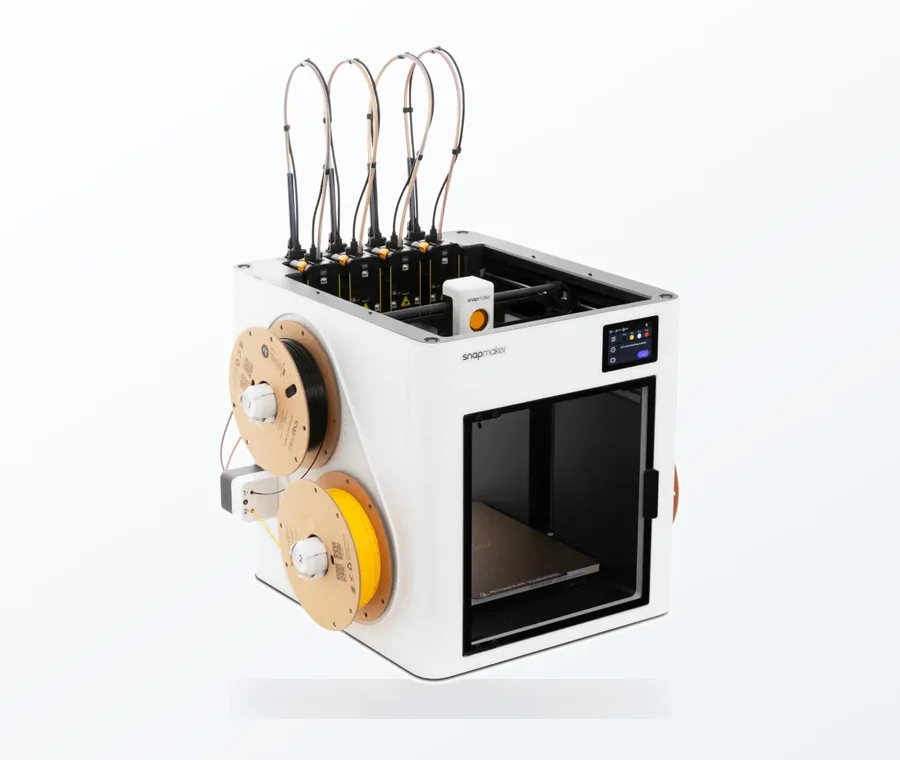
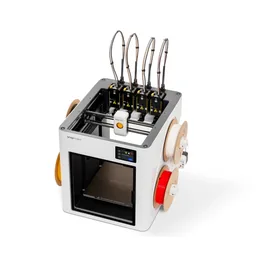
The consumer toolchanger 3D printer: the SnapSwap 4-toolhead system swaps heads in 5 seconds for true multi-color and multi-material printing, with smart calibration and auto filament loading.
- 4 toolheads · 5 s swap
- Up to 500 mm/s · 20,000 mm/s²
- 270 mm cube build volume
- Multi-color & multi-material
At its core, 3D printing offers material scientists an unparalleled tool for experimentation. It allows for the precise deposition of materials layer by layer, enabling the creation of custom geometries, multi-material composites, and structures with tailored properties that are impossible or highly impractical to achieve with conventional manufacturing. This capability is critical for rapid prototyping, significantly shortening the design-test-refine cycle inherent in material development.
Key advantages for research applications:
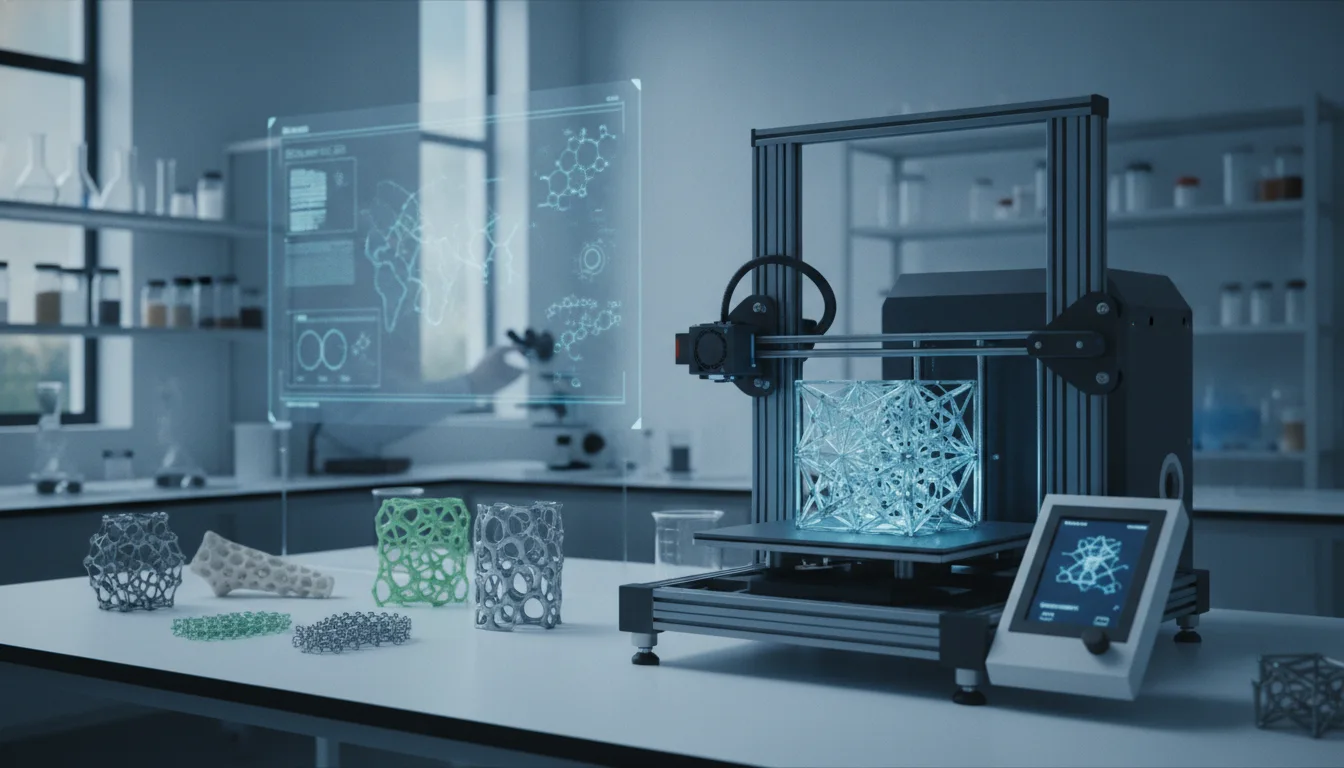
- Geometric complexity: Fabrication of intricate lattice structures, porous materials, and custom architectures.
- Material versatility: Exploration of novel material compositions, including ceramics, metals, polymers, and composites.
- Speed and iteration: Rapid production of multiple design variations for comprehensive parametric studies.
- Reduced waste: Additive processes inherently minimize material waste compared to subtractive methods.
- Customization: Tailoring samples for specific testing conditions or integrating sensors directly into structures.
Comparing advanced 3D printing techniques for material science
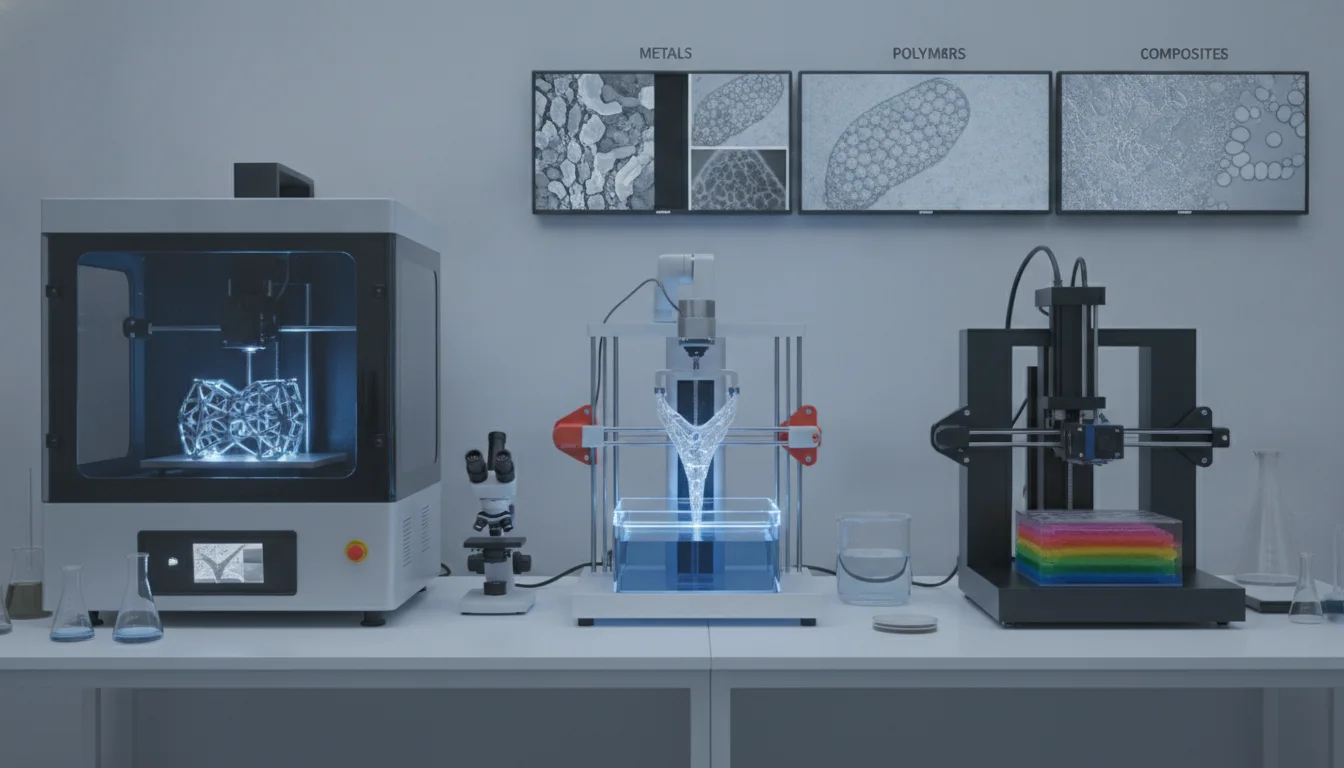
The choice of 3D printing technology for material science research is a pivotal decision, influenced by factors such as desired material properties, geometric complexity, resolution requirements, and, crucially, cost structures. While each method offers distinct advantages, they also come with specific limitations and financial considerations.
Fused deposition modeling (FDM) / Fused filament fabrication (FFF)
FDM, or FFF, is perhaps the most widely recognized and accessible 3D printing technology. It involves extruding thermoplastic filaments through a heated nozzle, building objects layer by layer.
- Features: Relatively large build volumes, good for functional prototypes, and a broad range of thermoplastic materials (e.g., PLA, ABS, PETG, Nylon, PEEK, PEI). The process is generally straightforward.
- Cost structure: Typically the lowest entry point for hardware, with printers ranging from a few hundred to tens of thousands of dollars. Material costs are also relatively low per kilogram. Operational costs, including power consumption and maintenance, are generally modest. However, achieving high resolution and isotropic mechanical properties can be challenging, potentially requiring more extensive post-processing or design compromises for certain research applications.
Stereolithography (SLA) and digital light processing (DLP)
SLA and DLP technologies utilize a light source (laser for SLA, projector for DLP) to cure liquid photopolymer resins layer by layer. They are renowned for their precision and surface finish.
- Features: Exceptional resolution and accuracy, smooth surface finishes, and the ability to create intricate details. Materials are typically thermosetting resins, often engineered for specific properties like flexibility, stiffness, or heat resistance.
- Cost structure: Printer costs are generally higher than FDM, ranging from a few thousand to hundreds of thousands of dollars for industrial systems. Photopolymer resins are significantly more expensive per liter than FDM filaments. Post-processing often involves washing and UV curing, adding to labor and equipment costs. While offering superior detail, the material selection is more limited compared to FDM or powder-bed fusion, and parts can be brittle depending on the resin.
Selective laser sintering (SLS) and selective laser melting (SLM)
These powder-bed fusion techniques use a high-power laser to selectively fuse layers of powdered material. SLS typically works with polymers (e.g., Nylon, PEEK), while SLM is used for metals (e.g., titanium, aluminum, stainless steel).
- Features: SLS produces strong, functional parts with good mechanical properties and does not require support structures (the unfused powder acts as support). SLM creates fully dense metal parts with properties comparable to traditionally manufactured components, enabling complex metal geometries. Both offer excellent design freedom.
- Cost structure: These technologies represent a significant investment, with printer costs often starting in the hundreds of thousands and reaching millions of dollars. Material powders are expensive, particularly for metals. Operational costs are high due to power requirements, inert gas environments (for SLM), and skilled labor for operation and extensive post-processing (e.g., heat treatment, surface finishing). While capable of producing highly robust components, the financial outlay and operational complexity are substantial barriers for many smaller research groups.
Binder jetting
Binder jetting involves depositing a liquid binder onto a thin layer of powdered material (metals, ceramics, composites) to form a part layer by layer. The ‘green’ part then typically undergoes post-processing like sintering or infiltration to achieve final density and strength.
- Features: Capable of printing large parts and complex geometries with a wide range of materials. It doesn’t use heat during the printing process, reducing residual stresses. It’s particularly attractive for ceramics and metallic components where sintering is a standard part of the manufacturing process.
- Cost structure: Printer costs can be lower than SLM systems, typically in the hundreds of thousands. Material powders are often less expensive than those for SLM. However, the multi-step process involving printing, de-powdering, and extensive post-processing (sintering, infiltration) adds significant costs in terms of equipment, energy, and labor. The final part’s density and mechanical properties are heavily dependent on the post-processing steps.
Direct ink writing (DIW) and extrusion-based methods
These techniques involve extruding highly viscous ‘inks’ or pastes through a nozzle onto a substrate. The inks can be loaded with ceramics, polymers, metals, or biological materials, and are often designed to solidify rapidly after deposition.
- Features: Exceptional material versatility, as custom inks can be formulated. It’s particularly strong in multi-material printing and creating gradient structures. Often used for soft robotics, tissue engineering, and custom electronics.
- Cost structure: Lab-scale DIW systems can be relatively affordable, starting from tens of thousands of dollars, making them accessible for academic research. Material costs are highly variable, depending on the custom ink formulations. Operational costs are moderate, but the development of suitable inks can be a time-consuming and expertise-intensive process. The resolution can be lower than SLA/DLP, and mechanical properties are highly dependent on the ink composition and post-curing processes.
Applications in scientific exploration and advanced manufacturing
The impact of material science 3D printing extends across numerous disciplines, driving scientific exploration and enabling novel applications in advanced manufacturing:
- Functional materials: Developing metamaterials with unusual optical, acoustic, or mechanical properties, or creating custom catalysts with optimized surface areas.
- Biomaterials and medical devices: Fabricating patient-specific implants, tissue scaffolds for regenerative medicine, and drug delivery systems with controlled release profiles.
- Energy storage: Designing and prototyping advanced battery electrodes or fuel cell components with complex internal architectures for improved efficiency.
- Sensors and electronics: Printing custom sensors for harsh environments or flexible electronic components.
- Aerospace and automotive: Producing lightweight, high-strength components with optimized geometries for improved performance and fuel efficiency.
For material scientists, selecting the appropriate 3D printing technology involves a careful weighing of various factors. It’s not simply about finding the ‘cheapest’ or ‘most advanced’ option, but rather the one that best aligns with specific research objectives and available resources.
Key decision-making factors:
- Material requirements: What type of material (polymer, metal, ceramic, composite, biological) is central to the research?
- Resolution and accuracy: What level of detail and dimensional precision is necessary for the experimental design?
- Mechanical properties: Are the printed parts intended for structural testing, or are other properties (e.g., electrical, optical) more critical?
- Build volume: What are the size constraints for the prototypes or samples?
- Throughput and speed: How quickly do iterations need to be produced?
- Post-processing capabilities: What additional steps (e.g., curing, sintering, surface finishing) are required, and are the necessary resources available?
- Budget: What is the available funding for initial equipment purchase, ongoing material supply, and operational expenses?
- Expertise: Does the research team possess or can acquire the necessary skills for operating and maintaining the chosen system?
Understanding these trade-offs is paramount. For instance, while an FDM printer offers a low barrier to entry for thermoplastic research, it may not meet the resolution demands for micro-architectural studies. Conversely, an SLM system can produce high-performance metal parts but comes with a prohibitive cost for many academic labs, necessitating access through shared facilities or grant funding.
The future of material science 3D printing
The consumer toolchanger 3D printer: the SnapSwap 4-toolhead system swaps heads in 5 seconds for true multi-color and multi-material printing, with smart calibration and auto filament loading.
The trajectory of material science 3D printing points towards even greater sophistication and accessibility. Innovations in multi-material printing, in situ process monitoring, and artificial intelligence-driven design optimization are continuously expanding the capabilities of these technologies. As material libraries grow and new printing paradigms emerge, the pace of scientific exploration will only accelerate.
Researchers are increasingly exploring hybrid systems that combine multiple printing techniques or integrate additive manufacturing with other processes like subtractive machining or sensor integration. This holistic approach promises to unlock even more complex functionalities and pave the way for true ‘materials by design,’ where properties are precisely engineered from the atomic to the macroscopic scale.
In conclusion, advanced 3D printing techniques are indispensable tools for modern material science research. By objectively evaluating the features and cost structures of various solutions, researchers can strategically leverage these technologies to drive rapid prototyping, foster advanced manufacturing capabilities, and ultimately, push the boundaries of scientific discovery. The decision hinges on a clear understanding of specific research needs, material compatibility, desired part characteristics, and the associated financial and operational implications.
Frequently asked questions
Can I use a standard desktop FDM printer for material science research, or do I need an industrial system?
Yes, a standard desktop FDM printer can be suitable for preliminary research, especially for thermoplastic iteration and functional prototyping on a budget. However, you must accept its limitations in resolution and isotropic mechanical properties; for studies requiring high precision or consistent material performance across all axes, an industrial system or a different technology like SLA or SLS is likely necessary.
How do I choose between SLA and SLS for printing polymer prototypes?
Choose SLA if your priority is exceptional surface finish, high resolution, and fine detail for non-structural or brittle parts. Choose SLS if you need strong, functional parts with good mechanical properties and do not want to design support structures, but be prepared for a significantly higher equipment and material cost.
What is the most cost-effective 3D printing technique for a small academic lab starting material science research?
FDM/FFF offers the lowest entry point for hardware and material costs, making it the most accessible for initial thermoplastic research. If your work requires custom ink formulations (e.g., for ceramics or composites), a lab-scale Direct Ink Writing (DIW) system starting in the tens of thousands of dollars may be a more targeted and still relatively affordable option compared to powder-bed fusion systems.