In the relentless pursuit of efficiency and performance, industrial design faces a constant challenge: how to create components that are simultaneously lighter, stronger, and more cost-effective. Traditional manufacturing methods often impose design constraints that limit the extent of optimization possible. However, the advent of two transformative technologies – topology optimization and additive manufacturing – has unleashed an unprecedented synergy, fundamentally reshaping how industrial parts are conceived and produced. This powerful combination is not just an incremental improvement; it represents a paradigm shift towards truly performance-driven design.
What is topology optimization?
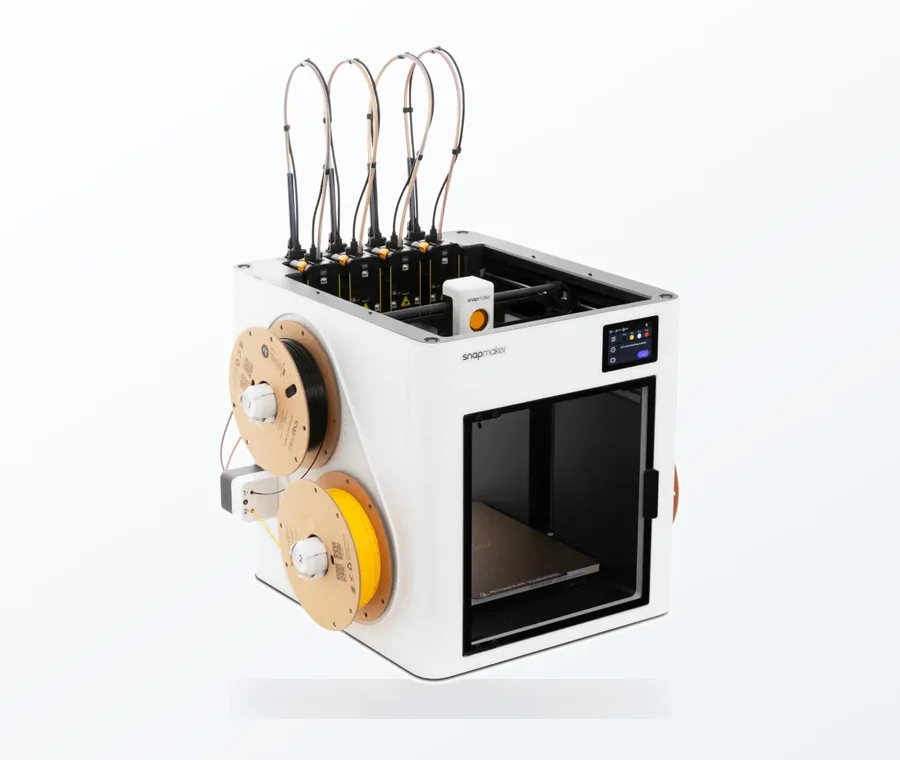
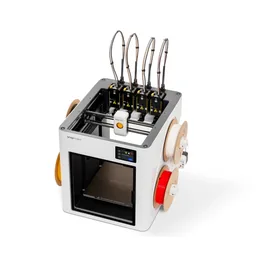
The consumer toolchanger 3D printer: the SnapSwap 4-toolhead system swaps heads in 5 seconds for true multi-color and multi-material printing, with smart calibration and auto filament loading.
- 4 toolheads · 5 s swap
- Up to 500 mm/s · 20,000 mm/s²
- 270 mm cube build volume
- Multi-color & multi-material
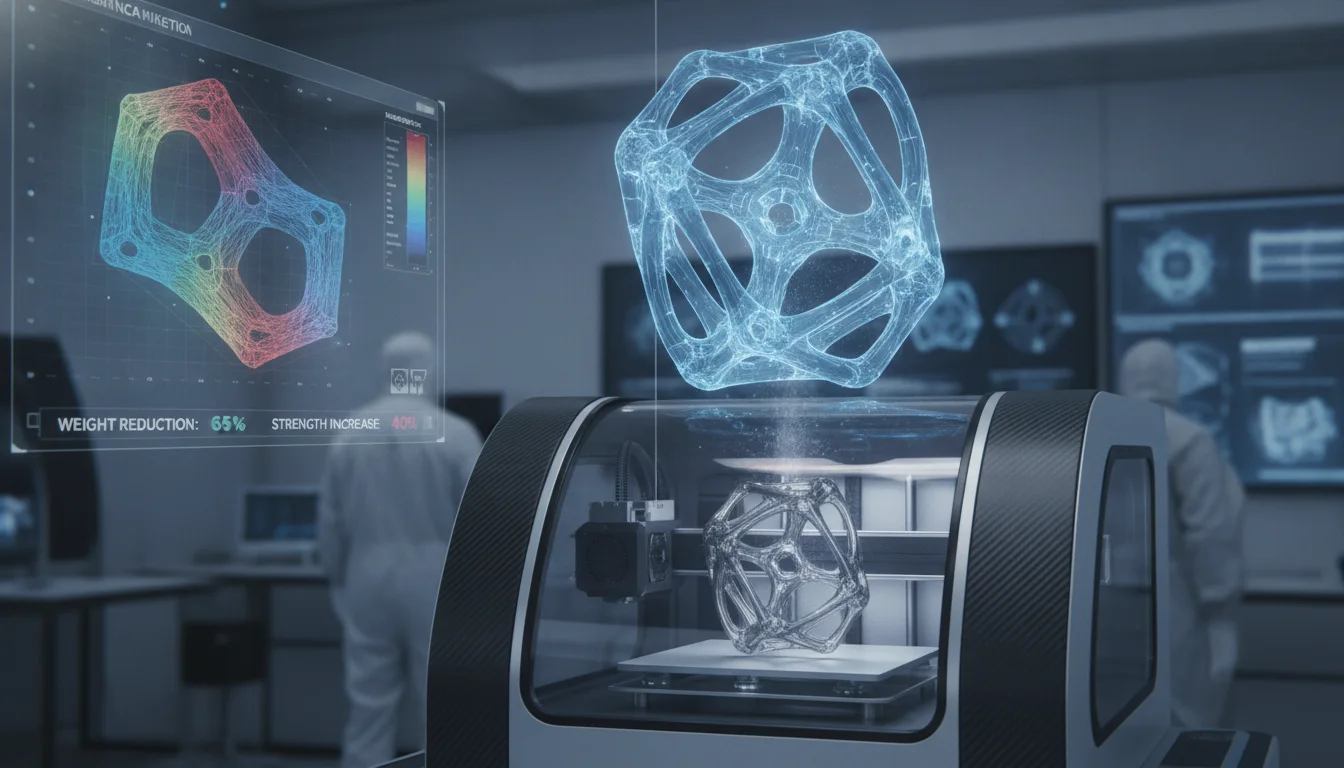
Topology optimization (TO) is a computational design method that determines the optimal material distribution within a defined design space, given a set of loads, boundary conditions, and manufacturing constraints. Imagine starting with a solid block of material and asking a computer to remove as much material as possible without compromising the part’s structural integrity or performance under specified stresses. That, in essence, is what TO accomplishes.
The process typically involves:
- Defining the design space: The maximum volume the part can occupy.
- Applying loads and boundary conditions: Simulating real-world forces and supports.
- Setting objectives and constraints: For example, minimizing mass while maintaining a certain stiffness, or maximizing stiffness within a mass limit.
- Iterative material removal: Using algorithms, the software iteratively removes material from areas that contribute least to the part’s performance, resulting in highly organic, often lattice-like structures.
The goal is to achieve maximum structural efficiency, ensuring that material is only present where it is absolutely needed to bear loads, leading to significant weight reductions and often improved performance characteristics.
The transformative power of additive manufacturing
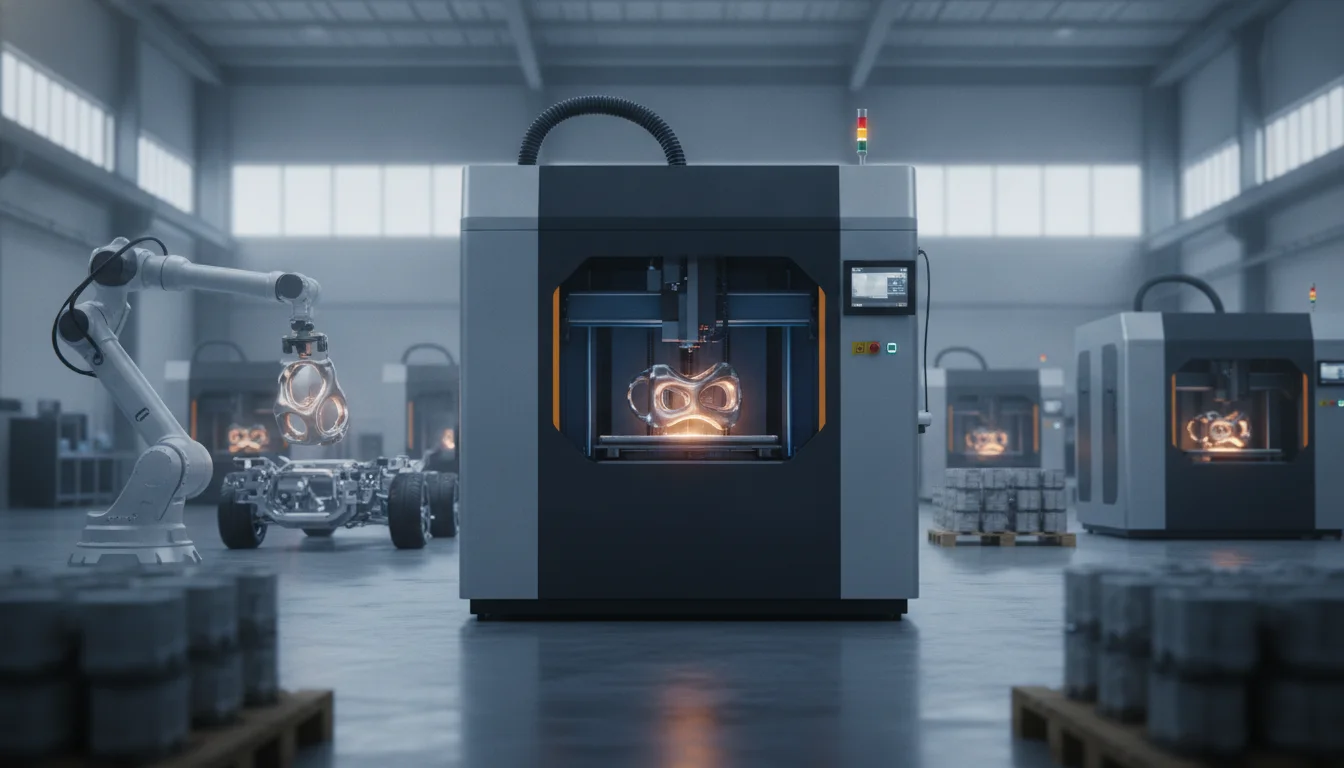
Additive manufacturing (AM), commonly known as 3D printing, is the process of building a three-dimensional object layer by layer from a digital design. Unlike subtractive methods (like machining) that remove material from a larger block, or formative methods (like casting) that shape material, AM adds material precisely where it’s needed. This fundamental difference is key to its revolutionary potential.
AM’s most compelling advantage lies in its unparalleled geometric freedom. It can produce highly complex internal structures, intricate lattice geometries, and organic shapes that are impossible or prohibitively expensive to create with traditional manufacturing techniques. This capability is precisely what makes it the perfect partner for topology optimization. Without 3D printing, many of the highly optimized, intricate designs generated by TO software would remain theoretical concepts, locked away by the limitations of conventional production.
The synergy: Topology optimization 3D printing
When topology optimization is combined with 3D printing, the result is more than the sum of its parts. This powerful synergy, often referred to as generative design additive manufacturing, unlocks new frontiers in engineering and product development. Here’s why this combination is so impactful:
- Unlocking true lightweighting industrial parts: TO identifies the most efficient material distribution, while AM provides the means to fabricate these complex, lightweight designs. This leads to significant mass reduction, crucial for industries where every gram counts, such as aerospace and automotive.
- Enhanced performance and strong 3D printed components: By placing material optimally, TO-generated parts often exhibit superior stiffness-to-weight ratios, better vibration damping, and improved thermal performance compared to their conventionally designed counterparts. The resulting components are not just lighter, but inherently stronger for their given mass.
- Material efficiency: The ‘only material where it’s needed’ philosophy of TO, combined with AM’s ability to build parts layer-by-layer, drastically reduces material waste during production. This is particularly valuable when working with expensive or rare materials.
- Part consolidation: Complex assemblies consisting of multiple components can often be redesigned using TO and AM into a single, integrated part. This reduces assembly time, simplifies supply chains, and minimizes potential points of failure.
- Customization and complexity: The combination allows for the creation of highly customized components tailored to specific performance requirements or unique geometries, pushing the boundaries of what’s possible in design.
This approach embodies the principles of design for additive manufacturing (DfAM), where the design process explicitly leverages the unique capabilities of 3D printing to create parts that are optimized for both performance and manufacturability.
Applications across industries
The impact of topology optimization 3D printing is being felt across a multitude of industrial sectors:
- Aerospace: From lightweight aircraft brackets and airframe components to optimized engine parts, the weight savings translate directly into fuel efficiency and increased payload capacity.
- Automotive: Chassis components, suspension parts, engine manifolds, and even entire vehicle structures are being redesigned for reduced weight, leading to better fuel economy and electric vehicle range.
- Medical: Custom orthopedic implants, prosthetics, and surgical instruments benefit from patient-specific designs, improved biomechanical properties, and biocompatible materials.
- Industrial Machinery: Robotics arms, tooling, jigs, and fixtures can be made lighter and stiffer, improving operational speed, precision, and energy efficiency.
- Energy: Components for turbines, heat exchangers, and other power generation systems can be optimized for better fluid dynamics and thermal performance.
Cost structures and considerations
The consumer toolchanger 3D printer: the SnapSwap 4-toolhead system swaps heads in 5 seconds for true multi-color and multi-material printing, with smart calibration and auto filament loading.
Understanding the economic implications of adopting topology optimization 3D printing requires a holistic view, extending beyond just the unit manufacturing cost. It involves evaluating upfront investments, operational expenses, and long-term value generation.
Initial investment and design costs
- Software and computational resources: Implementing TO requires robust simulation software licenses and potentially high-performance computing infrastructure. These upfront costs can be substantial.
- Additive manufacturing equipment: The capital expenditure for industrial-grade 3D printers varies widely based on technology (e.g., SLM, FDM, SLA), material capabilities, and build volume.
- Training and expertise: Developing in-house expertise in both TO and DfAM is crucial. This involves training engineers in advanced simulation, material science, and additive manufacturing processes.
- Design and validation cycles: While TO automates much of the design, the iterative nature of optimization, post-processing of CAD models, and rigorous validation through simulation and physical testing can incur significant engineering hours.
Manufacturing costs
- Material costs: AM materials, particularly advanced polymers and metal powders, are often significantly more expensive per kilogram than traditional bulk materials used in casting or machining.
- Machine time: The layer-by-layer nature of 3D printing can result in longer build times compared to mass production methods, impacting machine utilization and labor costs.
- Post-processing: Many 3D printed parts require extensive post-processing, including support removal, surface finishing, heat treatment, and quality inspection, which adds to the overall cost and lead time.
Long-term value and lifecycle benefits
While the upfront and per-part manufacturing costs for low-volume, complex components might appear higher than traditional methods, the long-term benefits often outweigh these initial expenditures:
- Operational savings: For aerospace and automotive, lightweighting industrial parts directly translates to reduced fuel consumption or extended range, leading to substantial operational savings over the product’s lifespan.
- Performance advantages: Superior strength-to-weight ratios, improved thermal management, or enhanced fluid dynamics can lead to better product performance, competitive advantage, and new market opportunities.
- Reduced assembly costs: Part consolidation through generative design additive manufacturing eliminates the need for multiple components, fasteners, and assembly steps, saving labor and inventory costs.
- Supply chain optimization: On-demand production of parts reduces inventory holding costs, minimizes obsolescence, and can simplify global supply chains.
- Faster time-to-market: Rapid prototyping and iteration cycles enabled by AM can significantly shorten product development timelines.
Ultimately, the economic viability of adopting topology optimization 3D printing is highly dependent on the specific application, production volume, material requirements, and the value placed on enhanced performance and efficiency. For high-value, low-volume, or performance-critical components, the investment often yields significant returns through lifecycle cost reductions and competitive differentiation.
Challenges and considerations
Despite its immense potential, the widespread adoption of topology optimization 3D printing is not without its challenges:
- Computational complexity: Generating and validating complex TO designs requires significant computational power and specialized software expertise.
- Material and process limitations: Not all materials are suitable for AM, and the mechanical properties of 3D printed parts can vary depending on the printing process, orientation, and post-processing.
- Post-processing demands: The intricate geometries often produced by TO can make support removal and surface finishing challenging and time-consuming.
- Validation and certification: Especially in highly regulated industries like aerospace and medical, rigorous testing and certification processes are required to ensure the reliability and safety of strong 3D printed components.
- Design for manufacturability (DfAM) expertise: While TO automates design, human expertise is still vital to guide the optimization process, apply practical manufacturing constraints, and ensure the resulting design is truly manufacturable and performs as intended.
The future outlook
The trajectory for topology optimization 3D printing is one of rapid evolution and increasing integration. As software becomes more intuitive and powerful, AM technologies mature, and new materials emerge, the barriers to entry will continue to lower. We can anticipate even greater integration with artificial intelligence and machine learning, leading to more sophisticated generative design tools that can autonomously explore vast design spaces and predict performance with greater accuracy. The shift towards performance-driven design, enabled by this synergy, is set to redefine manufacturing across industries, fostering innovation and sustainable engineering practices.
Conclusion
The combination of topology optimization and additive manufacturing represents a groundbreaking advancement in industrial design. By enabling engineers to create lighter, stronger industrial parts with unprecedented efficiency and geometric freedom, this synergy is driving innovation across diverse sectors. While initial investments and specific manufacturing costs require careful consideration, the long-term benefits in terms of operational efficiency, enhanced performance, and competitive advantage are undeniable. As these technologies continue to mature and integrate, they will undoubtedly pave the way for a new era of engineering, where design is limited only by imagination, not by the constraints of traditional manufacturing.
Frequently asked questions
Do topology-optimized 3D printed parts always need support structures?
Not automatically. The organic shapes generated by topology optimization often include overhanging angles that require supports, but you can reduce or eliminate supports by adding manufacturing constraints (like a minimum overhang angle or a preferred build direction) into the optimization setup. Without these constraints, expect significant support material and post-processing time.
Are topology-optimized parts more expensive than conventionally machined parts?
For a single part, often yes, because metal powders and industrial printer time are costly, and post-processing adds expense. However, the lifecycle savings—fuel reduction in aerospace, extended electric vehicle range, and part consolidation that eliminates assembly labor—can make the total cost of ownership lower for performance-critical, low-volume applications.
Can I run topology optimization on any standard CAD workstation?
Probably not for complex industrial parts. Topology optimization requires iterative finite element analysis, which demands significant computational resources—often a high-end workstation with a multi-core processor and plenty of RAM, or cloud-based simulation services. Simple optimizations on small parts may run on a consumer PC, but large aerospace or automotive components typically need specialized hardware.