
Recycling PLA or PETG at home means grinding failed prints and supports into small flakes (regrind), drying them, and pushing them through a desktop filament extruder that melts the plastic and draws it into a new strand, which is then wound onto a spool. It works, but the hard part is getting a consistent diameter. 3devo, which makes desktop filament makers, says you should reach about ±50 microns on 1.75 mm filament with its default PLA presets, and it recommends particles no larger than 4 mm and pre-dried material. Prusament PETG, a commercial filament, is specified at ±0.02 mm.
Whether it pays off depends on how much waste you produce, what the equipment costs you, and how much of your time and failed spools you’re willing to write off. There’s no honest single break-even figure, so this guide gives you the factors instead. For most hobbyists, printing less waste and buying commercially recycled filament are simpler. Home recycling is a good fit if you have a steady stream of clean, single-material scrap and enjoy the process as a project in its own right.
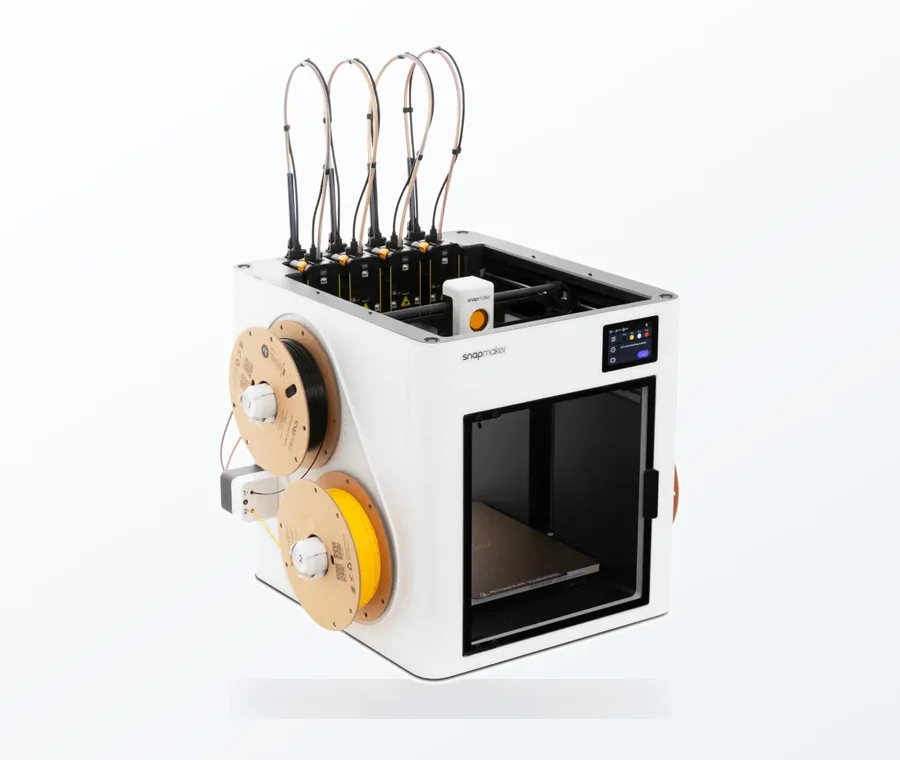
The consumer toolchanger 3D printer: the SnapSwap 4-toolhead system swaps heads in 5 seconds for true multi-color and multi-material printing, with smart calibration and auto filament loading.
- 4 toolheads · 5 s swap
- Up to 500 mm/s · 20,000 mm/s²
- 270 mm cube build volume
- Multi-color & multi-material
Is home filament recycling for you? A quick check
- Yes, probably, if you generate a lot of scrap of one material (one printer farm, one PLA brand, a school lab), have space for a shredder and an extruder, and can accept batches that fail.
- Maybe, if your waste is mixed colors of one material and you’re happy with muddy colors and prints where looks don’t matter.
- Probably not, if your scrap is a mix of PLA, PETG and unknown filaments, you print a few spools a year, or you mainly want to save money.
From failed prints to filament: the process step by step
- Collect and sort by material. Keep PLA and PETG in separate, labelled bins from the start. Brand and color sorting are optional, but they make the result more predictable.
- Clean the scrap. Remove labels, glue-stick residue, metal inserts, magnets and anything that isn’t the plastic you’re recycling. 3devo lists material contamination and dirt in the extruder among the causes of inconsistent filament diameter.
- Shred it small. 3devo recommends not feeding particles larger than 4 mm, because oversized pieces don’t transport steadily along the screw. In one published study, researchers passed PLA prints through a mini shredder 4 to 6 times and sieved the result through a 3 mm mesh.
- Dry the regrind. 3devo says many polymers need pre-drying before extrusion, both for appearance and for performance. Use the drying temperature on the data sheet of the original filament, or on the extruder maker’s material guide.
- Extrude with the machine’s own settings. Heater temperatures, screw speed and fan speed depend on the extruder, so start from its maker’s preset for that material. Stir the regrind in the hopper so it doesn’t bridge and stop feeding.
- Measure the diameter along the spool. Check it with calipers at several points, or use the extruder’s data log if it has a sensor.
- Wind and store dry. Spool with even tension, then store the filament sealed with desiccant, as you would a new spool.
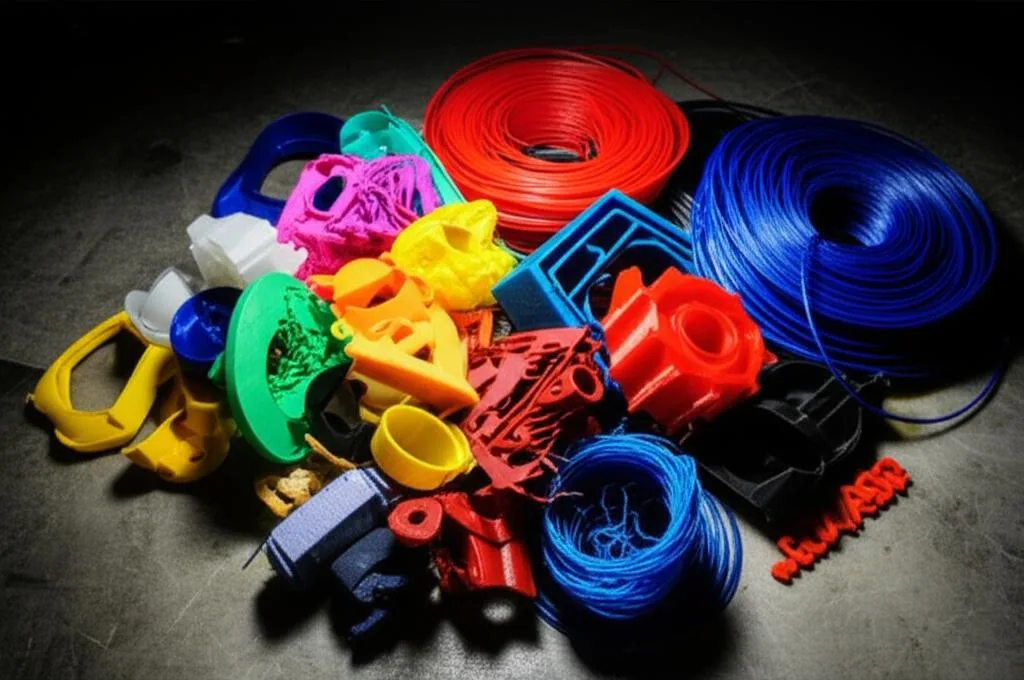
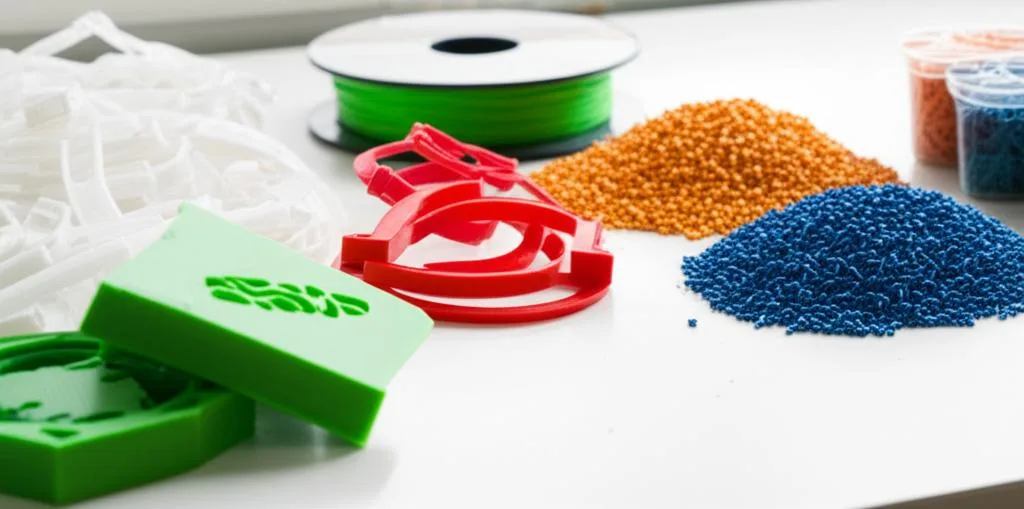
A pile like this is the typical starting point, and the reason sorting comes first. Mixed colors can be extruded together if they’re all the same material, but you’ll get a muddy color. Mixed materials are a different problem, covered below.
Equipment for home PLA and PETG recycling
| Stage | Equipment | What matters most |
|---|---|---|
| Size reduction | Cutters for small batches; a plastic shredder or granulator for regular use | Output of 4 mm or less, consistent size, enclosed blades and an emergency stop |
| Sieving | A mesh sieve (a 3 mm mesh was used in the study cited below) | Removing oversized pieces that cause feeding surges |
| Drying | Filament dryer or drying oven with steady temperature control | Reaching the temperature your material’s data sheet asks for, and holding it |
| Extrusion | Desktop single-screw filament extruder | Stable heater control, a diameter sensor with feedback to the puller, material presets |
| Cooling and winding | Fan cooling, puller and automatic winder | Even cooling so the strand stays round; even winding tension |
| Quality control | Digital calipers or an inline diameter sensor | Readings along the whole spool, not just the start |
Open-source projects such as Precious Plastic publish plans for shredders and extruders if you’d rather build than buy. Either way, the extruder decides how good your filament will be. A machine without diameter feedback relies on you to watch it and adjust by hand.
Filament diameter: the part that decides whether it prints
Your slicer assumes a fixed diameter. A thicker section pushes out more plastic than planned, and a thinner one less, so diameter wander shows up as over- and under-extrusion along the same print. A section that is far too thick can jam the extruder.
| Filament | Stated diameter tolerance | Source |
|---|---|---|
| Prusament PETG (virgin) | 1.75 ± 0.02 mm | Prusament TDS |
| Prusament PETG Recycled | 1.75 ± 0.05 mm | Prusament TDS |
| 3devo Filament Maker, default PLA presets, no pulling issues | About ± 50 microns (± 0.05 mm) at 1.75 mm | 3devo support |
The 3devo figure assumes clean, uniform feedstock and a machine working as intended. With shredded failed prints, results depend on your regrind. In a 2024 study that made filament from PLA shreds and virgin pellets on a 3devo desktop extruder, two of the eleven batches caused print failures because of inconsistent diameter, and the authors traced early problems to uneven shred size, which they fixed by sieving. 3devo’s own troubleshooting list adds temperature settings, screw speed, too much cooling, winder tension, bubbles and feeding problems as causes of thickness deviation.
PLA vs PETG regrind: what changes
- PLA is the usual starting material. Extruder makers publish PLA presets, and it’s the material behind most published home-recycling experiments, including the study above. Dry the regrind first; 3devo found that dried PLA regrind gave a more consistent diameter than undried.
- PETG takes on moisture and must be dried too, but don’t borrow drying settings meant for PET bottles. 3devo’s PET bottle walkthrough dries flake at 140–160 °C for 4 hours, while Prusament lists a heat deflection temperature of 68 °C for its PETG, so PET settings would soften PETG regrind into lumps. Use the PETG data sheet or the extruder maker’s PETG guide. The same 3devo walkthrough notes that PET and PETG must not be left sitting in the machine after a run and are purged out with a cleaning compound.
- Never mix the two. 3devo warns that incompatible materials can react in the extruder, producing gas (foaming) or cross-linking that reduces flow and printability. A PLA part printed with PETG supports needs the supports removed before shredding.
Tuning a printer for recycled filament, once you have it, has its own quirks; our guide to recycled filament problems covers them, and the PETG settings guide gives the baseline for that material.
Does recycled filament print as well as new?
The published numbers show modest losses in some properties, not a collapse, at least after one recycling pass. Prusa’s data sheets for its PETG and for its PETG Recycled (made from recycled Prusament PETG) give these values for printed test specimens:
| Property (printed specimens) | Prusament PETG | Prusament PETG Recycled |
|---|---|---|
| Tensile yield strength, horizontal | 47 ± 2 MPa | 43 ± 1.8 MPa |
| Tensile yield strength, vertical | 50 ± 1 MPa | 48 ± 2.5 MPa |
| Interlayer adhesion | 18 ± 4 MPa | 15 ± 5 MPa |
| Heat deflection temperature (0.45 MPa) | 68 °C | 68 °C |
| Diameter tolerance | ± 0.02 mm | ± 0.05 mm |
That’s an industrial result from clean, known feedstock. Prusa’s announcement states that the recycled filament is made only from waste generated while manufacturing Prusament PETG, “and not from, e.g., failed prints”, and that its color varies from batch to batch. Home regrind is less controlled than that: several brands and colors, and prints that may already have absorbed moisture.
The 2024 PLA study found that its lab-made filaments, virgin and 100% recycled alike, had higher tensile strength than the commercial filament it compared against, but lower ductility. The 100% recycled set lost 46% of ductility relative to that commercial filament, and the commercial filament was tougher overall. The authors only tested one extrusion cycle and noted that repeated recycling may not be practical for hobbyists. Treat multi-pass recycling of the same plastic as untested and expect each pass to cost some quality.
Is it worth it? Costs to weigh before you buy
Rather than a payback figure, which would depend on prices and electricity rates we can’t know, list your own numbers against these items:
- Equipment: shredder, extruder with winder, dryer and measuring tools, plus spare blades and maintenance.
- Energy: drying for hours, then running heated barrel zones for the whole extrusion run.
- Time: sorting, cleaning, shredding, sieving, supervising the extruder and cleaning it between materials.
- Yield: the first meters of each run, off-diameter sections and whole batches that won’t print. Weigh what goes in and what usable filament comes out.
- The alternative: the price of a new or commercially recycled spool of the same material.
If the answer is no, the cheaper win is making less scrap in the first place: calibrate before long prints, use supports only where needed, and follow the ideas in our guide to designing for minimal waste.
Safety: fumes, heat and blades
A filament extruder melts plastic continuously for as long as the run lasts, so treat it at least as seriously as a 3D printer. Run it in a ventilated room or under extraction; our guides to ventilation and filtration and fume extraction systems explain the options. Don’t feed unknown plastics, which can release different by-products. Shredders are pinch and cut hazards: never clear a jam with the motor powered, and keep hands out of the hopper. The barrel, die and fresh filament are hot enough to burn.
Common home recycling mistakes
- Shredding mixed materials and hoping the extruder sorts it out. It won’t; sort at the bin.
- Skipping the sieve. Oversized flakes cause feeding surges and diameter swings.
- Extruding wet regrind. Moisture causes bubbles and holes in the strand, which 3devo lists as a cause of thickness deviation.
- Checking diameter only at the start. Measure along the whole spool before you trust it with a long print.
- Using recycled filament for critical parts without testing it. Print a test piece and compare it with the same part in new filament.
Frequently asked questions
Can I mix PLA and PETG scraps when recycling filament?
No. Keep them separate from the collection bin onwards. 3devo warns that incompatible materials in the extruder can generate gas or cross-link, which reduces flow and printability, and contamination is one of the causes of inconsistent diameter it lists. Remove PETG supports from PLA parts, and the other way round, before shredding.
How small do failed prints need to be shredded?
3devo recommends particles no larger than 4 mm for its filament makers, because larger pieces don’t feed steadily along the screw. In a published PLA study, prints were shredded 4 to 6 times and sieved through a 3 mm mesh, which the authors said gave more uniform filament. Check your own extruder’s manual for its limit.
Is recycled filament weaker than new filament?
Usually somewhat, depending on the property. Prusa’s data sheets list tensile yield strength of 43 MPa for PETG Recycled against 47 MPa for virgin PETG (horizontal specimens), and interlayer adhesion of 15 against 18 MPa. A 2024 PLA study found lower ductility in its recycled filament than in a commercial one. Test parts made from home regrind before relying on them.
Is recycling 3D prints at home cheaper than buying filament?
It depends on your waste volume, equipment, energy prices and how much of the output actually prints, so there is no universal answer. Add up equipment, energy, time and failed batches, and compare that with the price of new or commercially recycled spools. For low-volume hobby printing, reducing waste is usually the cheaper route.
Sources
- 3devo support: Filament thickness deviation (inconsistent diameter)
- 3devo support: PLA quality control, PLA regrind extrusion and PET recycling
- Aly et al. (2024), Mechanical property characterization of virgin and recycled PLA blends in single-screw filament extrusion, Polymers
- Prusament PETG Recycled technical data sheet (PDF) and Prusament PETG technical data sheet (PDF)
- Prusa blog: Introducing Prusament PETG Recycled