

Additive manufacturing (AM), commonly known as 3D printing, has ushered in an era of unprecedented design freedom and on-demand production. From aerospace components to biomedical implants, its potential to revolutionize industries is immense. However, the path to widespread adoption is not without its hurdles. Print failures, material inconsistencies, and suboptimal process parameters can lead to significant material waste, increased production costs, and prolonged lead times. This is where the transformative power of artificial intelligence (AI) and machine learning (ML) steps in, offering a sophisticated approach to mitigate these challenges through predictive analytics.
The promise of predictive analytics in additive manufacturing
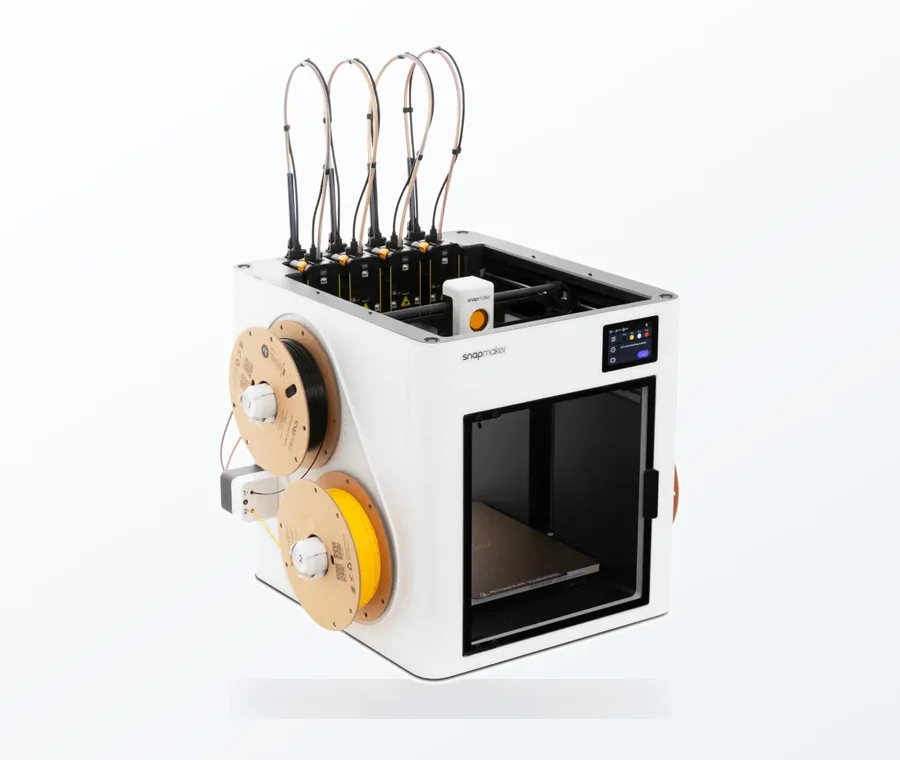
The consumer toolchanger 3D printer: the SnapSwap 4-toolhead system swaps heads in 5 seconds for true multi-color and multi-material printing, with smart calibration and auto filament loading.
- 4 toolheads · 5 s swap
- Up to 500 mm/s · 20,000 mm/s²
- 270 mm cube build volume
- Multi-color & multi-material
Predictive analytics, at its core, involves using data, statistical algorithms, and machine learning techniques to identify the likelihood of future outcomes based on historical and real-time data. In the context of additive manufacturing, this translates into foreseeing potential print failures, anticipating maintenance needs, and optimizing production parameters before issues even arise. By shifting from reactive problem-solving to proactive prevention, manufacturers can unlock substantial efficiencies and elevate the overall quality and reliability of their 3D printing operations.
The benefits are multi-faceted:
- Reduced waste and costs: Minimizing failed prints directly translates to savings in expensive materials and energy.
- Improved quality and reliability: Consistent production of high-quality parts that meet stringent specifications.
- Faster time-to-market: Streamlined processes and fewer iterations accelerate product development cycles.
- Optimized material utilization: Intelligent design and parameter adjustments can lead to more efficient use of raw materials.
- Enhanced machine uptime: Proactive maintenance prevents unexpected breakdowns and production delays.
Key applications of AI and machine learning in AM

AI and ML algorithms are being deployed across various stages of the additive manufacturing workflow, from design to post-processing, each contributing to a more robust and intelligent production ecosystem.
Print failure prevention
One of the most immediate and impactful applications of AI in 3D printing is the prevention of print failures. Traditional methods often rely on visual inspection or post-print quality checks, which are inherently reactive. AI-driven systems, however, leverage a wealth of real-time data to predict and often prevent issues:
- Real-time monitoring: Sensors integrated into 3D printers capture data streams such as temperature profiles, laser power, melt pool dynamics, layer height, and acoustic emissions. High-resolution cameras monitor the build plate for anomalies.
- Data collection and analysis: This vast amount of data is fed into ML models trained on historical datasets of successful and failed prints. The models learn to identify subtle patterns and deviations that precede common failures like delamination, warping, porosity, or support structure collapse.
- Anomaly detection: AI algorithms can flag unusual behavior in real-time, alerting operators to potential issues. In advanced systems, they can even initiate minor parameter adjustments to self-correct the printing process before a failure becomes irreversible.
- Predictive modeling for defects: By understanding the complex interplay of material properties, machine settings, and environmental factors, ML models can predict the likelihood of specific defects appearing in a print, allowing for pre-emptive adjustments to print parameters or even design changes.
Process optimization
Beyond preventing failures, AI and ML are instrumental in fine-tuning the entire additive manufacturing process, pushing the boundaries of what’s possible in terms of speed, efficiency, and material performance.
- Parameter optimization: Determining the optimal print parameters (e.g., laser speed, power, layer thickness, build orientation) for a new material or complex geometry is a time-consuming, iterative process. ML algorithms can explore vast parameter spaces, learning from experimental data and simulations to suggest the most effective settings, significantly reducing trial-and-error.
- Automated design for additive manufacturing (DfAM): AI tools can analyze design constraints and material properties to automatically generate optimized part geometries. This includes topology optimization, where algorithms design the most efficient material distribution within a given space to maximize strength-to-weight ratios.
- Support structure generation: Designing and removing support structures is a significant bottleneck. AI can automate the generation of minimal, yet effective, support structures, optimizing for ease of removal, material usage, and surface finish, thereby reducing post-processing time and cost.
Quality control and assurance
Ensuring the quality and integrity of printed parts is paramount, especially for critical applications. AI and ML offer advanced capabilities for both in-situ and post-process quality assurance.
- In-situ inspection: During the printing process, AI-powered computer vision systems can analyze images of each layer as it’s built, detecting microscopic defects or inconsistencies that would be invisible to the human eye. This allows for early detection of issues, potentially even stopping a print before significant material is wasted.
- Post-process analysis: After printing, AI can automate the inspection of parts using techniques like X-ray computed tomography (CT) scans or optical scanning. ML models can quickly compare these scans against the original CAD model, identifying deviations, internal defects, or surface imperfections with high accuracy and speed, far surpassing manual inspection.
- Digital twin creation: AI facilitates the creation of a ‘digital twin’ for each manufactured part, a virtual replica that tracks its entire lifecycle from design and printing parameters to material properties and performance data. This comprehensive digital thread is invaluable for traceability, quality auditing, and predictive maintenance throughout the part’s operational life.
- Material characterization: ML models can accelerate the characterization of new materials for AM, predicting their behavior under various printing conditions and post-processing treatments, thus speeding up material development and qualification.
Predictive maintenance
The sophisticated machinery involved in additive manufacturing represents a significant capital investment. Unexpected breakdowns can halt production, incurring substantial costs. AI-driven predictive maintenance offers a proactive solution.
- Monitoring machine health: ML algorithms analyze data from various machine components – motors, sensors, laser sources, material feeders – looking for subtle changes in vibration, temperature, current draw, or other operational parameters that indicate impending wear or failure.
- Scheduling proactive maintenance: By predicting when a component is likely to fail, maintenance can be scheduled during planned downtime, preventing catastrophic failures and minimizing unscheduled interruptions. This extends the lifespan of expensive equipment and optimizes resource allocation.
- Reducing downtime: Proactive maintenance significantly reduces the overall downtime of AM machines, ensuring higher utilization rates and greater production throughput.
Technologies and methodologies underpinning AI in AM
The integration of AI into additive manufacturing relies on a confluence of advanced technologies and computational methodologies:
- Machine learning algorithms: This encompasses a broad range of techniques, including supervised learning (for classification and regression tasks like predicting defect types or optimal parameters), unsupervised learning (for anomaly detection and clustering similar print characteristics), and reinforcement learning (for optimizing complex, sequential decision-making processes, such as intelligent print path generation).
- Deep learning: A subset of machine learning, deep learning, particularly convolutional neural networks (CNNs), excels at processing visual data. This is crucial for interpreting images from in-situ cameras, CT scans, and other visual inspection systems to identify defects and analyze layer quality.
- Sensor fusion: Combining data from multiple disparate sensors (e.g., thermal, optical, acoustic, accelerometers) provides a more comprehensive understanding of the printing environment. AI algorithms are adept at fusing these diverse data streams to create a holistic picture, overcoming the limitations of individual sensors.
- Data infrastructure: Robust data pipelines are essential for collecting, storing, and processing the massive volumes of data generated during AM. This often involves cloud computing for scalable storage and computational power for model training, alongside edge computing solutions for real-time, on-machine data analysis and immediate decision-making.
Cost structures and implementation considerations

Implementing AI and machine learning for predictive analytics in additive manufacturing involves a range of financial and operational considerations. There is no one-size-fits-all solution, and the optimal approach often depends on an organization’s existing infrastructure, technical expertise, and specific production goals. Here, we objectively compare the cost structures and features of various approaches.
Software solutions
The software component is central to any AI/ML implementation, encompassing everything from data acquisition to model deployment and user interfaces.
- Proprietary AI/ML platforms from AM machine manufacturers:
- Features: These solutions are often tightly integrated with specific printer ecosystems (e.g., EOS, 3D Systems, Stratasys, GE Additive). They typically offer user-friendly interfaces, pre-trained models optimized for their machines and materials, and dedicated vendor support. They may include features like closed-loop control, real-time anomaly detection, and basic process optimization.
- Cost structure: Often involve a significant upfront licensing fee for the software suite, followed by recurring annual subscription or maintenance fees. There can be additional costs for specific modules, advanced features, or expanded data storage. While convenient, this approach can lead to vendor lock-in and may offer less flexibility for customization or integration with non-native systems.
- Third-party AI/ML platforms and specialized software vendors:
- Features: Companies like Materialise, Autodesk Netfabb, or specialized AI solution providers (e.g., Oqton, Velo3D’s Assure) offer platforms that aim for broader compatibility across different AM technologies and manufacturers. These solutions often provide more advanced analytics, greater customization options, and capabilities for multi-machine fleet management. They might focus on specific areas like build preparation, simulation, or in-situ monitoring.
- Cost structure: Typically subscription-based, with pricing tiers often determined by the number of machines, users, features accessed, or data volume processed. Initial setup and integration costs can vary significantly depending on the complexity of connecting to existing AM machines and data infrastructure. These solutions can offer more flexibility but may require more effort in integration and data standardization.
- Open-source frameworks and custom development:
- Features: Utilizing frameworks like TensorFlow, PyTorch, Scikit-learn, or OpenCV allows for ultimate flexibility and bespoke solution development. Organizations can build highly customized AI models tailored to their unique processes, materials, and failure modes. This approach provides complete control over intellectual property and algorithms.
- Cost structure: The frameworks themselves are generally free. However, the primary cost lies in the significant investment in human capital – hiring or training skilled data scientists, machine learning engineers, and software developers. There are also ongoing infrastructure costs for development environments, model training (often requiring powerful GPUs), and deployment. While offering the most control, this path demands a high level of internal expertise and a substantial long-term commitment.
Hardware requirements
Effective AI/ML in AM necessitates robust hardware for data acquisition and processing.
- Sensors: Implementing predictive analytics often requires augmenting existing AM machines with additional sensors. This can include high-resolution thermal cameras, accelerometers, acoustic emission sensors, optical pyrometers, and advanced vision systems.
- Cost structure: Sensor costs vary widely based on precision, robustness, and integration complexity. Initial installation and calibration can be significant. Organizations must evaluate the trade-off between sensor cost and the value of the data they provide for specific failure modes.
- Edge computing devices: For real-time anomaly detection and immediate process adjustments, processing data at the source (on the machine or near it) is crucial. Edge computing devices provide localized processing power.
- Cost structure: Moderate, depending on the required processing capabilities. These devices can reduce reliance on cloud infrastructure for immediate responses but add to the hardware footprint.
- Cloud/on-premise infrastructure: For training complex ML models, storing vast datasets, and performing retrospective analysis, scalable computing resources are essential.
- Cost structure: Cloud services (AWS, Azure, Google Cloud) offer pay-as-you-go models, scaling with usage, which can be cost-effective for fluctuating demands. On-premise solutions require significant upfront capital expenditure for servers, GPUs, and data centers, along with ongoing maintenance and energy costs. The choice depends on data volume, security requirements, and existing IT infrastructure.
Data acquisition and management
The quality and availability of data are the lifeblood of any AI/ML system.
- Data collection systems: Integrating new sensors with existing AM machines and establishing robust data pipelines to collect, clean, and standardize data.
- Cost structure: This involves initial setup costs for hardware integration, software development for data connectors, and ongoing operational costs for data storage and transmission. Legacy machines may require significant customization.
- Data labeling and annotation: For supervised learning models, historical data (e.g., images of print failures) needs to be accurately labeled by human experts.
- Cost structure: Often an overlooked but substantial cost, requiring dedicated personnel or specialized services. The quality of labels directly impacts model performance.
- Data security and privacy: Ensuring the secure storage and transmission of sensitive production data.
- Cost structure: Investments in cybersecurity measures, compliance audits, and robust data governance frameworks are essential and ongoing.
Personnel and expertise
Human capital is a critical investment for successful AI/ML adoption.
- Data scientists and ML engineers: To develop, deploy, monitor, and refine AI models.
- Cost structure: High demand for these specialized skills often translates to significant salary costs.
- AM process engineers: Domain experts are crucial for providing context to data scientists, interpreting ML outputs, and validating model performance.
- Cost structure: Existing AM engineers may require additional training, or new hires with a blend of AM and data science skills may be needed.
- Training and upskilling: Investing in training existing staff to work with new AI tools and understand their implications.
- Cost structure: Ongoing educational programs and workshops.
Scalability considerations
The path from pilot project to enterprise-wide deployment has distinct cost implications.
- Pilot projects: Typically involve a lower initial investment, focusing on a limited number of machines or specific failure modes. The goal is to demonstrate proof-of-concept and quantify ROI.
- Cost structure: More contained, allowing for experimentation and learning without committing vast resources.
- Enterprise deployment: Scaling AI/ML across an entire fleet of diverse AM machines, potentially across multiple geographical locations. This requires robust, standardized infrastructure, comprehensive data integration, and centralized management.
- Cost structure: Higher upfront costs for infrastructure, integration across heterogeneous systems, and potential re-training of models for different machine types or materials. However, the benefits of scale (e.g., shared knowledge bases, centralized data analytics, consistent quality control) can significantly amplify ROI in the long run.
When evaluating these options, organizations should conduct a thorough cost-benefit analysis, considering not just the direct financial outlay but also the potential for reduced waste, improved part quality, increased throughput, and enhanced competitive advantage. The choice between proprietary solutions, third-party platforms, or custom development hinges on factors like existing technical capabilities, desired level of control, budget constraints, and the strategic importance of AM to the business.
Challenges and future outlook
The consumer toolchanger 3D printer: the SnapSwap 4-toolhead system swaps heads in 5 seconds for true multi-color and multi-material printing, with smart calibration and auto filament loading.
While the potential of AI in AM is undeniable, several challenges remain. Data availability and quality are paramount; generating large, labeled datasets for all possible failure modes can be arduous. Integration with existing legacy systems and the lack of standardization across different AM machine manufacturers present significant hurdles. Ethical considerations, such as job displacement due and the need for explainable AI in critical applications, also warrant careful attention.
Looking ahead, the trajectory is towards increasingly autonomous additive manufacturing. Future systems will likely feature self-correcting printers capable of identifying defects, adjusting parameters in real-time, and even repairing themselves. The concept of a ‘digital thread’ will become even more pervasive, with AI managing the entire lifecycle of a part, from design inception to end-of-life. As data becomes richer and algorithms more sophisticated, AI and ML are poised to transform additive manufacturing from an advanced technology into a fully industrialized, intelligent, and highly reliable production method.
Conclusion

The integration of AI and machine learning into additive manufacturing is not merely an incremental improvement; it represents a fundamental shift towards more intelligent, efficient, and reliable production. Predictive analytics, in particular, empowers manufacturers to move beyond reactive troubleshooting, embracing a proactive stance that minimizes print failures, optimizes processes, and ensures consistent quality. While the implementation pathways vary in terms of cost and complexity, from proprietary solutions to bespoke open-source development, the strategic imperative remains clear: leveraging AI is crucial for unlocking the full potential of 3D printing and maintaining a competitive edge in advanced manufacturing. Organizations must carefully assess their specific needs, capabilities, and long-term objectives to chart the most effective course for integrating these transformative technologies into their additive manufacturing workflows.
Frequently asked questions
How much does it typically cost to add AI-driven print failure detection to an existing 3D printer?
The cost varies significantly based on your approach. Using a proprietary platform from your printer manufacturer involves upfront licensing fees plus annual subscriptions, while third-party platforms like Materialise or Oqton charge subscription fees based on machine count or data volume. The lowest-cost path is using open-source frameworks like TensorFlow, but that requires hiring data scientists and ML engineers, which carries high salary costs. You must also budget for additional sensors (thermal cameras, accelerometers) and either edge computing devices or cloud storage.
Can AI predict and prevent warping or delamination during a print, or does it only detect failures after they happen?
AI can both predict and prevent these failures. Machine learning models trained on historical data of successful and failed prints identify subtle patterns in temperature profiles, melt pool dynamics, and layer height that precede warping or delamination. Advanced systems can then initiate minor parameter adjustments in real-time—such as modifying laser power or print speed—to self-correct the process before the failure becomes irreversible, shifting from reactive detection to proactive prevention.
Do I need a large dataset of failed prints to train an AI model for my specific printer and materials?
Yes, data quality and quantity are paramount. For supervised learning models, you need a substantial labeled dataset of both successful and failed prints specific to your machine and materials, and labeling requires human experts to annotate images of failures. This is often an overlooked cost. However, proprietary platforms from manufacturers like EOS or Stratasys come with pre-trained models optimized for their machines and materials, reducing your need to generate your own failure dataset from scratch.