The landscape of 3D printing materials is vast and continuously expanding, offering an incredible array of options for creators and engineers alike. Among the most intriguing and versatile categories are flexible filaments, which open doors to applications traditionally challenging for rigid plastics. Within this realm, Thermoplastic Polyurethane (TPU) and Thermoplastic Elastomer (TPE) stand out as prominent choices, often sparking debate and confusion among users. While both are celebrated for their elasticity and rubber-like properties, they possess distinct characteristics that make them suitable for different applications and printing scenarios. Understanding these nuances is paramount for anyone looking to harness the full potential of flexible 3D printing, ensuring that the chosen material aligns perfectly with a project’s specific requirements for flexibility, durability, and overall performance.
This comprehensive comparison delves into the fundamental differences between TPU and TPE, exploring their chemical compositions, mechanical properties, printability, and common applications. By shedding light on their unique attributes, this guide aims to equip you with the knowledge necessary to make an informed decision, helping you navigate the world of flexible filaments and select the ideal material for your next innovative 3D printing endeavor, considering factors like shore hardness and the demands of its intended use. We will objectively analyze their strengths and weaknesses, allowing you to weigh the various attributes against your project’s unique needs.
Understanding Thermoplastic Elastomers (TPE)
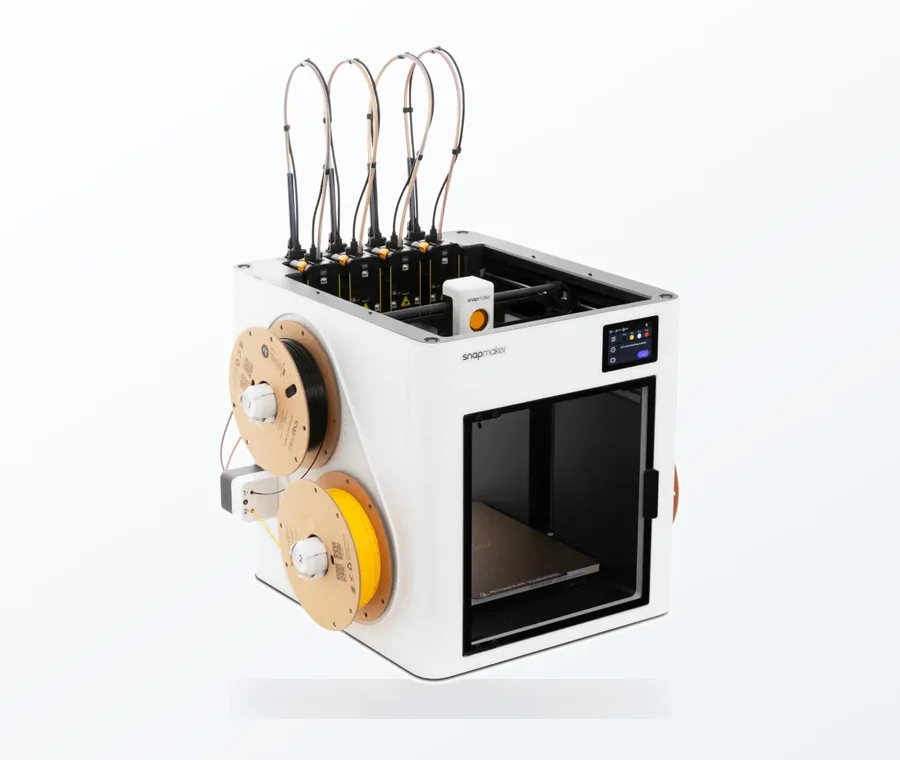
The consumer toolchanger 3D printer: the SnapSwap 4-toolhead system swaps heads in 5 seconds for true multi-color and multi-material printing, with smart calibration and auto filament loading.
- 4 toolheads · 5 s swap
- Up to 500 mm/s · 20,000 mm/s²
- 270 mm cube build volume
- Multi-color & multi-material
Thermoplastic Elastomers (TPEs) represent a broad class of copolymers or a physical mix of polymers (usually a plastic and a rubber) that consist of materials with both thermoplastic and elastomeric properties. In essence, TPEs behave like thermoset rubbers at room temperature – exhibiting flexibility, elasticity, and softness – but can be processed like thermoplastics when heated. This unique duality allows them to be melted and reformed multiple times without significant degradation, a key advantage over traditional thermoset rubbers which are permanently cross-linked and cannot be reprocessed. The “elastomer” part of their name signifies their rubber-like elasticity, while “thermoplastic” refers to their ability to be melt-processed.
Key characteristics and types of TPE
- Broad Category: TPE is not a single material but a family of materials. This family encompasses several distinct sub-classes, each with its own specific chemical backbone and resulting properties. These include:
- Styrenic Block Copolymers (SBCs): Often used in footwear, adhesives, and asphalt modification. They offer good elasticity and flexibility.
- Thermoplastic Polyolefins (TPOs): Blends of polypropylene or polyethylene with an un-crosslinked rubber. Common in automotive components (e.g., bumpers) and roofing membranes.
- Thermoplastic Vulcanizates (TPVs): A type of TPO where the rubber phase is dynamically vulcanized (cross-linked) during blending, offering enhanced oil resistance and compression set. Found in seals, gaskets, and tubing.
- Thermoplastic Copolyesters (COPEs): Known for good chemical resistance, high-temperature performance, and excellent flex fatigue resistance. Used in wire and cable jacketing.
- Thermoplastic Polyamides (TPAs): Offer good chemical resistance and high-temperature performance, often used in automotive and industrial applications.
- Thermoplastic Polyurethanes (TPUs): As discussed separately, TPUs are a prominent member of the TPE family, distinguished by their unique polyurethane chemistry.
This inherent variability means that when discussing “TPE” without further specification, one is often referring to a wider range of materials that might have vastly different properties depending on their specific composition and the ratio of hard to soft segments.
- Varied Hardness: Due to its broad nature, TPEs can range significantly in Shore hardness, from very soft, gel-like materials (e.g., Shore A 20, similar to a soft rubber band) to quite rigid, almost plastic-like substances (e.g., Shore D 70, akin to a golf ball). This wide spectrum means that a “TPE” filament can offer a vast range of flexibility and tactile feel.
- Elasticity: TPEs are known for their excellent elastic recovery, meaning they can deform under stress and return to their original shape once the stress is removed. This makes them ideal for applications requiring repeated flexing or stretching, such as hinges or dampeners.
- Chemical Resistance: The chemical resistance of TPEs varies greatly depending on their specific type. Some TPEs offer good resistance to oils, greases, and certain solvents, while others may be more susceptible to degradation or swelling. It’s crucial to consult specific material data sheets.
- Temperature Performance: Generally, TPEs perform well across a range of temperatures, maintaining flexibility in cold environments and stability at moderate heat. However, their upper continuous operating temperature limit is typically lower than some high-performance engineering plastics, and can vary significantly between types.
Typical applications for TPE in 3D printing
Given their versatility and the ability to achieve extreme softness, TPE filaments find their way into numerous 3D printing applications, especially where a soft, rubbery feel, high flexibility, or specific chemical resistance (depending on the TPE type) is desired. These include:
- Gaskets, seals, and O-rings requiring good compression set and sealing properties, particularly for custom sizes.
- Flexible prototypes and functional parts that need to bend, absorb impact, or conform to irregular surfaces.
- Wearable items like soft watch bands, custom orthotic insoles, or comfortable grips for tools and handles.
- Dampening components and vibration isolators for sensitive electronics or machinery.
- Protective casings for electronics, phone cases, or drone landing gear that needs to absorb shock.
- Novelty items, flexible toys, and artistic creations where a unique tactile experience is paramount.
Understanding Thermoplastic Polyurethane (TPU)
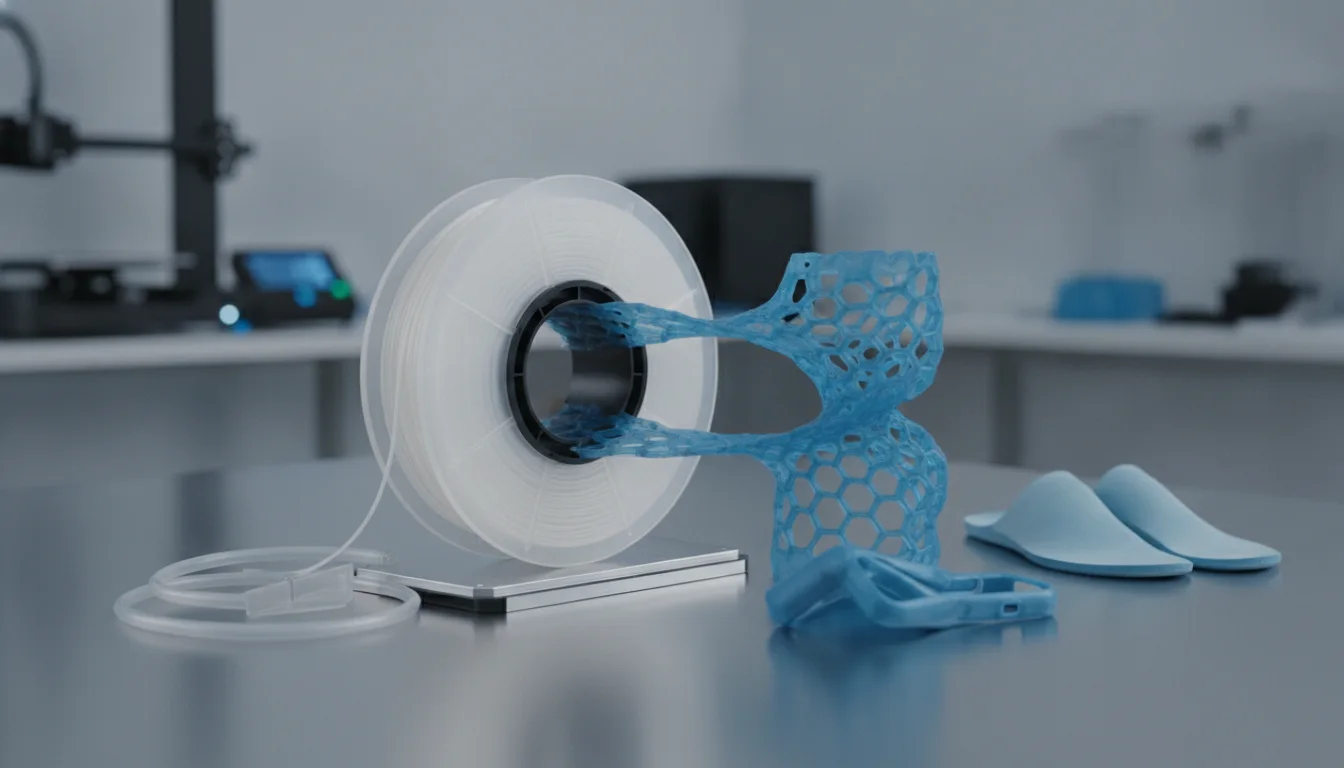
Thermoplastic Polyurethane (TPU) is a specific type of Thermoplastic Elastomer (TPE), often considered a benchmark within the flexible filament category for 3D printing due to its balanced and often superior properties. It’s a block copolymer consisting of alternating hard and soft segments. The hard segments, typically derived from diisocyanates and chain extenders, provide strength, rigidity, and abrasion resistance. The soft segments, usually from polyols, contribute to its elasticity, flexibility, and rubber-like feel. This unique molecular structure gives TPU a distinct advantage in terms of performance consistency and versatility across various applications.
Key characteristics of TPU
- Excellent Durability: TPU is renowned for its exceptional abrasion resistance, making it highly durable even in demanding applications where parts are subjected to rubbing, scraping, or repeated contact. It can withstand significant wear and tear, often surpassing many other flexible materials in longevity.
- High Elasticity and Flexibility with Strength: While highly flexible, TPU also offers excellent tensile strength and elongation at break, meaning it can stretch considerably (often 500-600% or more) before breaking and reliably return to its original form without significant permanent deformation. It strikes a superior balance between flexibility and mechanical strength, making it ideal for dynamic applications.
- Good Chemical Resistance: TPU generally exhibits good resistance to oils, greases, aliphatic hydrocarbons, and many common solvents. This broadens its applicability in industrial, automotive, and outdoor contexts where exposure to such substances is common. However, it can be susceptible to strong acids, bases, and some aromatic solvents.
- Temperature Stability: TPU maintains its flexibility and mechanical properties across a wider temperature range compared to many other TPEs. It performs well in sub-zero temperatures, often down to -40°C, and can withstand continuous operating temperatures typically up to 80-100°C, with specialized grades offering even higher thermal resistance.
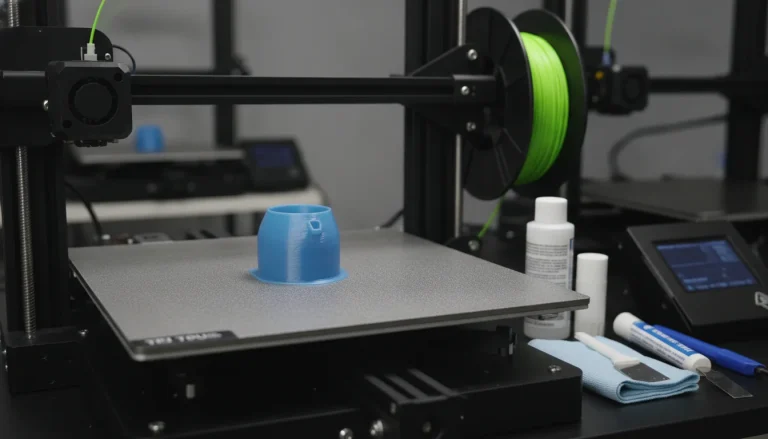
- Printability: While flexible filaments, in general, can be challenging to print, TPU is often considered one of the easier TPEs to work with. It typically has better layer adhesion, less stringing, and a more consistent flow compared to other, softer TPEs. However, it still requires careful printer calibration, often benefits from a direct drive extruder, and demands slower print speeds than rigid filaments.
- Shore Hardness Range: TPU typically falls within a Shore A hardness range of 60A to 98A, and sometimes extends into Shore D (e.g., Shore D 50-60). This range offers a good balance of softness, structural integrity, and relative ease of printing, making it versatile for many functional parts.
- UV Resistance: Many TPU formulations offer good UV resistance, making them suitable for outdoor applications where exposure to sunlight is a concern, though specific grades may vary.
Typical applications for TPU in 3D printing
TPU’s robust and balanced properties make it suitable for a wide array of functional, aesthetic, and performance-critical applications, including:
- Functional prototypes and end-use parts requiring high flexibility, impact absorption, and excellent return-to-form, such as complex bellows or flexible connectors.
- Automotive components like seals, gaskets, vibration dampeners, cable organizers, and protective covers for sensitive electronics within vehicles.
- Medical devices and prosthetics (especially biocompatible grades) where flexibility, skin contact safety, and durability are crucial, such as custom orthoses or cushioning components.
- Sports equipment components, protective gear (e.g., shin guards, helmet liners), and outdoor equipment where resilience and flexibility are key.
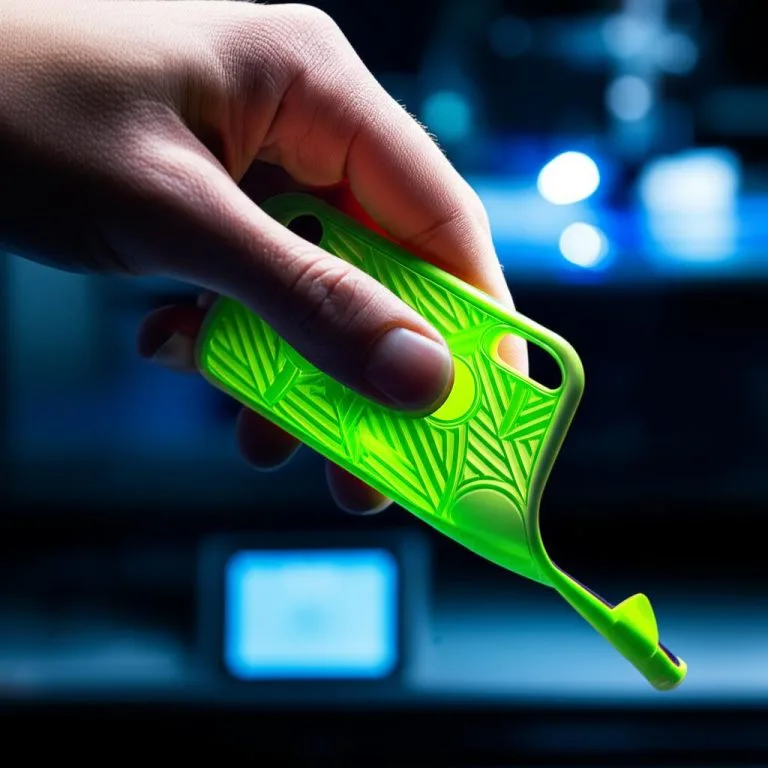
- Consumer goods such as highly durable phone cases, drone parts (landing gear, camera gimbals), flexible enclosures for electronics, and protective bumpers.
- Footwear components, custom insoles, and shoe sole prototypes that require both cushioning and wear resistance.
- Robotics components, grippers, and soft robotics elements that need to conform to irregular shapes and withstand repeated actuation.
TPU versus TPE: A direct comparison
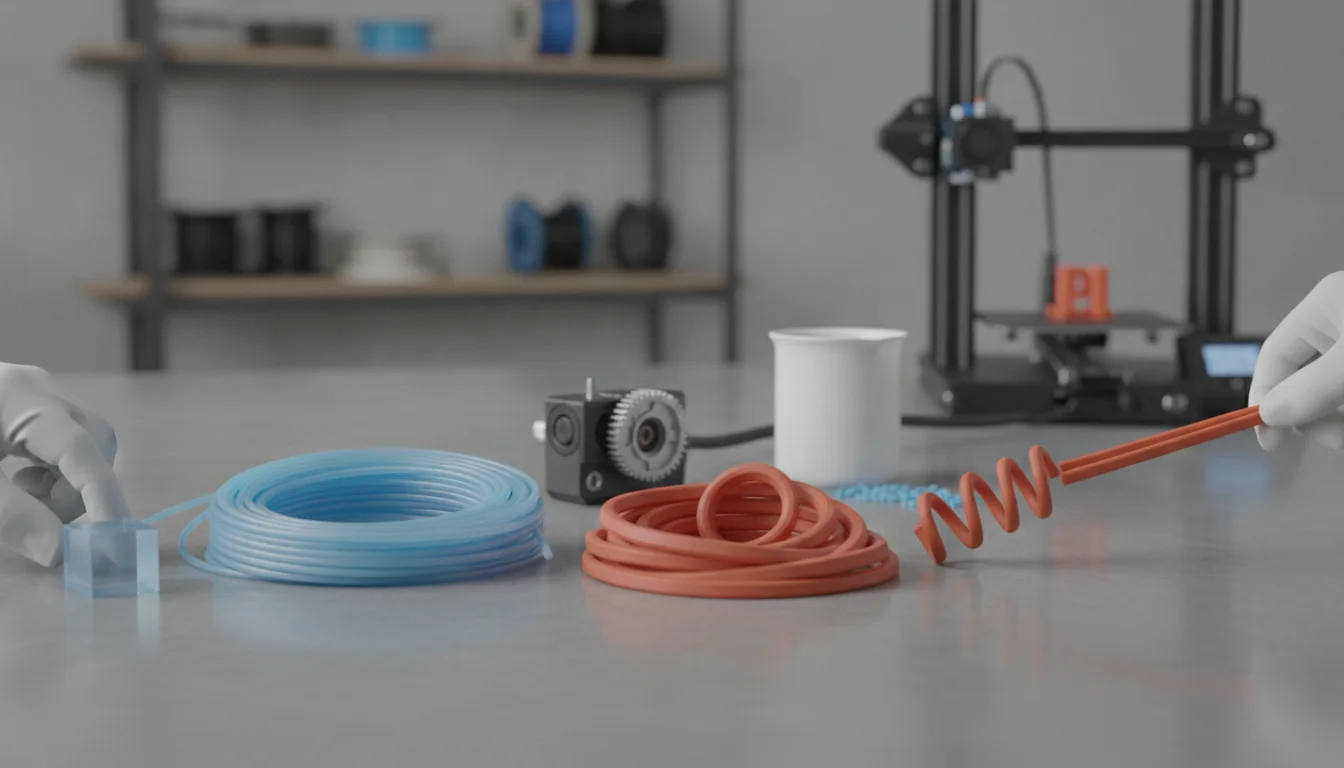
While TPU is technically a subset of TPE, the term “TPE” in the context of 3D printing often refers to the broader category of flexible elastomers that are not specifically polyurethane-based, or to softer, more generic formulations. This distinction is crucial when evaluating materials for a project, as the performance gap between a generic TPE and a high-quality TPU can be significant. Let’s break down their key differences across various performance metrics, helping to clarify the “TPU vs TPE comparison” for practical application.
Chemical composition and structure
- TPE: As a broad class, TPEs can be composed of various polymer blends. These often include a hard plastic component (e.g., polypropylene, polyethylene, nylon) and a soft rubber component (e.g., EPDM, natural rubber, silicone). The specific combination and morphology (how these components are arranged at a molecular level) dictate the final properties. This variability means that “TPE” can encompass a vast range of chemical makeups, leading to diverse and sometimes unpredictable characteristics without detailed specification.
- TPU: Specifically, Thermoplastic Polyurethane, is a block copolymer derived from a polyol (soft segment), a diisocyanate (hard segment), and a chain extender. Its molecular structure inherently provides a consistent balance of rigid and flexible segments. This precise chemical engineering gives TPU a more predictable and consistent set of mechanical properties across different manufacturers, provided it’s genuine TPU. This consistency is a major advantage for critical applications.
Shore hardness and flexibility
Shore hardness is a critical metric for flexible filaments, indicating their resistance to indentation. It’s measured on different scales – Shore A for softer materials (like rubber bands) and Shore D for harder ones (like a car tire or golf ball). Understanding these scales is vital for comparing “shore hardness 3D printing” materials.
- TPE: The Shore hardness range for TPEs is exceptionally wide, spanning from very soft (e.g., Shore A 20, comparable to a very soft gel insole) to moderately hard (e.g., Shore D 70, similar to a hard plastic wheel). This broad spectrum means you can find TPEs that are significantly softer than most TPUs. However, very soft TPEs (typically below Shore A 80) can be notoriously difficult to print due to their extreme elasticity and tendency to buckle or stretch in the extruder.
- TPU: TPU typically occupies a narrower, but still significant, range, generally from Shore A 60 (similar to a pencil eraser) to Shore A 98 (like a shopping cart wheel), sometimes extending into the lower Shore D scales (e.g., Shore D 50-60, like a hard rubber shoe sole). This range provides a good balance of flexibility and printability. TPUs are generally perceived as being more consistently “firmly flexible” rather than “super squishy” compared to the softest TPEs, offering a more controlled flex.
Note on Shore Hardness Scales: The Shore A scale measures softer materials, while Shore D measures harder ones. A higher number on either scale indicates a harder material. For instance, Shore A 95 is quite firm and rubbery, while Shore A 60 is significantly softer and more pliable. When a material’s hardness exceeds the Shore A scale, it moves to the Shore D scale. A material like Shore D 50 is much harder than anything on the Shore A scale, providing a rigid yet slightly flexible characteristic.
Elasticity and tensile strength
- TPE: While TPEs are inherently elastic, their tensile strength (resistance to breaking under tension) and elongation at break (how much they can stretch before breaking) can vary wildly. Some TPEs might stretch a lot but have lower tear strength, making them prone to breaking under tension or repeated stress. Their elastic recovery (ability to return to original shape) might also be less consistent over time or after repeated cycles compared to TPU, especially for less robust formulations.
- TPU: TPU generally excels in both elasticity and tensile strength. It boasts high elongation at break, meaning it can stretch considerably before failing, and superior elastic recovery, consistently returning to its original shape even after repeated deformation. This makes TPU a more reliable choice for parts that will undergo repeated dynamic loading or high stress. Its tear strength is also typically higher than many other TPEs, providing robust performance against cuts and rips.
Durability and abrasion resistance
- TPE: The durability and abrasion resistance of TPEs are highly dependent on their specific chemical composition and the ratio of their hard and soft segments. Some formulations offer decent resistance, while others might wear down quickly, especially in applications involving friction or impact. It’s crucial to check the specifications for individual TPE products, as generalizations are difficult.
- TPU: TPU is renowned for its outstanding abrasion resistance and overall durability. It holds up exceptionally well against friction, impact, and general wear and tear, making it a preferred material for parts exposed to harsh conditions, high traffic, or requiring a long service life. This property is one of its most significant advantages, often making it the go-to choice for protective components.
Temperature resistance
- TPE: The working temperature range for TPEs can vary considerably. Some can handle relatively high temperatures (up to 100-120°C for short periods), while others may soften or degrade at much lower temperatures. Low-temperature flexibility is generally good across the TPE family, but the exact lower limit can differ.
- TPU: TPU typically offers a good balance of high and low-temperature performance. It maintains flexibility in sub-zero temperatures, often down to -40°C or even lower, and can withstand continuous operating temperatures often up to 80-100°C, with some specialized grades going higher (e.g., for automotive under-hood applications). This broader and more consistent temperature stability makes it more suitable for diverse environments and applications that experience temperature fluctuations.
Chemical resistance
- TPE: As with other properties, chemical resistance for TPEs is highly variable. Some TPEs offer good resistance to certain chemicals (e.g., acids, bases, alcohols), while others might swell, degrade, or lose mechanical properties upon contact with oils, fuels, or solvents. Always verify the specific TPE’s chemical compatibility with the intended application’s environment.
- TPU: TPU generally provides good resistance to many oils, greases, aliphatic hydrocarbons, and common solvents. This makes it a strong candidate for parts in automotive, industrial, and marine settings. However, it can be susceptible to strong acids, bases, and some aromatic solvents, which can cause swelling or degradation over time. Its resistance profile is generally more predictable and often superior to many generic TPEs.
Printability and ease of use
Printing flexible filaments can be challenging, primarily due to their inherent elasticity and tendency to buckle, stretch, or jam in the extruder mechanism. Both TPU and TPE require optimized printer settings and often specialized hardware.
- TPE: Softer TPEs (e.g., below Shore A 80) are notoriously difficult to print. Their extreme flexibility means they can easily coil or “wad up” in the extruder path before reaching the hot end, leading to clogs and failed prints. They typically require very slow print speeds (often 10-20 mm/s), a direct drive extruder with a very short and constrained filament path, and careful management of retraction settings (often minimal or no retraction) to prevent tangling and jams. Stringing can also be a common issue, requiring extensive calibration.
- TPU: While still challenging compared to rigid filaments like PLA or PETG, TPU is generally considered more forgiving and easier to print than many other TPEs. Its slightly higher rigidity (even at lower Shore A values like 60A) and better flow characteristics contribute to more reliable printing. It benefits greatly from a direct drive extruder, optimized settings for temperature (higher than PLA), slower speeds (30-60 mm/s is often achievable), and carefully tuned retraction settings (often minimal to prevent clogs). TPU often produces more consistent results with better layer adhesion and less stringing than very soft TPEs, making it a more accessible flexible material for many users.
Post-processing
- TPE: Post-processing flexible parts can be tricky. Support removal can be challenging without damaging the part due to the material’s elasticity and tendency to stretch rather than cleanly break. Sanding or smoothing is often difficult, as the material can gum up sandpaper. Bonding with adhesives can be hit-or-miss depending on the TPE type, with some requiring specialized primers.
- TPU: Similar challenges apply to TPU. Support structures need to be designed carefully with sufficient gaps for easier removal. While sanding is difficult, TPU parts can often be smoothed using heat guns or specialized chemical treatments (e.g., MEK for some TPUs), though this requires caution and testing. Adhesion to other materials or itself can be good with appropriate cyanoacrylate (super glue) or specialized flexible adhesives, and TPU often offers better adhesion than many TPEs.
Cost considerations
When evaluating the cost of TPU versus TPE, it’s important to consider not just the raw material price per kilogram, but also the overall value derived from its performance, printability, and the demands of the application. The “elastic material selection” often involves a balance between initial outlay and long-term performance.
- TPE: Due to its broad nature and various compositions, TPE can sometimes be found at a lower price point, especially for generic or less specialized formulations, or those made from commodity plastics. However, specialized or high-performance TPEs (e.g., those with specific chemical resistances or extreme softness) might be comparable in price to, or even exceed, TPU. The potential for increased print failures and wasted material due to difficult printability with very soft TPEs could also add significantly to the effective cost of a project, negating any initial filament savings.
- TPU: TPU often sits at a slightly higher price point than generic TPEs, reflecting its consistent mechanical properties, superior durability, and often more reliable printability. For many applications, the enhanced performance, reduced printing headaches, and longer lifespan of the printed part can easily justify the investment, leading to a lower overall project cost due to fewer failed prints, less post-processing, and longer-lasting end-use parts. The consistency of TPU across different batches and manufacturers also adds value.
It is important to note that filament pricing is dynamic and varies significantly based on brand reputation, specific formulation (e.g., additives for UV resistance, flame retardancy, or color), volume of purchase, and global market conditions. Therefore, direct financial advice is not provided here, but rather a general observation of market trends and value propositions.
Environmental impact and sustainability
- TPE: The environmental profile of TPEs is diverse, given their varied compositions. Some TPEs are inherently recyclable, while others are not, depending on their blend. Bio-based or recycled content TPEs are an emerging area, offering more sustainable options, but their availability in filament form might still be limited compared to traditional formulations. Proper recycling infrastructure for mixed polymer TPEs can also be a challenge.
- TPU: Many TPUs are inherently recyclable, and the industry is increasingly focused on developing sustainable options, including bio-based TPU and those made from recycled content. Their exceptional durability also contributes to sustainability by extending the lifespan of printed parts, reducing the need for frequent replacements and thus minimizing waste over time. This longevity can be a significant environmental advantage.
Choosing the right flexible filament for your project
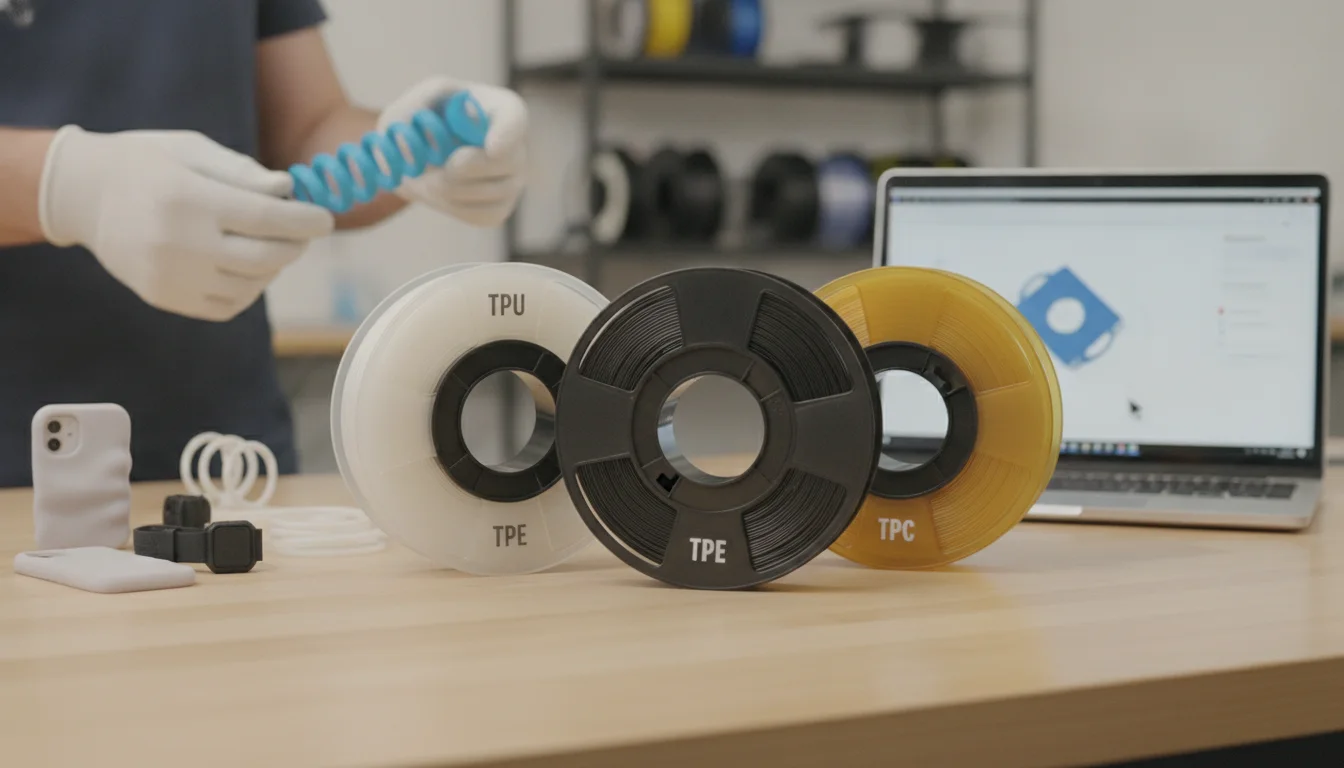
The decision between TPU and TPE ultimately boils down to a thorough understanding of your project’s specific demands and priorities. There isn’t a universally “better” material; rather, there’s the most appropriate material for a given application. By carefully considering the nuanced differences, you can make an informed choice that optimizes for performance, printability, and cost-effectiveness.
Key questions to consider for elastic material selection:
- What exact level of flexibility and softness do you need?
- If your project absolutely requires extreme softness and pliability (e.g., Shore A 20-60), you will likely need to explore specific TPE formulations. Be prepared for potentially challenging printing experiences and ensure your printer setup is optimized for very soft materials.
- If you need robust flexibility with good structural integrity, resilience, and a rubbery feel (e.g., Shore A 60-98, or low Shore D), TPU is often an excellent and more reliable choice, offering a balance of ease of printing and performance.
- How critical are durability, abrasion resistance, and tear strength?
- For parts that will experience significant wear, friction, repeated bending, or impact (e.g., protective gear, functional mechanical parts, seals), TPU’s superior abrasion resistance, tear strength, and elastic recovery make it a very strong contender and often the preferred choice for longevity.
- If durability is secondary to extreme softness or a highly specific chemical resistance, certain TPEs might still be suitable, but their overall robustness may be lower than TPU.
- What are the environmental and chemical exposure conditions for the part?
- Consider the operating temperature ranges (both high and low), exposure to oils, fuels, solvents, UV light, and water. TPU generally offers a more predictable and often superior resistance profile across a wider range of these factors, making it suitable for demanding environments.
- For highly specific chemical resistance requirements, it is paramount to research individual TPE types thoroughly, as their resistance profiles can vary dramatically.
- What are your 3D printer’s capabilities and your personal experience level with flexible filaments?
- If you have a direct drive extruder, a well-calibrated machine, and prior experience with flexible filaments, you’ll have more success with a wider range of TPEs and TPUs, including softer varieties.
- For beginners or those with bowden extruders, starting with a harder TPU (e.g., Shore A 95A) is generally recommended for a significantly easier and less frustrating printing experience. Very soft TPEs can be a source of considerable frustration and failed prints for the uninitiated.
- What is your budget, and how critical is the part’s long-term performance?
- While some TPEs might have a lower initial cost per spool, consider the total cost of ownership, including potential print failures, material waste, and the expected longevity of the final part. TPU’s reliability, durability, and often superior performance can frequently offer better long-term value, even if the initial filament price is slightly higher.
Ultimately, the “TPU vs TPE comparison” isn’t about one being inherently better than the other, but rather about matching the material’s intricate properties to the application’s precise demands. TPU offers a generally more balanced profile of durability, elasticity, and printability, making it a popular and often reliable choice for a vast range of functional flexible parts. TPE, as a broader and more diverse category, provides access to a wider range of specialized properties, particularly extreme softness or highly specific chemical resistances, but often comes with greater variability in performance and potentially increased printing challenges. By carefully evaluating your project’s needs against the detailed characteristics discussed, you can confidently select the flexible filament that will bring your 3D printing vision to life with optimal results.
Frequently asked questions
Can I print TPU or soft TPE on a Bowden extruder printer?
Printing soft flexible filaments on a Bowden extruder is very difficult because the long filament path gives the flexible material room to buckle and coil before reaching the hot end. While a harder TPU (Shore A 95A or above) might work with extremely slow speeds and minimal retraction, softer TPEs below Shore A 80 are nearly impossible to print reliably on Bowden systems. A direct drive extruder with a short, constrained filament path is strongly recommended for any flexible material.
Which material is cheaper overall when you factor in failed prints?
While generic TPE spools sometimes have a lower upfront price per kilogram than TPU, the total project cost often favors TPU for functional parts. Softer TPEs are notoriously difficult to print, leading to more frequent clogs, jams, and failed prints that waste material and time. TPU’s more reliable printability, combined with its superior durability and longer part lifespan, typically delivers better long-term value despite a potentially higher initial filament cost.
Is TPU or TPE better for making a phone case or protective cover?
TPU is the better choice for phone cases and protective covers. It offers superior abrasion resistance, higher tear strength, and excellent impact absorption, which are critical for a part that will be handled daily and dropped repeatedly. While a very soft TPE might feel more “squishy,” it would wear down faster and be more prone to tearing under the stress of regular use, making TPU the more durable and practical option for this application.