Every 3D printer enthusiast has faced it: the dreaded failed print. A botched first layer, a support structure gone wrong, or a power outage leading to a half-finished model – these failures often end up in the bin, contributing to plastic waste. But what if there was another way? The idea of recycling these plastic scraps back into usable filament is gaining traction. But is 3D printing filament recycling truly possible and profitable from the comfort of your home?
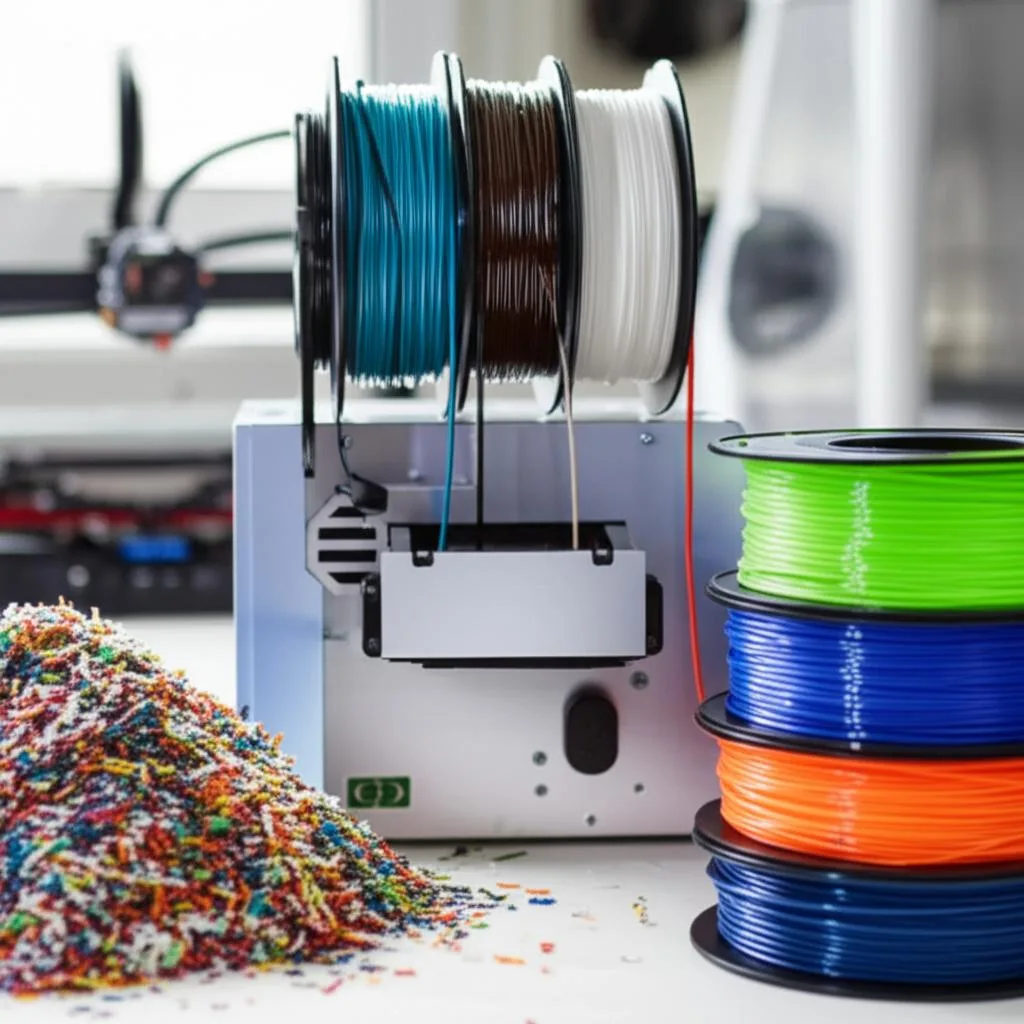
The concept is straightforward: take your failed prints or support material, shred them into small pellets, and then extrude these pellets into new filament. Several desktop machines, often called “filament extruders” or “recyclers,” have emerged on the market, promising to close the loop on your 3D printing waste. These devices typically consist of a shredder (sometimes sold separately or requiring manual pre-shredding), an extruder screw, and a winding mechanism. While the technology is accessible, achieving consistent filament diameter and quality – crucial for successful subsequent prints – remains a significant challenge for home setups.
Beyond the technical feasibility, the question of profitability is key. Home filament recyclers can range from a few hundred to several thousand dollars. While the raw plastic material from failed prints is essentially “free,” the energy consumption, the time invested in processing, and the initial equipment cost need to be factored in. For someone who prints frequently and generates a substantial amount of waste, the long-term savings on purchasing new filament could eventually offset the investment. However, for casual users, it might be more of a hobby project than a financially lucrative endeavor.
A critical aspect to consider for anyone undertaking home recycling is Safety and Environment. When melting plastics, various fumes can be released. Proper ventilation is absolutely essential to avoid inhaling potentially harmful chemicals. Always work in a well-ventilated area or use an appropriate air filtration system. Different plastic types (PLA, ABS, PETG) melt at different temperatures and can produce varying by-products. It’s crucial to sort your plastic waste by type to ensure a consistent and safe recycling process. Furthermore, while home recycling reduces your personal waste footprint, it’s part of a larger environmental discussion around plastic consumption and disposal.
In conclusion, home 3D printing filament recycling is indeed possible, offering a fascinating opportunity for hobbyists to experiment with sustainability and reduce their personal waste. It may not always be highly profitable for every user due to equipment costs and the learning curve, but it certainly contributes positively to the “Safety and Environment” aspect by diverting plastic from landfills. As the technology evolves, we might see more efficient and cost-effective home solutions emerge, making circular 3D printing a more widespread reality.
Frequently asked questions
What is the most common problem when trying to make new filament from failed prints at home?
The biggest challenge is achieving consistent filament diameter. Most home extruder setups struggle to maintain the tight tolerance (typically ±0.05 mm) needed for reliable printing, so even if you successfully create new filament, it may cause clogs or inconsistent extrusion in your printer.
Is it safe to recycle ABS prints indoors?
No. ABS releases potentially harmful fumes when melted, so you must work in a well-ventilated area or use an appropriate air filtration system. PLA and PETG also produce fumes, though generally less toxic, but proper ventilation is still essential for any plastic melting process.
How much failed plastic do you need to generate for home recycling to break even on equipment cost?
You need to produce a very large volume of waste. Home filament recyclers cost several hundred to several thousand dollars, and while the raw plastic is free, you must also factor in energy consumption and time. Only frequent printers generating substantial waste are likely to see long-term savings offset the initial investment.