
Achieving truly durable and functional 3D prints is a nuanced art, extending far beyond merely hitting ‘print’ on your machine. The backbone of a strong print lies not just in meticulous design, but critically, in the intelligent selection and application of the right 3D printing material. Understanding the inherent characteristics of various filaments and how these translate into design choices is paramount for anyone aiming to produce parts that stand the test of time and stress. This guide delves into the intricate world of 3d printing material design, offering insights into how different materials necessitate distinct design approaches to maximize strength and longevity.
The foundational role of material properties in print strength
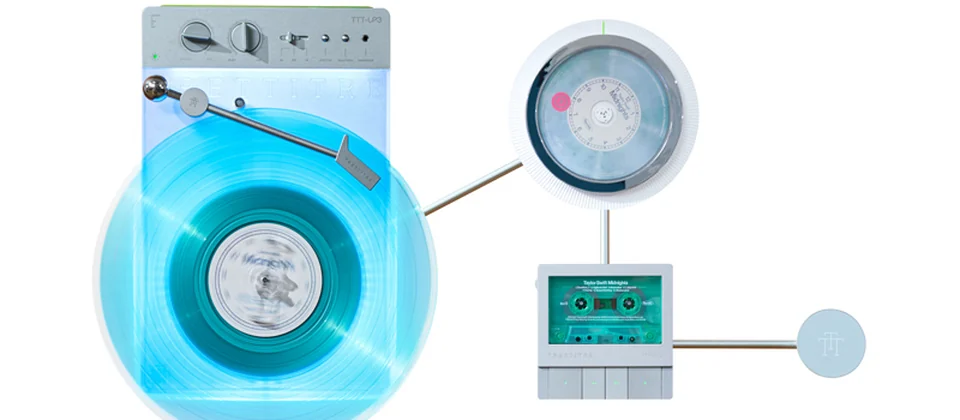
A retro-styled turntable and add-on speaker system with concrete and wood enclosure options. Currently running on Kickstarter.
Before diving into specific materials, it’s crucial to grasp that every filament possesses a unique set of mechanical properties. These include tensile strength (resistance to pulling apart), flexural strength (resistance to bending), impact strength (resistance to sudden force), and temperature resistance. The way a material responds to these forces dictates its suitability for a given application and, consequently, influences the design choices made to enhance its durability.
General design principles for enhanced print strength
While material-specific nuances are key, certain universal design principles lay a strong foundation for robust 3D prints:
- Print Orientation: Due to the layer-by-layer nature of FDM 3D printing, prints are inherently anisotropic, meaning their strength varies depending on the direction of force. Orienting a part so that critical stresses are applied parallel to the layers, rather than perpendicular, can significantly improve its strength. For instance, a hook printed flat will likely be stronger than one printed vertically.
- Infill Density and Pattern: Infill provides internal support and contributes substantially to a print’s overall strength. Higher infill percentages generally equate to stronger parts, though with increased material consumption and print time. Patterns like rectilinear, grid, or honeycomb offer different trade-offs between strength, weight, and print time.
- Wall Thickness (Shell Count): The number of perimeters or ‘shells’ directly influences the strength of the outer structure. Increasing wall thickness can dramatically enhance a part’s ability to withstand external forces, often more efficiently than simply increasing infill.
- Avoiding Stress Concentrators: Sharp corners, sudden changes in geometry, and thin sections can act as stress concentrators, leading to premature failure. Incorporating fillets, chamfers, and gradual transitions can help distribute stress more evenly across a part.
- Optimizing Layer Adhesion: Strong layer adhesion is fundamental. Proper print temperature, extrusion width, and minimal cooling (where appropriate) can improve the bond between layers, reducing the likelihood of delamination.
Material-specific considerations for durable prints
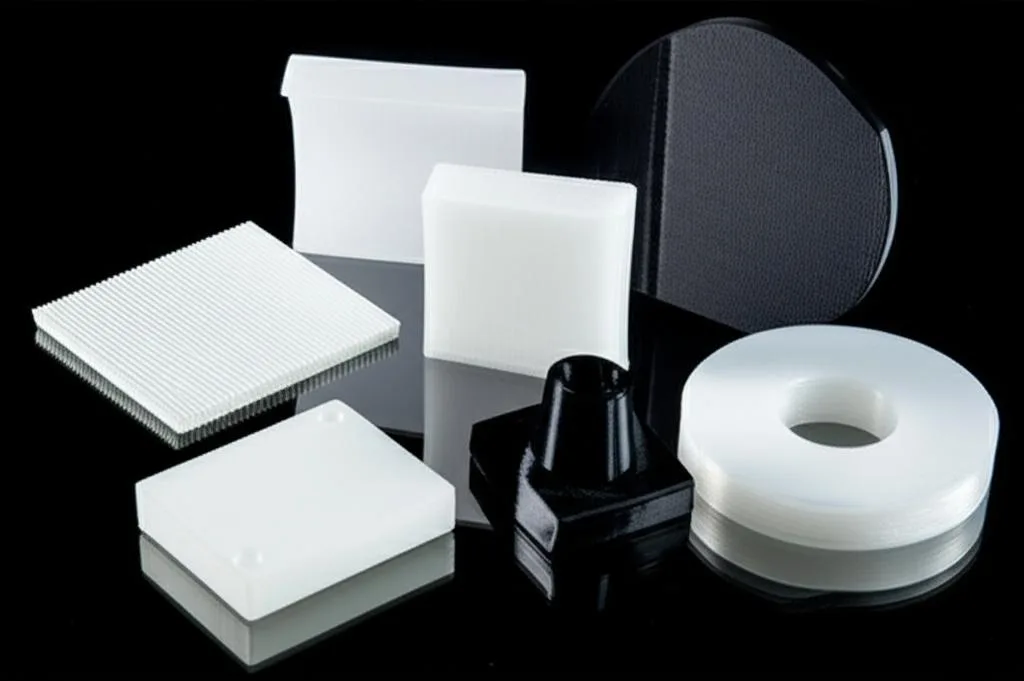
Let’s explore how different popular filaments demand tailored design strategies to unlock their full potential for durability.
PLA design tips for strength
Polylactic Acid (PLA) is a widely popular filament due to its ease of printing, low warping, and biodegradability. However, it’s also known for being relatively brittle compared to other engineering plastics, and has a lower heat deflection temperature.
- Embrace Roundness: Given PLA’s brittleness, sharp internal and external corners are particularly vulnerable to cracking under stress. Incorporating generous fillets and chamfers helps distribute stress more effectively. This is a crucial aspect of PLA design tips for longevity.
- Increase Wall Thickness: For parts requiring higher strength, increasing the number of perimeters (e.g., to 3-5 walls) can significantly boost impact resistance and overall robustness.
- Optimize Infill and Orientation: While PLA is brittle, optimizing infill (e.g., honeycomb or cubic at 20-30%) and print orientation to align stress with layers can still yield surprisingly strong parts.
- Consider Annealing: For specific applications, annealing PLA prints after printing can increase their crystallinity, leading to improved heat resistance and some mechanical strength, though it may also induce slight shrinkage and warping.
- Cost Context: PLA generally represents a more accessible entry point in terms of filament cost, making it a common choice for prototyping where material cost efficiency is a consideration.
ABS design rules for strength
Acrylonitrile Butadiene Styrene (ABS) is a classic engineering plastic, valued for its toughness, impact resistance, and higher temperature resistance compared to PLA. Its primary challenges lie in printing, particularly its tendency to warp and emit fumes.
- Enclosed Printing Environment: An enclosed build chamber is almost a necessity for ABS to maintain a stable temperature, reduce warping, and improve layer adhesion, all critical for strength. This is a fundamental ABS design rule.
- Robust Bed Adhesion: ABS requires excellent bed adhesion to prevent parts from detaching and warping. Solutions like ABS slurry or specific adhesives are often employed.
- Thicker Walls and Higher Infill: Leveraging ABS’s inherent toughness, increasing wall count (4-6+) and infill density (30-50% for functional parts) will produce incredibly robust components.
- Minimize Sharp Corners: While tougher than PLA, ABS still benefits from rounded corners to prevent stress concentrations, especially under impact.
- Vapor Smoothing: Post-processing with acetone vapor can not only improve surface finish but also fuse layers, significantly enhancing print strength and reducing anisotropy.
- Cost Context: ABS typically falls into a mid-range cost category, offering a good balance between mechanical properties and material expense for many functional applications.
PETG and other functional print materials
Polyethylene Terephthalate Glycol (PETG) has gained immense popularity as a bridge between PLA and ABS, offering good strength, flexibility, chemical resistance, and ease of printing with less warping than ABS. Beyond PETG, materials like Nylon and Polycarbonate (PC) are true workhorses for demanding functional print materials.
PETG design considerations
- Manage Stringing: PETG is prone to stringing, which can affect print quality but less so strength. Proper retraction settings are key.
- Excellent Layer Adhesion: PETG generally boasts superb layer adhesion, contributing to strong, durable parts. Ensure adequate extrusion temperature.
- Moderate Cooling: While some cooling is fine, excessive cooling can reduce layer adhesion, so finding a balance is important.
- Cost Context: PETG is often priced similarly to ABS, presenting a strong value proposition for its blend of properties and printability.
Nylon and Polycarbonate (PC) for extreme durability
When the application demands superior strength, abrasion resistance, and temperature tolerance, Nylon and PC often come into play. These are prime examples of functional print materials.
- Nylon: Known for its exceptional strength, flexibility, and abrasion resistance. It’s highly hygroscopic, requiring diligent drying before printing. Design considerations include thicker walls, higher infill, and careful management of moisture.
- Polycarbonate (PC): Offers very high strength, rigidity, and excellent heat resistance. It requires high print temperatures and an enclosed, heated chamber. Design for PC often involves robust structures to leverage its stiffness.
- Cost Context: Nylon and PC filaments are typically at the higher end of the cost spectrum, reflecting their advanced mechanical properties and specialized manufacturing requirements.
Beyond filament: Slicer settings and post-processing
Even with the perfect 3d printing material design, your slicer settings and post-processing steps can make or break a print’s durability.
- Extrusion Width and Temperature: Printing with a slightly wider extrusion width than your nozzle diameter can improve layer bonding. Optimizing print temperature for each material ensures proper melt flow and fusion.
- Cooling: While essential for overhangs and fine details, excessive cooling can weaken layer adhesion, especially for materials like ABS and PETG.
- Post-Processing: Techniques like annealing (for PLA and some other materials), vapor smoothing (for ABS), or applying protective coatings can significantly enhance a print’s mechanical properties and surface durability.
Making an informed choice in 3D printing material design
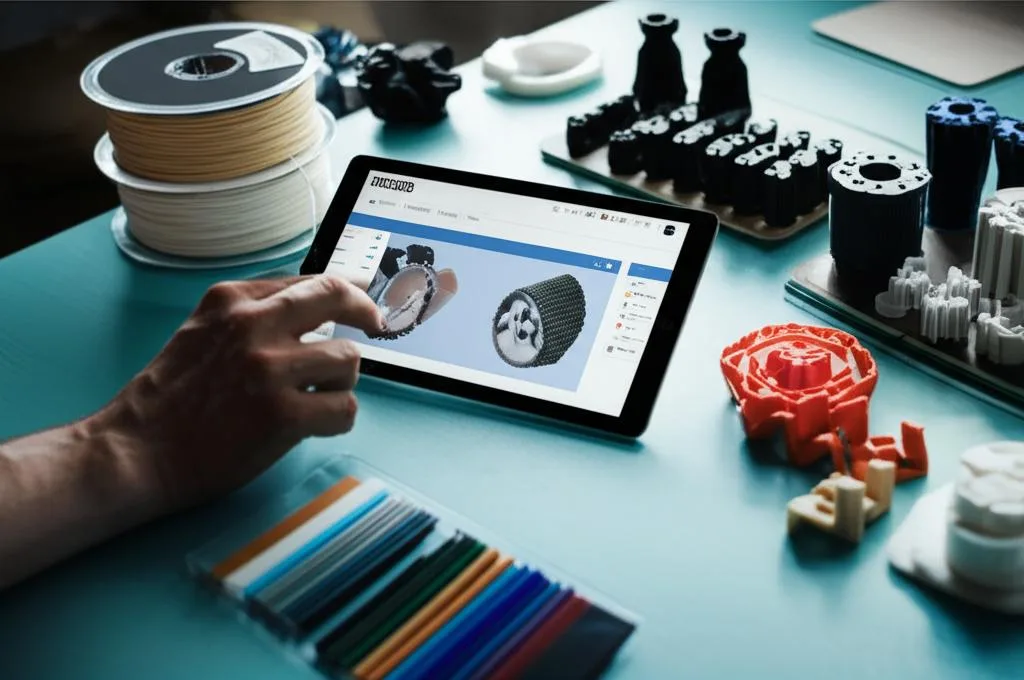
Ultimately, the quest for stronger 3D prints is a journey of understanding the symbiotic relationship between material science and design principles. There isn’t a single “best” material; rather, there’s the most appropriate material for a given application, budget, and desired performance profile. By diligently considering the inherent strengths and weaknesses of each filament, applying targeted design strategies, and fine-tuning your print process, you empower yourself to produce 3D printed parts that not only look good but truly perform and endure.
Frequently asked questions
Can I use PLA for outdoor parts that will sit in the sun?
PLA is not well suited for outdoor use in direct sunlight because it has a low heat deflection temperature. As noted in the article, annealing can improve PLA’s heat resistance, but the process may cause slight shrinkage and warping. For outdoor or hot-environment applications, ABS or Polycarbonate are better choices due to their higher temperature tolerance.
What is the most cost-effective way to dramatically increase the strength of a PETG print?
Increasing the wall thickness (number of perimeters) is often more efficient than simply raising infill percentage for improving external force resistance. PETG already has excellent layer adhesion, so focusing on shell count (e.g., 4-6 walls) and ensuring adequate extrusion temperature gives the best strength-to-cost ratio. The article notes PETG is priced similarly to ABS, offering strong value for its properties.
Why does my ABS print keep cracking or splitting along layer lines?
This is typically caused by poor layer adhesion due to thermal stress or insufficient temperature stability. The article emphasizes that an enclosed build chamber is almost a necessity for ABS to maintain stable temperature and reduce warping. Increasing print temperature and minimizing cooling fan speed also improve the bond between layers, reducing the chance of delamination.