
In the world of 3D printing, the pursuit of speed often comes with a trade-off: print quality. As enthusiasts push their machines to ever-higher velocities, two common adversaries emerge from the shadows: ghosting and ringing. These visual artifacts, manifesting as faint echoes or ripples around features on a printed part, are the bane of many a maker striving for pristine results. At the heart of the matter lies vibration – an inherent byproduct of rapid mechanical movement. This guide delves into the various approaches to frame bracing, a crucial structural reinforcement technique designed to mitigate these vibrations, offering an objective comparison of different solutions to help you make an informed decision.
Understanding ghosting and ringing in high-speed 3D printing
Before diving into solutions, it’s essential to grasp what ghosting and ringing truly are and why they appear. Both are visual distortions on the surface of a 3D print, typically noticeable on flat walls or around sharp corners.
- Ghosting (or echoing) refers to faint, repeating patterns that mirror the geometry of an underlying feature. For instance, if you have a raised letter ‘A’ on a wall, you might see faint outlines of the ‘A’ extending horizontally across the wall. This is often caused by the printer’s frame or components flexing and oscillating slightly after a sudden change in direction, such as when the print head accelerates or decelerates rapidly.
- Ringing (or salmon skin), on the other hand, appears as fine, concentric ripples or waves, usually more pronounced near corners or features where print head movement changes abruptly. It’s a direct result of mechanical vibrations in the printer’s structure, often at specific resonant frequencies, that cause the nozzle to momentarily deviate from its intended path.
Both phenomena are exacerbated by high-speed printing because increased velocity translates to greater inertial forces and more aggressive acceleration/deceleration profiles. A printer’s frame, if not sufficiently rigid, acts like a spring, absorbing and then releasing this kinetic energy, leading to these undesirable surface imperfections.
The role of frame bracing in mitigating vibrations

Frame bracing is a structural modification aimed at increasing the overall rigidity and stability of a 3D printer’s frame. By adding reinforcement, the goal is to reduce unwanted flex, twist, and resonance, thereby minimizing the vibrations that lead to ghosting and ringing. A more rigid frame means that the energy from print head movements is absorbed more effectively or dampened more quickly, allowing the nozzle to maintain its precise trajectory.
Comparing frame bracing solutions: cost, features, and effectiveness
There isn’t a one-size-fits-all solution for frame bracing. The optimal choice often depends on your specific printer model, budget, technical aptitude, and desired level of improvement. Here, we objectively compare various approaches.
1. DIY 3D-printed braces and structural reinforcements
This is often the entry point for many users looking to improve their printer’s stability. It leverages the printer’s own capabilities to produce upgrades.
- Cost implications: Generally very low. The primary costs are filament and electricity for printing the parts. Many designs are freely available online (e.g., on Printables or Thingiverse), eliminating design costs.
- Features and characteristics: These braces typically involve printing corner brackets, top-hat designs, or specific components that add material to inherently weak points of the frame. They are highly customizable; users can often scale or modify designs to fit their specific printer’s dimensions. Common materials include PLA, PETG, or ABS, with higher infill percentages often recommended for increased stiffness.
- Effectiveness: Varies significantly. While simple printed braces can offer noticeable improvements, particularly on entry-level printers with relatively flimsy frames, their effectiveness is limited by the material properties of the filament used. PLA, for instance, is less rigid than ABS or PETG, and even these plastics won’t match the stiffness of metal. They are best suited for addressing minor flex and are a good starting point for those on a tight budget or wanting to test the waters of frame reinforcement.
- Considerations: Requires a functional printer to print the braces themselves. The quality of the printed brace directly impacts its effectiveness. May require additional fasteners like nuts and bolts.
2. Off-the-shelf bracing kits
As the popularity of high-speed printing grows, manufacturers and aftermarket vendors have begun offering pre-designed bracing kits for popular 3D printer models.
- Cost implications: Moderate. These kits typically range from tens to a few hundred dollars, depending on the complexity, materials, and target printer model. Costs include materials, manufacturing, and often R&D.
- Features and characteristics: These kits are engineered for specific printer models, ensuring a precise fit and optimized structural support. They often incorporate stronger materials like aluminum plates, steel rods, or high-density plastic components. Installation is generally straightforward, with clear instructions provided. Some kits might include tensioning rods that create a triangulated structure, significantly increasing rigidity.
- Effectiveness: Generally high. Because these kits are purpose-built and often utilize superior materials and engineering principles, they tend to offer a more substantial reduction in ghosting and ringing compared to basic 3D-printed parts. The use of metal components ensures a much higher Young’s modulus (stiffness) than plastic.
- Considerations: Compatibility is key – ensure the kit is designed for your specific printer. While installation is easier than custom solutions, it still requires some mechanical aptitude. The investment is higher than DIY printed parts.
3. Custom metal extrusions and brackets
For those seeking the highest level of structural integrity and willing to invest more time and resources, custom metal bracing offers a robust solution.
- Cost implications: Higher. This approach involves purchasing raw materials like aluminum extrusions (e.g., 2020, 3030 profiles), steel angle brackets, or custom-cut aluminum plates. Costs can quickly add up, especially if custom machining or cutting services are required. Fasteners (T-nuts, bolts, corner connectors) also contribute to the overall expense.
- Features and characteristics: This method allows for maximum customization and rigidity. Users can design and implement a bracing scheme tailored precisely to their printer’s weaknesses. Aluminum extrusions are particularly popular for their strength-to-weight ratio and modularity. The resulting structure can be exceptionally stiff, often transforming the printer’s entire frame into a much more robust assembly.
- Effectiveness: Potentially the highest. By strategically adding or replacing frame components with high-modulus metals, vibrations can be dramatically reduced, leading to significant improvements in print quality at high speeds. This method can effectively eliminate most ghosting and ringing artifacts attributable to frame flex.
- Considerations: Requires significant technical skill, including CAD design (if designing from scratch), measurement accuracy, and potentially drilling, tapping, or cutting metal. The initial investment in tools and materials can be substantial. It’s a more involved project, best suited for experienced makers comfortable with hardware modification.
4. Integrated frame solutions (e.g., structural enclosures)
Some advanced bracing strategies involve integrating the printer’s frame with a robust enclosure, effectively making the enclosure part of the structural support system.
- Cost implications: Highest. Building or purchasing a high-quality, structurally integrated enclosure involves significant material costs (wood, acrylic, aluminum profiles) and potentially specialized hardware.
- Features and characteristics: This solution offers dual benefits: thermal management for printing advanced materials and superior structural reinforcement. The enclosure walls or frame can be designed to directly brace the printer’s internal structure, creating an incredibly rigid system. This often involves mounting the printer’s frame directly to a sturdy external frame.
- Effectiveness: Very high. By essentially building a ‘printer within a printer’ or integrating the two, the combined structure can achieve exceptional rigidity. This not only dampens vibrations but also provides a stable environment for consistent printing, especially with materials sensitive to temperature fluctuations.
- Considerations: Requires significant space, a substantial budget, and advanced DIY skills. Design and execution can be complex. Ventilation and accessibility need careful planning. This is often an end-game solution for those seeking ultimate performance and versatility.
Factors to consider when making your choice
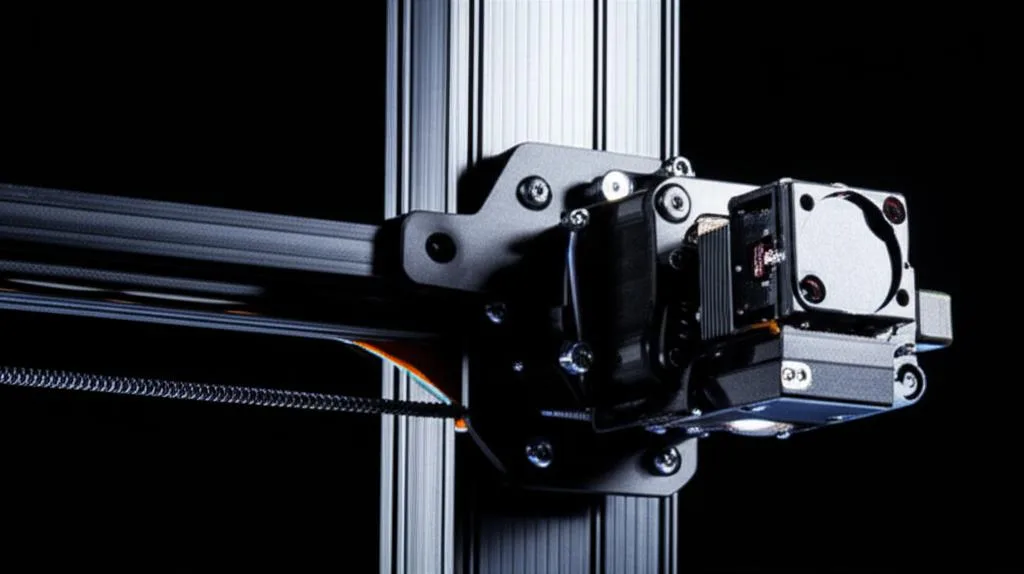
When weighing these options, several factors come into play, influencing the balance between cost, effort, and expected results:
- Your printer’s existing frame: Some printers inherently have more rigid frames than others. A budget printer with a flimsy acrylic or thin aluminum frame will likely benefit more from even basic bracing than a high-end machine already built like a tank.
- Desired print speeds: If you’re only looking for marginal speed increases, a simpler bracing solution might suffice. For pushing the absolute limits of your printer’s velocity, more aggressive and robust bracing will be necessary.
- Budget: This is often the most significant limiting factor. Clearly define how much you are willing to spend on upgrades.
- Technical skill and tools: Assess your comfort level with disassembling parts, working with CAD, cutting materials, and using various tools.
- Aesthetics: Some users prioritize a clean, integrated look, while others are content with functional additions, regardless of appearance.
- Material considerations: For printed braces, consider materials like PETG or ABS over PLA for better stiffness and heat resistance. For metal solutions, aluminum offers a good balance of strength and workability.
Beyond ghosting and ringing: additional benefits of structural reinforcement
While the primary goal of frame bracing is to combat ghosting and ringing, the benefits extend further. A more rigid printer frame can contribute to:
- Improved dimensional accuracy: Less frame flex means more precise movement of the print head, leading to parts that are closer to their intended dimensions.
- Reduced wear and tear: A stable frame puts less stress on moving parts, potentially extending the lifespan of linear rails, bearings, and motors.
- Quieter operation: Dampening vibrations can also lead to a noticeable reduction in operational noise, a welcome side effect for many users.
- Foundation for future upgrades: A rock-solid frame provides a stable base for further modifications, such as heavier print heads, direct drive extruders, or advanced motion systems, without introducing new vibration issues.
Making an informed decision
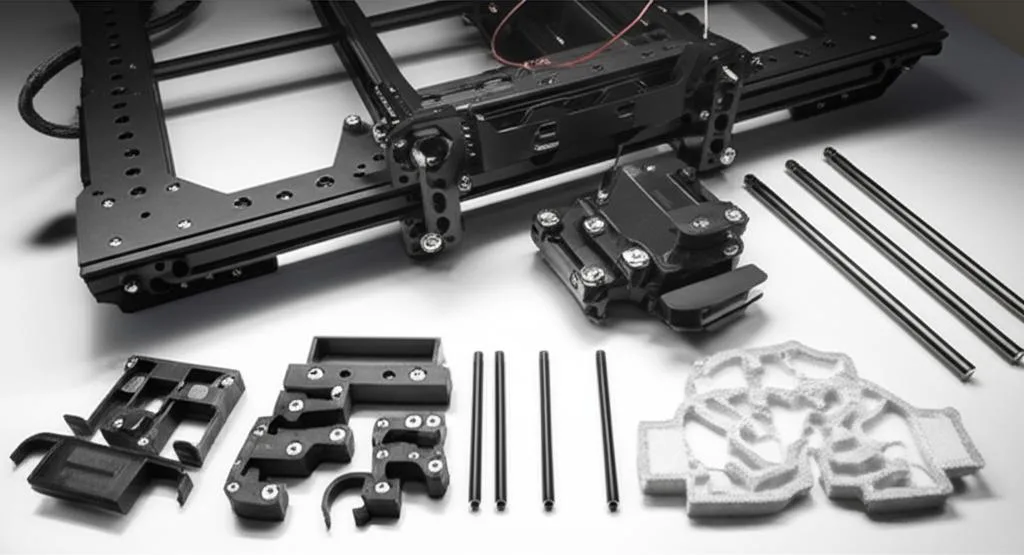
Eliminating ghosting and ringing through frame bracing is a journey that can range from simple, low-cost modifications to complex, high-investment overhauls. Each solution presents a different balance of cost, complexity, and effectiveness. There is no single “best” option; rather, the most suitable choice aligns with your specific printer, your technical capabilities, and your aspirations for print quality and speed.
By objectively comparing the features and cost implications of DIY printed parts, off-the-shelf kits, custom metal solutions, and integrated enclosures, you are equipped to make a decision that best serves your high-speed 3D printing endeavors. The key is to assess your needs, evaluate the options presented, and choose the path that offers the most appropriate structural reinforcement for your setup, ultimately paving the way for cleaner, more precise prints.
Frequently asked questions
Can frame bracing completely eliminate ghosting and ringing, or should I also adjust acceleration and jerk settings?
Frame bracing reduces the mechanical vibrations that cause ghosting and ringing, but it rarely eliminates them entirely on its own. For the best results, you should combine structural reinforcement with firmware tuning—lowering acceleration and jerk values in your slicer or printer firmware directly reduces the inertial forces that excite those vibrations. Most users find that a moderately braced frame with conservative acceleration settings yields far cleaner prints than either approach alone.
Will adding printed PLA braces actually help if my printer has an aluminum frame?
It depends on the frame’s stiffness. A printer with thin, low-grade aluminum extrusions can still benefit from PLA braces because PLA is stiffer than the acrylic used on budget machines, but the improvement will be modest—PLA’s Young’s modulus is roughly one-tenth that of aluminum. For an already-rigid aluminum frame, printed plastic braces add negligible rigidity; off-the-shelf metal kits or custom aluminum extrusions are far more effective in that scenario.
Is it safe to print the DIY braces on the same printer I’m trying to upgrade, or will vibration during the print ruin the parts?
It is generally safe to print braces on the printer you intend to upgrade, as long as the machine is currently functional and producing acceptable prints at normal speeds. Ghosting and ringing artifacts will appear on the brace parts themselves if you print them at high speed, but those surface imperfections do not significantly affect the brace’s structural performance—its stiffness depends on infill percentage and layer adhesion, not surface finish. For best results, print the braces at a moderate speed with high infill (40–60%) using PETG or ABS rather than PLA.