The automotive industry, a behemoth of innovation and engineering prowess, grapples with a persistent challenge: the efficient and economical supply of spare parts, particularly for older vehicles or specialized, low-volume models. As vehicles age, the original equipment manufacturers (OEMs) often discontinue the production of certain components due to diminishing demand, making these parts ‘obsolete’. This creates a significant headache for repair shops, classic car enthusiasts, and even modern vehicle owners facing a critical but rare part failure. The traditional manufacturing paradigm, heavily reliant on economies of scale, often makes producing these low-volume or obsolete parts prohibitively expensive.
This long-standing dilemma has led to a burgeoning interest in additive manufacturing, more commonly known as 3D printing, as a viable and transformative solution. By enabling on-demand production, 3D printing offers a compelling alternative to conventional methods, potentially reshaping the supply chain for automotive spare parts and breathing new life into the maintenance and restoration of countless vehicles.
The traditional spare parts supply chain: A costly balancing act

To fully appreciate the potential of 3D printing, it’s essential to understand the inherent complexities and cost drivers of the traditional spare parts supply chain. For mass-produced components, the process is streamlined: high-volume production runs amortize the significant upfront costs of tooling (molds, dies, jigs), material procurement is optimized, and logistics are well-established. However, this model breaks down when demand is sporadic or extremely low.
- Tooling costs: Creating the necessary molds or dies for injection molding, casting, or stamping is a substantial capital expenditure. For a part needed in quantities of a few dozen per year, this investment is simply not justifiable.
- Minimum Order Quantities (MOQs): Manufacturers typically impose MOQs to make production runs economically viable. This forces OEMs or distributors to produce or purchase more parts than immediately needed, tying up capital in inventory.
- Inventory management and warehousing: Storing physical spare parts, especially for components with unpredictable demand, incurs significant costs. These include warehouse space, labor for picking and packing, insurance, and the risk of obsolescence (parts never sold) or damage.
- Long lead times: If a part is truly out of production and tooling no longer exists, re-establishing a manufacturing line can take months, if not years, delaying repairs and frustrating customers.
- Logistics and distribution: Shipping physical parts across global networks adds further costs and environmental impact.
These factors contribute to a scenario where rare or obsolete parts become either unavailable, incredibly expensive, or require extensive searching through salvage yards – a far cry from an efficient, sustainable solution.
3D printing: A paradigm shift for automotive spare parts
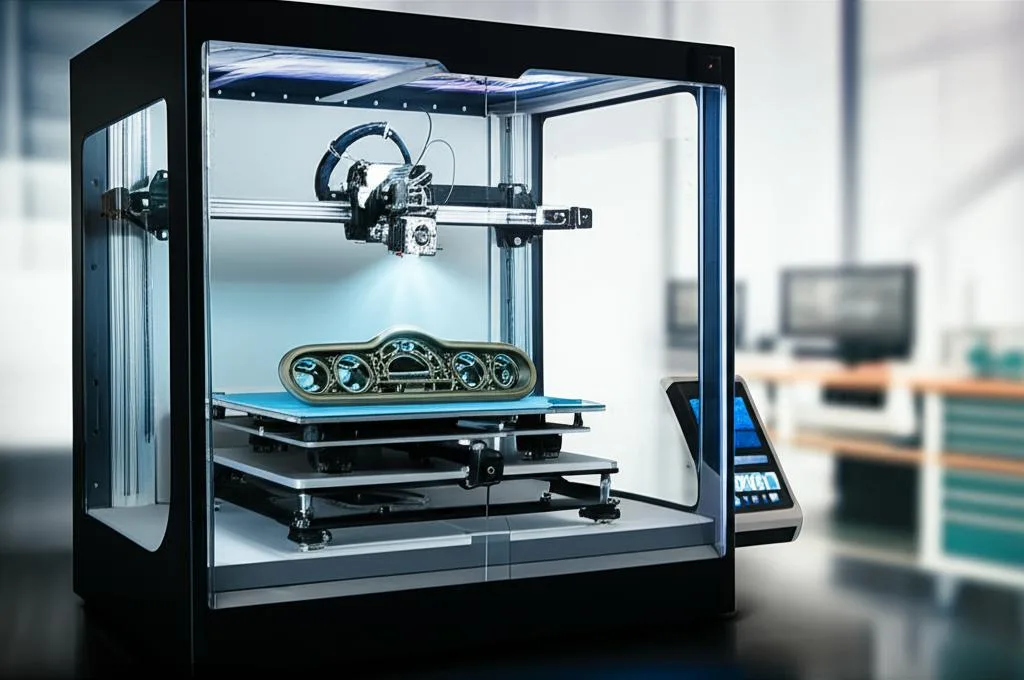
Additive manufacturing fundamentally alters the cost structure and operational dynamics of part production. Instead of subtractive methods (machining away material) or formative methods (shaping material with tooling), 3D printing builds parts layer by layer from a digital design. This ‘digital-to-physical’ workflow unlocks several key advantages for obsolete and low-volume automotive components.
Cost structures in additive manufacturing
The cost breakdown for a 3D printed part differs significantly from traditional manufacturing. While it might not always be the cheapest option for high-volume, standard parts, its economic advantages shine in specific niches:
- No tooling costs: This is arguably the most impactful financial benefit. The absence of molds or dies eliminates a massive upfront capital expenditure, making even a single part production economically feasible.
- Per-part cost model: Costs are primarily driven by material usage, machine time, and post-processing. This means that whether you print one part or a hundred, the per-unit cost remains relatively consistent, without the steep price reduction seen with higher volumes in traditional manufacturing.
- Digital inventory: Instead of physical stock, OEMs can maintain a digital library of CAD files. Parts are printed only when and where they are needed, drastically reducing warehousing costs and the risk of obsolete inventory.
- Material cost: While 3D printing materials can sometimes be more expensive per kilogram than their bulk counterparts, the ability to use only the necessary amount of material (minimal waste) and avoid MOQs can offset this.
- Machine depreciation and maintenance: The cost of the 3D printer itself is amortized over the parts produced. For service bureaus or larger operations, this is a fixed overhead.
- Design and engineering: Initial investment in creating or reverse-engineering CAD models for obsolete parts is necessary, but this is a one-time cost per part design.
This shift from large upfront investments and inventory holding to a more variable, on-demand cost model makes 3D printing particularly attractive for niche automotive applications.
Comparing features and capabilities
Beyond cost, 3D printing offers distinct features that can be advantageous for automotive spare parts:
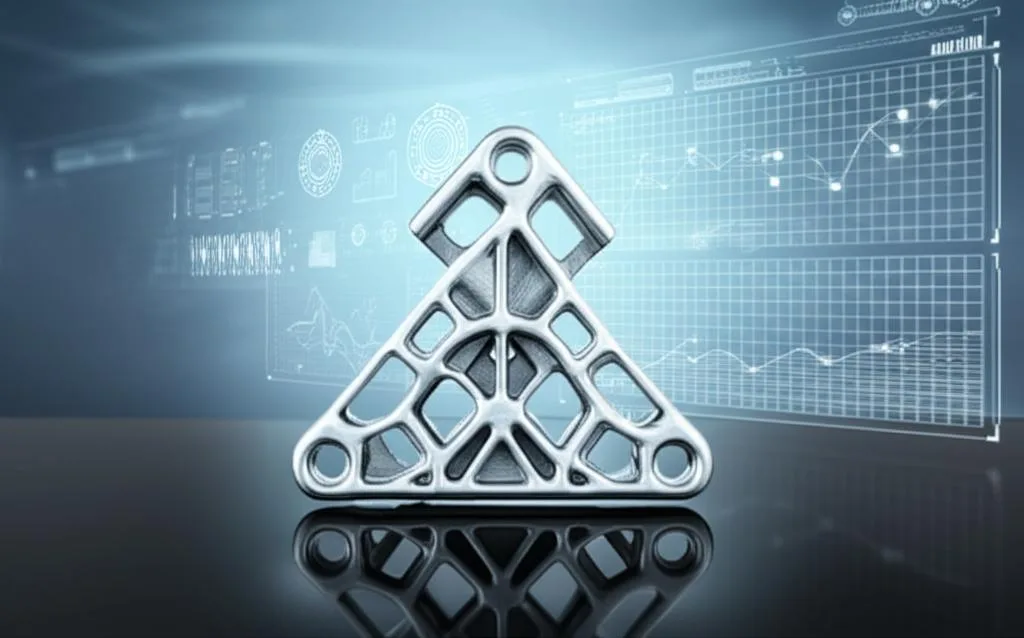
- Design complexity and customization: 3D printing excels at producing complex geometries, internal structures, and organic shapes that are difficult or impossible with traditional methods. This allows for lightweighting, part consolidation, and even performance improvements over original designs. Customization for specific vehicle modifications or individual preferences becomes feasible.
- Material variety and innovation: A wide array of polymers (plastics, resins, composites) and metals (aluminum, titanium, stainless steel) can be 3D printed. This includes engineering-grade materials with properties suitable for functional automotive components, such as high-temperature resistance, chemical inertness, or specific mechanical strength.
- Rapid prototyping and iteration: While not strictly for spare parts, the ability to quickly produce prototypes means that if a design needs to be reverse-engineered or improved, the iteration cycle is significantly shortened.
- Localized and distributed manufacturing: Digital files can be sent anywhere in the world for local production, reducing shipping times and costs, and potentially creating more resilient supply chains.
- Part consolidation: Multiple components that traditionally required assembly can sometimes be redesigned into a single, complex 3D printed part, reducing assembly time and potential failure points.
While surface finish and dimensional accuracy might require post-processing for certain applications, the continuous advancements in 3D printing technology are rapidly closing these gaps.
Key 3D printing technologies for automotive spare parts
Several additive manufacturing processes are relevant to automotive spare parts, each with its own cost implications, material capabilities, and part characteristics:
Polymer-based technologies
- Fused Deposition Modeling (FDM) / Fused Filament Fabrication (FFF): Often the most accessible and cost-effective. FDM builds parts by extruding thermoplastic filament layer by layer. It’s suitable for non-critical, aesthetic, or low-stress functional parts like interior trim, dashboard components, or ducting. Materials include ABS, PETG, Nylon, and even carbon fiber reinforced plastics. Costs are relatively low per part, primarily driven by material and print time.
- Stereolithography (SLA) / Digital Light Processing (DLP): Uses a UV laser or projector to cure liquid resin into solid layers. SLA/DLP offers high resolution and smooth surface finishes, ideal for detailed aesthetic parts, complex prototypes, or molds. Resins offer various properties, from tough to flexible. Per-part costs are higher than FDM due to material and machine complexity, but still avoid tooling.
- Selective Laser Sintering (SLS) / Multi Jet Fusion (MJF): These powder bed fusion technologies use a laser (SLS) or an agent and heat (MJF) to fuse polymer powder. They produce strong, functional parts with good mechanical properties and isotropic strength (uniform strength in all directions) without support structures. Nylon 11 and 12 are common materials. Ideal for robust functional components like brackets, housings, or connectors. Costs are moderate to high per part, but very competitive for batches of parts that fit within the build volume due to efficient packing.
Metal-based technologies
- Direct Metal Laser Sintering (DMLS) / Selective Laser Melting (SLM): These processes use a high-powered laser to fully melt and fuse metal powders (e.g., aluminum, stainless steel, titanium). They produce fully dense, high-performance metal parts with mechanical properties comparable to or exceeding traditionally manufactured components. Essential for critical, high-stress components like engine brackets, specialized manifolds, or structural elements where light weighting is crucial. Costs per part are significantly higher due to expensive machines, materials, and post-processing, but often the only viable option for highly complex or truly obsolete metal parts without re-tooling.
The choice of technology depends heavily on the specific requirements of the part: its function, material properties needed, aesthetic demands, and the acceptable cost per unit.
Supply chain resilience and environmental considerations
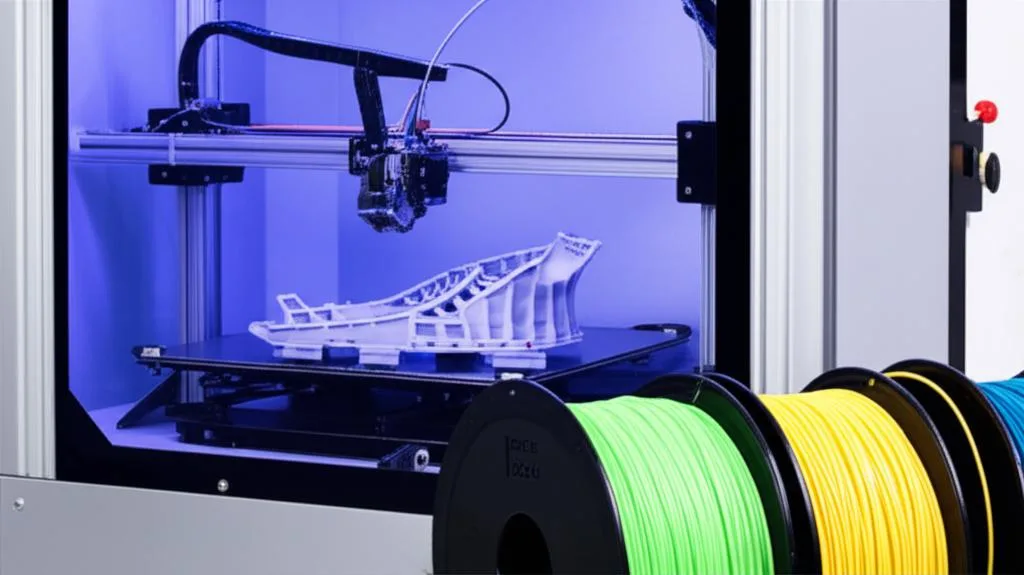
Beyond direct cost and feature comparisons, 3D printing offers broader benefits for the automotive industry’s supply chain and sustainability goals:
- Reduced lead times: On-demand production significantly cuts down the time from order to delivery, crucial for vehicle repairs and minimizing downtime.
- Decentralized production: Digital files can be sent to local 3D printing service bureaus or regional production hubs, reducing reliance on single, distant manufacturing facilities and shortening transportation distances.
- Waste reduction: Additive processes generally produce less material waste compared to subtractive manufacturing. Digital inventory also eliminates waste from unsold or obsolete physical stock.
- Circular economy enablement: 3D printing facilitates the repair and refurbishment of existing vehicles, extending their lifespan rather than prematurely scrapping them due to a single unavailable part.
These factors contribute to a more agile, responsive, and potentially more environmentally friendly spare parts ecosystem.
Challenges and considerations for adoption
While the promise of 3D printing for automotive spare parts is significant, its widespread adoption is not without challenges:
- Material qualification and certification: Ensuring 3D printed parts meet the stringent performance, safety, and longevity standards of the automotive industry requires rigorous testing and certification, which can be a lengthy and costly process.
- Intellectual property: For obsolete parts, original design data may not exist, requiring reverse engineering. For newer parts, managing digital IP and preventing unauthorized replication is crucial.
- Scalability for higher volumes: While excellent for low-volume, 3D printing generally cannot compete on cost or speed with traditional mass production for hundreds of thousands of identical parts.
- Post-processing requirements: Many 3D printed parts require cleaning, curing, sanding, or machining to achieve desired surface finishes, dimensional accuracy, or mechanical properties, adding to the overall cost and time.
- Initial investment in expertise and infrastructure: OEMs or suppliers looking to bring 3D printing in-house need to invest in equipment, software, and skilled personnel.
Conclusion: Empowering informed decisions
The automotive spare parts dilemma, particularly for obsolete and low-volume components, presents a compelling use case for 3D printing. This technology offers a fundamentally different cost structure, shifting from high upfront tooling and inventory expenses to a more variable, on-demand, per-part model. Its inherent features, such as design complexity, material versatility, and localized production capabilities, provide distinct advantages over traditional manufacturing for specific applications.
However, it is not a panacea. The choice between traditional manufacturing and 3D printing for a particular spare part requires a careful, objective evaluation of several factors: the required volume, part complexity, material properties, performance demands, lead time criticality, and the overall cost implications across the entire lifecycle of the part. By understanding the nuanced trade-offs in cost structures and technical features, stakeholders in the automotive industry can make informed decisions, leveraging 3D printing to unlock new efficiencies, enhance customer satisfaction, and ensure the longevity of vehicles on the road.
Frequently asked questions
Can I 3D print a structural metal part like a broken engine bracket, or is this limited to plastic interior trim?
Yes, structural metal parts are feasible using Direct Metal Laser Sintering (DMLS) or Selective Laser Melting (SLM), which produce fully dense components in aluminum, stainless steel, or titanium with properties comparable to traditionally made parts. However, costs per part are significantly higher due to expensive machines and materials, so this is typically reserved for critical high-stress components where retooling for an obsolete metal part is not viable.
If I only need one or two copies of an obsolete plastic bracket, is FDM printing cost-effective compared to machining it from a block?
For very low volumes, FDM/FFF is often cost-effective because it eliminates the high upfront tooling costs of injection molding and avoids the material waste of machining from a solid block. Costs are driven primarily by filament material and print time, making single-unit production economically feasible, though surface finish may require post-processing like sanding.
What are the main safety or reliability concerns when using a 3D printed part as a functional replacement in a vehicle?
The primary concerns are material qualification and certification, since 3D printed parts must meet the same performance, safety, and longevity standards as OEM components, which requires rigorous testing. Additionally, parts from powder bed fusion (SLS/MJF) offer isotropic strength, while FDM parts can be weaker along layer lines, so you must choose the right technology and material for the part’s stress and temperature demands.