In the realm of 3D printing, managing the complexity and size of digital models is a constant challenge. This is where STL decimation, also known as mesh optimization or polygon reduction, comes into play. It's a critical process for streamlining 3D models by intelligently reducing the number of triangles (polygons) that define their surfaces, without significantly compromising the visual integrity or structural accuracy of the final print. The benefits are manifold: smaller file size, faster processing times in slicers, reduced memory consumption, and potentially improved print quality by eliminating unnecessary geometric detail that can sometimes lead to artifacts.
Understanding the nuances of STL decimation

Explore the
Snapmaker U1
The core principle behind STL decimation is to identify and remove redundant polygons, particularly in flat or smoothly curved areas where many triangles convey little unique geometric information. Conversely, areas with intricate details or sharp edges require a higher polygon count to maintain fidelity. Effective decimation algorithms strike a delicate balance, preserving crucial features while aggressively simplifying less critical regions. This process is particularly vital when dealing with large STL files generated from high-resolution scans or complex CAD designs, which can otherwise bog down workstations and lead to lengthy slicing times.
Comparing solutions for STL mesh decimation
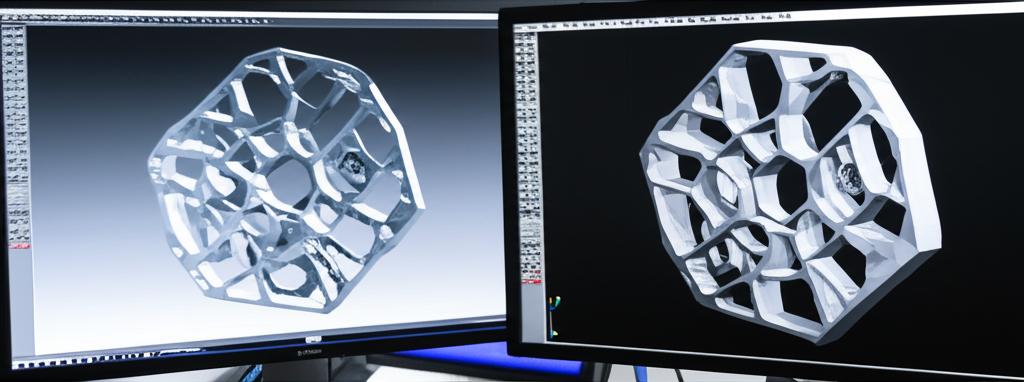
A range of tools and solutions are available for performing STL decimation, each with its own cost structure, feature set, and suitability for different user needs. Understanding these options is key to making an informed decision that aligns with specific project requirements and budgetary constraints.
Dedicated mesh processing software
- Features: These specialized applications often offer the most advanced and granular control over the decimation process. Users can typically define target polygon counts or percentages, set thresholds for detail preservation, and utilize sophisticated algorithms that intelligently identify and protect critical features. Many include tools for mesh repair, smoothing, and analysis, providing a comprehensive toolkit for model preparation. They are designed to handle extremely large STL files efficiently, making them a staple for professionals working with intricate or scanned data.
- Cost Structure: Dedicated mesh processing software typically falls into two main categories: perpetual licenses with a one-time purchase fee, or subscription-based models (monthly or annually). Free trials are often available, allowing users to evaluate functionality before committing. The initial investment can be significant, but for frequent users, the advanced features and control can justify the expense.
CAD/CAM software with built-in decimation tools
- Features: Many professional CAD (Computer-Aided Design) and CAM (Computer-Aided Manufacturing) packages include integrated tools for mesh decimation. These tools are often designed to work seamlessly within the broader design workflow, allowing users to optimize models without exporting to external software. While convenient, their decimation capabilities might be less extensive or offer less fine-grained control compared to dedicated mesh processors. They often prioritize maintaining design intent over aggressive polygon reduction, which might not always be ideal for extreme file size reduction.
- Cost Structure: Decimation features are usually bundled as part of the larger CAD/CAM software suite. The cost is therefore tied to the overall software license, which can range from several hundred to several thousand dollars annually for subscription models, or a substantial upfront cost for perpetual licenses. For users already invested in a particular CAD ecosystem, this approach offers convenience and avoids additional software purchases.
Online decimation services and web-based tools
- Features: A growing number of online platforms offer cloud-based STL decimation. These services are often user-friendly, requiring users to upload their STL files, specify a decimation percentage or target file size, and then download the optimized model. They are particularly appealing for users who need occasional decimation without investing in software or for those seeking quick, straightforward solutions. The level of control can vary significantly, with some offering more advanced options like feature preservation.
- Cost Structure: Many online decimation services offer a freemium model. Basic decimation up to a certain file size or polygon count might be free, with premium features, higher limits, or faster processing speeds available through a subscription or per-use fee. This can be a cost-effective solution for intermittent use or for smaller projects, avoiding the overhead of software ownership.
Open-source libraries and scripts
- Features: For users with programming skills, open-source libraries (e.g., those found in Python or C++ environments) provide powerful frameworks for implementing custom STL decimation algorithms. This approach offers the ultimate flexibility and control, allowing developers to tailor the decimation logic precisely to their needs, integrate it into custom pipelines, and even experiment with novel algorithms. Projects like MeshLab (which is free and open-source) also offer robust decimation capabilities through a graphical user interface.
- Cost Structure: The software itself is typically free. However, this option demands a significant investment in time and technical expertise for implementation, debugging, and maintenance. While there's no direct monetary cost for the software, the 'cost' is incurred through development effort. This makes it a viable option for research, highly specialized applications, or for organizations with in-house development teams.
Choosing the right path for your 3D printing needs
The optimal choice for STL decimation hinges on several factors: the frequency of use, the complexity and size of your models, your budget, and your technical proficiency. For professionals regularly handling complex geometries and requiring maximum control over mesh optimization, dedicated software or a robust CAD/CAM solution might be warranted despite the higher upfront cost. For occasional users or those prioritizing ease of use, online services offer a convenient and often cost-effective alternative. Meanwhile, open-source tools cater to those seeking deep customization and have the technical know-how to leverage them.
Ultimately, the goal is to achieve an ideal balance between reduced file size and preserved print quality, ensuring that your 3D printing workflow remains efficient and produces excellent results without unnecessary computational overhead.