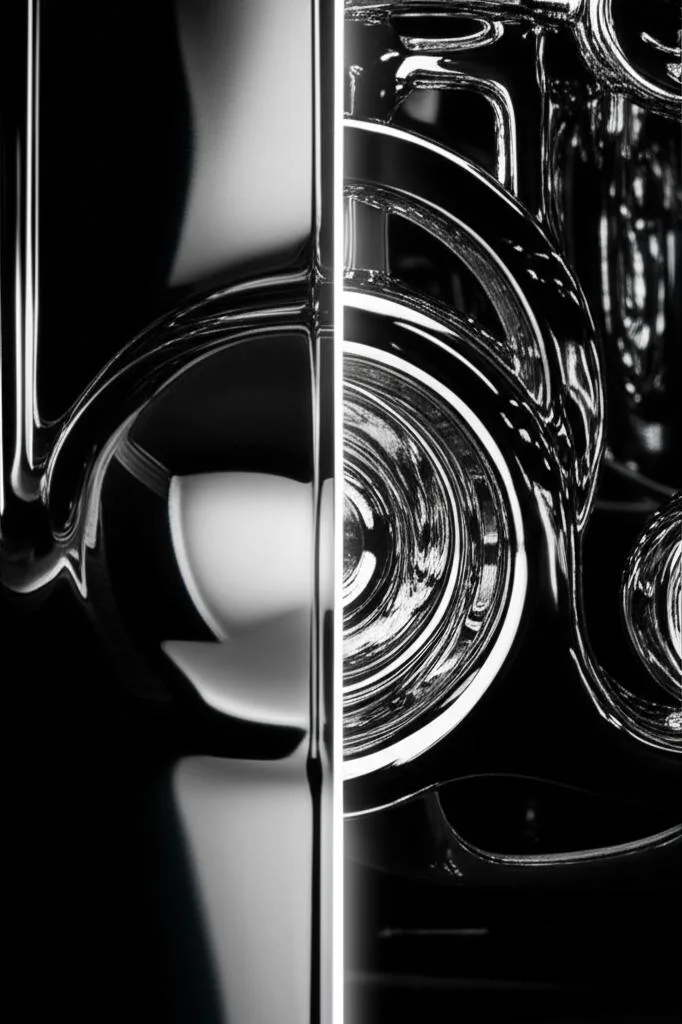
Capturing the intricate details of real-world objects in 3D using photogrammetry has revolutionized industries from heritage preservation to product design. However, a common stumbling block for even seasoned professionals is dealing with shiny, reflective, or transparent surfaces. These challenging materials, often referred to as ‘photogrammetry shiny objects,’ present unique hurdles due to their interaction with light, leading to glare, blown-out highlights, and elusive surface textures. This guide delves into advanced studio lighting photogrammetry techniques designed to overcome these obstacles, ensuring high-quality 3D scans even for the most reflective subjects.
Understanding the challenge of reflective surface scanning
The world’s first desktop full-color 3D & UV printer. Back the Kickstarter campaign with a refundable $50 deposit for VIP pricing.
Before diving into solutions, it’s crucial to grasp why reflective objects pose such a significant problem for photogrammetry. Photogrammetry software relies on identifying unique, consistent features across multiple photographs to reconstruct an object’s geometry. Shiny surfaces, however, behave differently:
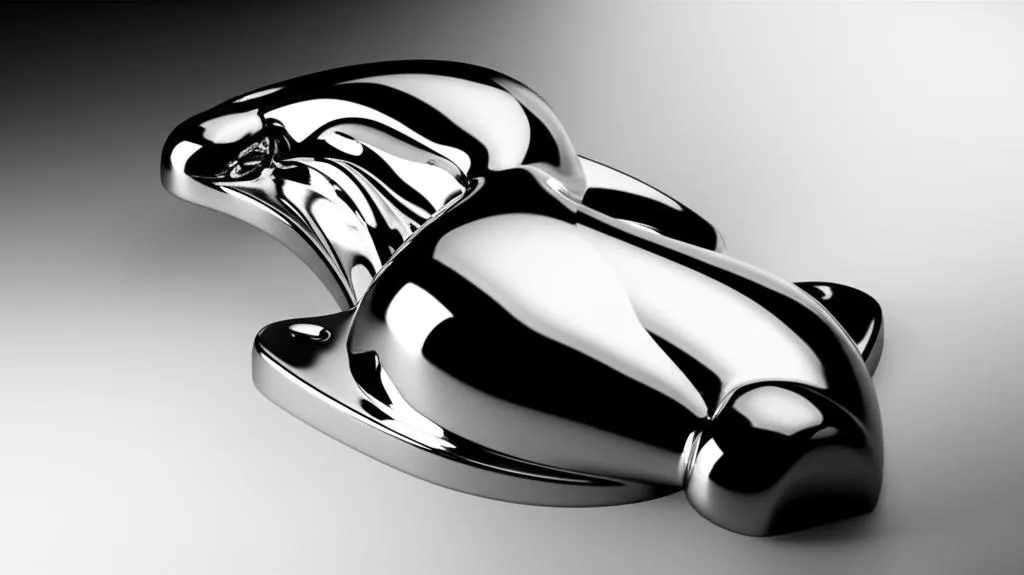
- Specular Reflections: These are mirror-like reflections where light bounces off the surface at a single angle. They appear as bright spots or streaks (glare) that shift dramatically with camera position, making it impossible for the software to track consistent features. This is the primary culprit behind failed `photogrammetry shiny objects` scans.
- Lack of Diffuse Texture: Many shiny objects lack inherent diffuse texture – the subtle variations in color and shade that give an object its unique appearance regardless of viewing angle. Instead, their perceived texture is often dominated by reflections of their environment, which change with every shot.
- Shadow Casting: While not exclusive to shiny objects, their often smooth, hard surfaces can create sharp, high-contrast shadows that obscure geometry, especially in direct lighting setups.
- Transparency: Objects like glass or clear plastics allow light to pass through, creating refractive effects and making it difficult to capture their true form without complex setups. While related, this guide primarily focuses on opaque reflective surfaces.
Effectively tackling these issues requires a deliberate and often sophisticated approach to lighting, moving beyond standard diffuse setups to specialized techniques that mitigate or eliminate unwanted reflections.
Foundational principles for scanning difficult surfaces
Regardless of the specific advanced technique employed, a few foundational principles underpin successful `reflective surface scanning`:
- Controlled Environment: Minimize ambient light and external reflections. A dedicated studio space with dark or neutral walls is ideal.
- Even Illumination: Aim for consistent, soft lighting that minimizes harsh shadows and provides uniform brightness across the object.
- High-Quality Imagery: Sharp focus, correct exposure, and appropriate depth of field are non-negotiable.
- Consistent Camera Settings: Lock your aperture, ISO, and white balance to ensure consistency across all images, which is vital for photogrammetry processing.
Advanced lighting techniques for glare reduction in 3D scans
Here, we explore several advanced methods to achieve `glare reduction 3d scan` results for challenging surfaces, each with its own set of features, advantages, and considerations.
1. Cross-polarization for reflection suppression
Cross-polarization is arguably the most powerful and widely adopted technique for reducing specular reflections on non-metallic shiny objects. It leverages the properties of polarized light to effectively ‘turn off’ reflections.
How it works:
Light waves oscillate in various directions. A polarizing filter allows only light waves oscillating in a specific plane to pass through. In cross-polarization:
- Polarized Light Sources: A linear polarizing film is placed over your light sources (e.g., LED panels, strobes). This polarizes the light hitting the object.
- Camera Polarizer: A second polarizing filter (usually circular for convenience with autofocus) is placed on your camera lens. This filter is rotated 90 degrees relative to the light source polarizers.
When polarized light hits a non-metallic reflective surface, the specular reflection retains its polarization. By rotating the camera’s polarizer to be ‘crossed’ (90 degrees) relative to the light’s polarization, these specular reflections are blocked. Diffuse reflections, however, lose their polarization upon interaction with the surface and can still pass through the camera’s filter, allowing the underlying texture to be captured.
Features and trade-offs:
- Effectiveness: Highly effective for non-metallic reflections (plastics, painted surfaces, glass, ceramics). Less effective for bare metals, which depolarize light differently.
- Equipment: Requires linear polarizing film for each light source and a circular polarizer for the camera lens.
- Light Loss: Polarizing filters absorb some light, meaning you’ll need more powerful lights or longer exposure times. This can be a significant consideration for handheld setups or fast-paced scanning.
- Color Shifts: Minor color shifts can occur, which are generally correctable in post-processing.
- Complexity: Moderate. Setting up multiple polarized lights and ensuring correct alignment of filters can take practice.
- Non-Invasive: Does not alter the object, making it suitable for delicate or valuable items.
2. Diffuse dome or sphere lighting
A diffuse dome or sphere creates an almost perfectly even lighting environment, significantly reducing harsh shadows and softening reflections by scattering light from all directions. This approach is fundamental for high-quality `studio lighting photogrammetry`.
How it works:
The object is placed inside a translucent dome or sphere (often white or light grey). Light sources (e.g., LED strips, flash units) are positioned outside the dome, illuminating its inner surface. The dome then acts as a giant, soft light source, wrapping the object in even, shadowless light.
Features and trade-offs:
- Evenness: Provides exceptional, uniform illumination, ideal for capturing subtle surface details without distracting shadows.
- Reflection Management: While not eliminating reflections entirely (especially on highly specular metals), it softens them considerably, making them less disruptive for photogrammetry software. Often, a diffuse dome is combined with cross-polarization for the best results on extremely challenging surfaces.
- Equipment: Can range from simple, collapsible light tents (for smaller objects) to custom-built photogrammetry domes or commercial solutions.
- Size Limitations: The size of the dome dictates the maximum size of the object that can be scanned.
- Complexity: Moderate to high, depending on whether you build a DIY solution or invest in a commercial setup.
- Versatility: Excellent for a wide range of objects, particularly those with complex geometries where shadows would otherwise obscure details.
3. Multi-light source arrays and exposure stacking
For objects with varying reflectivity or highly complex geometry, an array of individually controllable light sources, combined with exposure stacking, offers unparalleled flexibility.
How it works:
Instead of a single, uniform lighting setup, multiple lights are positioned around the object. Each light can be fired individually or in specific combinations. The camera captures multiple images from the same viewpoint, each with a different light source active or a different exposure setting. These images are then combined in post-processing.
- Light Painting: Each image captures light from a specific angle, allowing the software to ‘see’ different facets of the object without being overwhelmed by reflections from other angles.
- HDR/Exposure Bracketing: Capturing multiple exposures (under, correct, over) can help recover detail in both highlights and shadows, providing a broader dynamic range for processing.
Features and trade-offs:
- Flexibility: Offers maximum control over how light interacts with the object. Can target specific areas or mitigate localized reflections.
- Effectiveness: Can be highly effective for very challenging objects, including some metals, by providing diverse lighting information.
- Equipment: Requires multiple light sources (e.g., LED panels, ring lights), often with individual controls, and a robust camera setup.
- Complexity: Very high. Requires meticulous setup, precise camera and light synchronization, and significant post-processing (image alignment, blending, and reflection removal).
- Data Volume: Generates a much larger dataset of images per object, increasing processing time.
4. Diffuse sprays and temporary coatings
Sometimes, the most direct path to `glare reduction 3d scan` success is to temporarily alter the object’s surface. Diffuse sprays or coatings transform a shiny object into a matte one, making it ideal for photogrammetry.
How it works:
A thin, even layer of a temporary, removable matte spray (e.g., specialized scanning sprays, artist’s fixative, or even dry shampoo for some applications) is applied to the object’s surface. This eliminates specular reflections entirely, creating a perfectly diffuse surface with a uniform texture that photogrammetry software can easily process.
Features and trade-offs:
- Effectiveness: Unparalleled. This method almost guarantees excellent scan results for any material, as it completely bypasses the reflection problem.
- Equipment: Minimal – just the spray itself.
- Invasiveness: This is the primary drawback. The object’s surface is temporarily altered, which is unacceptable for many applications (e.g., museum artifacts, client products, historical items).
- Cleanup: Requires careful cleaning after the scan, which can be time-consuming and potentially damaging if not done correctly.
- Detail Loss: While providing excellent geometry, it masks the object’s original color and texture, which must be re-applied or captured separately if needed.
- Complexity: Low for application, but high for ensuring safe and complete removal.
Practical considerations and workflow optimization
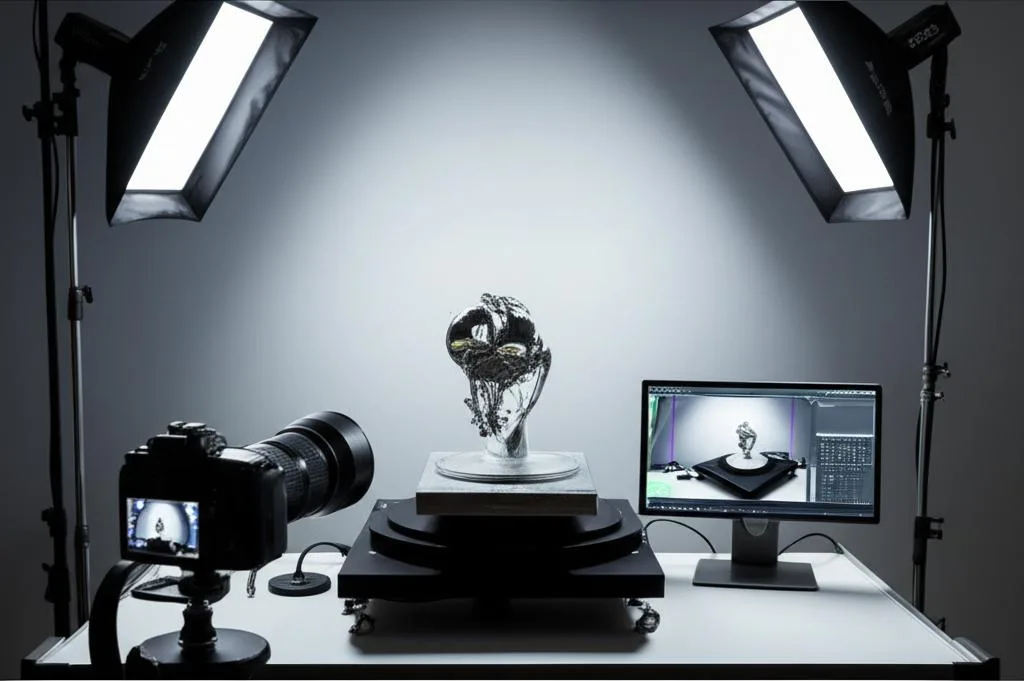
Beyond specific lighting techniques, several workflow optimizations can significantly improve results when dealing with `photogrammetry shiny objects`:
- Neutral Backgrounds: Use a matte, neutral-colored background (e.g., grey or black fabric) that won’t contribute unwanted reflections or shadows.
- Stable Setup: A robust tripod and a turntable are essential for consistent image capture. Automated turntables can ensure precise rotation and consistent camera-to-object distance.
- Camera Settings:
- Aperture: Use a relatively narrow aperture (higher f-stop, e.g., f/8 to f/16) to maximize depth of field and ensure as much of the object is in sharp focus as possible.
- ISO: Keep ISO as low as possible (e.g., ISO 100 or 200) to minimize noise, especially when dealing with light loss from polarizers.
- White Balance: Set a custom white balance for your lighting setup to ensure accurate color representation across all images.
- Reference Markers: For complex objects or highly reflective surfaces where natural features are scarce, place small, matte, non-reflective markers on the object or its base. These provide consistent points for the software to track.
- Software Selection: Choose photogrammetry software known for its robust masking and alignment capabilities, as you may need to manually mask out reflections or refine point clouds.
- Post-processing: Be prepared for more extensive post-processing. This might include using image editing software to stack multiple exposures, carefully masking out reflections, or even painting out persistent glare before feeding images into the photogrammetry software.
Conclusion
Tackling `photogrammetry shiny objects` is undoubtedly one of the more challenging aspects of 3D scanning. However, with a solid understanding of light interaction and the strategic application of advanced `studio lighting photogrammetry` techniques, these obstacles can be effectively overcome. Whether through the precise reflection suppression of cross-polarization, the enveloping softness of a diffuse dome, the granular control of multi-light arrays, or the transformative power of diffuse sprays, each method offers distinct features and trade-offs. The optimal approach often involves a combination of these techniques, tailored to the specific object, desired outcome, and available resources. By meticulously controlling your lighting environment and adopting these expert strategies, you can achieve stunningly accurate 3D models from even the most challenging reflective surfaces, pushing the boundaries of what’s possible in digital capture.
Frequently asked questions
Can I use cross-polarization on bare metal objects like a polished aluminum part?
Cross-polarization is highly effective for non-metallic reflective surfaces such as plastics, painted surfaces, and ceramics, but it is less effective on bare metals. Metals depolarize reflected light differently than dielectrics, so the specular reflections are not fully blocked by a crossed polarizer. For metal objects, a diffuse dome or multi-light array technique typically yields better results.
What is the cheapest and fastest way to scan a single shiny object at home?
The most cost-effective and quick method is using a diffuse spray or temporary coating, such as a specialized scanning spray or dry shampoo. This requires minimal equipment (just the spray itself) and almost guarantees a successful scan by turning the surface matte. The trade-off is that you must clean the object afterward, and the original color and texture will need to be captured separately.
How do I prevent background reflections from ruining my scan of a shiny object?
Use a matte, neutral-colored background like grey or black fabric that won’t contribute unwanted reflections. Additionally, set up your object in a controlled environment with dark or neutral walls to minimize external reflections. For the most stubborn cases, a diffuse dome physically surrounds the object with a soft, even light source, preventing harsh environmental reflections from appearing on the surface.