
The allure of personalized jewelry has captivated consumers for centuries, offering a unique blend of self-expression, sentiment, and artistry. In an increasingly digital world, the demand for bespoke items continues to surge, driven by a desire for individuality and a deeper connection to possessions. This burgeoning market presents an exciting opportunity for entrepreneurs, and at its heart lies a transformative technology: 3D printing. Specifically, the advent of accessible and powerful desktop 3D printers has democratized the creation process, enabling small businesses and individual artisans to enter a domain once dominated by large-scale manufacturers or highly specialized craftspeople. This guide aims to provide an objective comparison of various production models for launching a personalized jewelry line, focusing on how desktop 3D printers can be leveraged effectively. We will delve into the cost structures, operational features, and scalability of each approach, empowering you to make an informed decision that aligns with your specific vision and resources, rather than advocating for one ‘best’ or ‘cheapest’ option.
Understanding the Landscape: Personalized Jewelry and 3D Printing
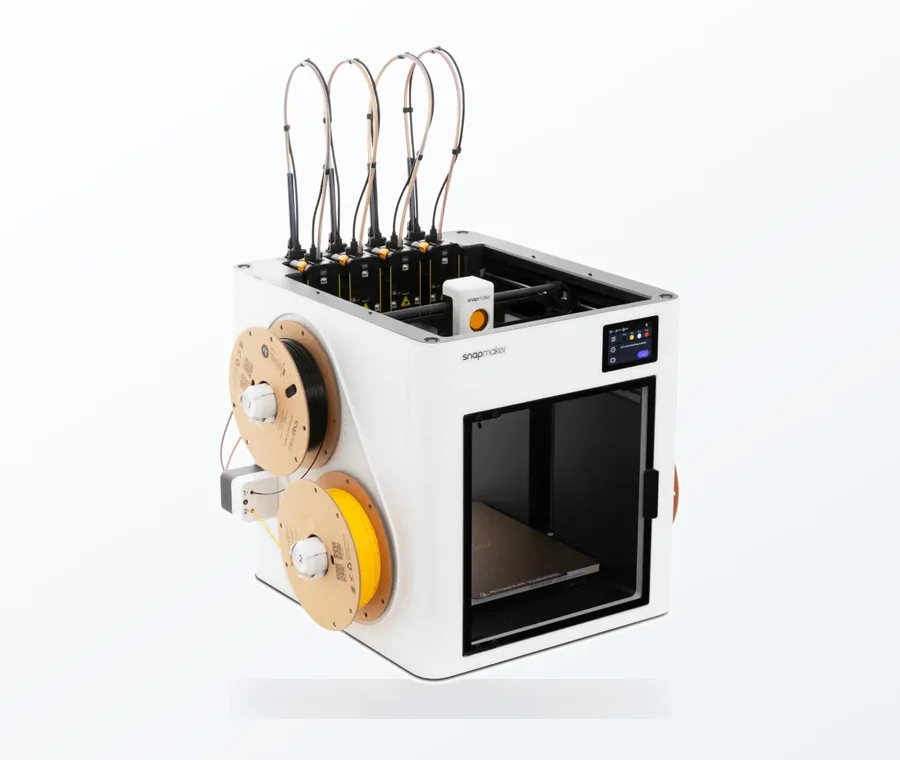
The consumer toolchanger 3D printer: the SnapSwap 4-toolhead system swaps heads in 5 seconds for true multi-color and multi-material printing, with smart calibration and auto filament loading.
- 4 toolheads · 5 s swap
- Up to 500 mm/s · 20,000 mm/s²
- 270 mm cube build volume
- Multi-color & multi-material
The Appeal of Personalized Jewelry
Personalized jewelry transcends mere adornment; it’s a tangible representation of identity, memory, and connection. From engraved names and dates to custom designs reflecting hobbies or passions, these pieces carry profound emotional value. This inherent uniqueness fuels consumer demand, creating a robust and resilient market segment. Consumers are often willing to pay a premium for items that tell their story or celebrate significant life events, making this a lucrative niche for those who can deliver truly custom products. The market’s growth is further propelled by social media, where unique, shareable items resonate strongly with audiences seeking authenticity and bespoke experiences.
Why 3D Printing for Customization?
3D printing, particularly with the advancements in desktop units, offers unparalleled advantages for the creation of personalized jewelry. Its core strength lies in its ability to translate complex digital designs into physical objects with high precision. For jewelry, this means:
- Intricate Geometries: 3D printers can produce designs with details and complexities that would be challenging, if not impossible, to achieve with traditional methods. This allows for highly unique and artistic pieces.
- Rapid Prototyping and Iteration: Designers can quickly print multiple versions of a design, test fit, aesthetics, and make rapid adjustments without incurring significant tooling costs. This accelerates the design cycle for custom 3D print items.
- On-Demand Production: Perhaps the most significant advantage for a small business, 3D printing facilitates true on-demand production. Items are only created once an order is placed, eliminating the need for large inventories, reducing waste, and mitigating financial risk associated with unsold stock.
- Cost-Effectiveness for Low Volume: For custom, one-off, or small-batch production, 3D printing often proves more cost-effective than traditional manufacturing methods that require expensive molds or extensive manual labor per piece.
- Material Versatility: While direct metal printing is still largely industrial, desktop 3D printers can print highly detailed wax-like or castable resins, which are then used in traditional lost-wax casting to produce metal jewelry. They can also print in various plastics and composites for fashion jewelry or prototypes.
Core Approaches to Launching Your Line
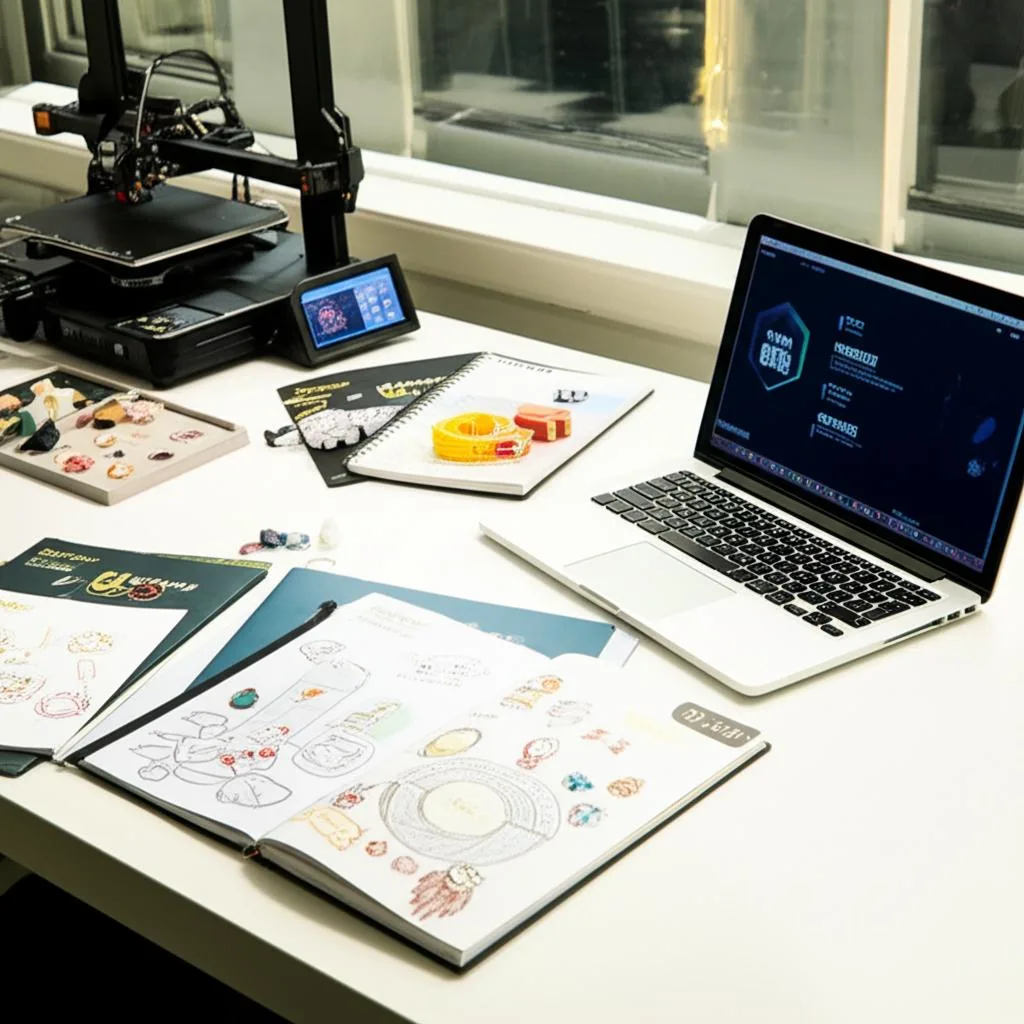
Launching a personalized jewelry line with the aid of 3D printing can take several forms, each with distinct cost implications, operational requirements, and levels of control. We will explore three primary models: fully in-house production, a hybrid approach combining in-house design with outsourced production, and a fully outsourced model.
Approach 1: Fully In-House Production with Your Own Desktop 3D Printer
This model involves taking full control of the entire production process, from design to final finishing, utilizing your own desktop 3D printer. It represents the highest degree of creative and operational control.
Cost Structure:
- Initial Investment:
- Desktop 3D Printer: This is the cornerstone. For jewelry, Stereolithography (SLA) or Digital Light Processing (DLP) printers are typically preferred over Fused Deposition Modeling (FDM) due to their superior detail and surface finish. Prices can range from approximately $300 for entry-level resin printers to $4,000+ for professional-grade units capable of printing high-resolution castable resins. Consider models like the Anycubic Photon series, Elegoo Mars/Saturn, or Formlabs Form 3B+.
- Design Software (CAD): Essential for creating custom 3D print models. Options range from free (Blender, Fusion 360’s personal license) to professional subscriptions (Rhino, MatrixGold, ZBrush). Annual costs can range from $0 to several hundred or even thousands for specialized jewelry CAD software.
- Post-Processing Equipment: This includes UV curing stations (for resin prints), washing stations (IPA or specialized resin cleaners), sanding tools, polishing machines (rotary tumblers, vibratory tumblers), jewelers’ benches, hand tools (files, pliers), safety equipment (gloves, respirators), and potentially plating kits if you plan to do your own gold/silver plating. Initial setup can range from a few hundred to several thousand dollars.
- Consumables & Materials: An initial stock of resins (standard, castable, durable), filaments (if using FDM for prototypes), polishing compounds, sandpaper, and cleaning agents.
- Ongoing Costs:
- Materials: Resin costs vary significantly by type and brand, from $40-$150 per liter. Castable resins, specifically formulated for lost-wax casting, tend to be on the higher end. Filament costs are generally lower.
- Maintenance: Replacement FEP films for resin tanks, printer calibration, occasional part replacements (e.g., build plate, screen protectors).
- Utilities: Electricity consumption for the printer and post-processing equipment.
- Labor: Your time, which is a significant cost. This includes design, print preparation, printing, extensive post-processing (washing, curing, sanding, polishing, assembly), quality control, packaging, marketing, and sales.
Features/Pros:
- Maximum Control: You have complete oversight over every aspect of design, material choice, print quality, and finishing. This ensures your brand’s unique aesthetic and quality standards are consistently met for every personalized jewelry piece.
- Rapid Iteration: The ability to quickly print prototypes allows for agile design development and immediate feedback, accelerating the path from concept to finished product.
- True On-Demand Production: Every piece can be made to order, minimizing inventory risk and allowing for highly specific customization requests.
- Higher Profit Margins: By eliminating third-party service fees, the per-piece profit margin can be significantly higher once the initial investment is recouped.
- Skill Development: You gain invaluable expertise in 3D printing, CAD design, and jewelry making, which can be leveraged for future growth or diversification.
- Brand Authenticity: Direct involvement in creation can be a powerful storytelling element for your small business.
Considerations/Cons:
- Significant Upfront Investment: The combined cost of a good printer, software, and post-processing setup can be substantial for a new small business.
- Steep Learning Curve: Mastering CAD software, understanding 3D printer operation, troubleshooting common issues, and perfecting jewelry finishing techniques require considerable time and effort.
- Time-Intensive: Even with a desktop 3D printer, the entire process from design to finished piece is labor-intensive, particularly the post-processing and finishing stages which are crucial for jewelry quality.
- Space Requirements: A dedicated workspace is needed for the printer, post-processing area (which can involve fumes from resins/solvents), and finishing tools.
- Scalability Challenges: While excellent for on-demand production of individual pieces, scaling up to high volumes can be challenging with a single desktop printer and manual finishing. It may require investing in multiple printers or automating parts of the process.
- Environmental and Safety Concerns: Working with resins requires proper ventilation and handling due to potential skin irritants and fumes. Disposal of resin waste must also be managed responsibly.
Approach 2: Hybrid Model – In-House Design & Prototyping, Outsourced Production
This approach balances control with efficiency. You retain creative control by handling the design and potentially early-stage prototyping in-house, but outsource the final, high-quality production (e.g., metal casting) to specialized service bureaus.
Cost Structure:
- Initial Investment:
- Design Software (CAD): As in Approach 1, essential for creating your unique custom 3D print designs.
- Optional Desktop 3D Printer for Prototyping: A less expensive desktop 3D printer (e.g., FDM or a basic SLA) might be acquired to print low-cost prototypes for fit and form checks, reducing reliance on external services for early iterations. This could be a few hundred dollars.
- Minimal Post-Processing Tools: If only prototyping in-house, you’d need basic tools for cleaning and curing prototypes, but not the extensive setup required for final jewelry finishing.
- Ongoing Costs:
- Outsourcing Service Fees: This is the primary ongoing cost. Service bureaus charge per piece or per batch for 3D printing (often high-resolution wax-like resins) and subsequent casting in precious metals (silver, gold, platinum). Fees depend on material, weight, complexity, and finishing services requested. This can range from tens to hundreds of dollars per piece for casting.
- Prototyping Materials: If you do in-house prototyping, the cost of filament or basic resin.
- Shipping Costs: To and from the service bureau.
- Labor: Your time primarily focused on design, managing external relationships, quality checks of outsourced pieces, marketing, and sales.
Features/Pros:
- Leverages Professional Quality: You benefit from the high-end equipment and expertise of specialized service bureaus for critical stages like metal casting, ensuring superior material quality and finish for your personalized jewelry.
- Reduced Upfront Investment: Avoids the high cost of industrial-grade printers and extensive metalworking/finishing equipment.
- Scalability: External partners can handle increased order volumes more readily than a single in-house desktop setup, making it easier to scale your small business.
- Focus on Core Competencies: Allows you to concentrate on design, branding, and customer acquisition for your personalized jewelry line, rather than the intricacies of manufacturing.
- Access to Diverse Materials: Service bureaus often offer a wider range of precious metals and finishing options than what’s feasible for an in-house setup.
Considerations/Cons:
- Reliance on Third Parties: Your production timeline and quality are dependent on the service bureau’s performance, lead times, and quality control. This can introduce potential delays or inconsistencies.
- Lower Per-Piece Profit Margins: While avoiding large upfront costs, the per-piece cost for outsourcing is higher than producing fully in-house, reducing your individual item profit margin.
- Communication Overhead: Requires clear communication of design specifications and quality expectations with the service provider.
- Less Hands-On Control: You lose direct control over the physical production and finishing stages, potentially limiting unique artistic touches that come from direct craftsmanship.
- Minimum Order Quantities: Some service bureaus may have minimum order quantities, which could be a hurdle for pure on-demand production of one-off custom pieces.
Approach 3: Fully Outsourced – Design & Production
This model involves minimal direct involvement in the physical creation process. You might use online platforms or specialized services that handle both design customization (often through templates) and full production, including 3D printing and finishing. Your role is primarily marketing, sales, and customer service.
Cost Structure:
- Initial Investment:
- Minimal: Primarily focused on setting up an e-commerce presence (Shopify, Etsy, etc.), marketing materials, and potentially subscription fees for design customization platforms if you’re using a template-based service. This could range from $50 to a few hundred dollars.
- Ongoing Costs:
- Service Fees/Commissions: The highest per-piece cost. You pay a substantial fee to the outsourcing partner for each piece produced, which covers design, 3D printing, material, and finishing. This could be a fixed price per item or a percentage of the sale price.
- Platform Fees: If using an e-commerce platform or a print-on-demand service, there will be monthly fees or transaction commissions.
- Marketing & Advertising: Your primary operational expenditure to drive sales to your personalized jewelry offerings.
- Labor: Your time is dedicated to marketing, customer service, order management, and potentially simple design modifications if using template-based tools.
Features/Pros:
- Lowest Upfront Investment: This is the most accessible entry point for a small business with limited capital, as it requires virtually no investment in hardware or specialized software.
- Minimal Technical Expertise: No need to learn complex CAD software, 3D printer operation, or intricate jewelry finishing techniques. The focus is purely on the business and creative concept.
- Highly Scalable: External partners are equipped to handle large volumes, allowing for significant growth without additional capital expenditure on your part.
- True Hands-Off On-Demand Production: The entire production workflow is managed by the third party, allowing for efficient on-demand production without operational burden.
- Focus on Brand and Sales: You can dedicate all your efforts to building your brand, marketing your personalized jewelry, and providing excellent customer service.
- Reduced Risk: No inventory to manage, no production errors to personally resolve.
Considerations/Cons:
- Highest Per-Piece Cost / Lowest Profit Margins: The convenience comes at a price. The per-item cost is significantly higher, leading to the lowest potential profit margins for your small business.
- Limited Creative Control: You are often restricted to pre-defined templates or a limited range of customization options offered by the service. Unique, highly intricate, or truly bespoke designs may not be feasible.
- Dependency on External Quality: You have minimal control over the actual production quality, material sourcing, and finishing. Your brand’s reputation is directly tied to the service provider’s performance.
- Less Brand Differentiation: If using generic templates or common service providers, it can be harder to differentiate your personalized jewelry from competitors using the same services.
- Slower Lead Times: Depending on the service, production and shipping times can be longer than in-house or even hybrid models.
Key Considerations for Your Personalized Jewelry Business
Regardless of the production model you choose, several fundamental aspects will influence the success of your personalized jewelry line. Understanding these elements is crucial for effective planning and execution.
Design Software and Skills
Your ability to create compelling and printable designs is paramount. Computer-Aided Design (CAD) software is the digital canvas for your custom 3D print jewelry. Options include:
- Parametric Modelers (e.g., Fusion 360, Rhino): Excellent for precise, dimensionally accurate designs, often preferred for functional jewelry or pieces requiring exact fits. They allow for easy modification of parameters.
- Sculpting Software (e.g., ZBrush, Blender’s sculpting tools): Ideal for organic, artistic, and intricate designs that mimic hand-sculpted forms. Blender is free and open-source, offering a powerful suite of tools for modeling, sculpting, and rendering.
- Jewelry-Specific CAD (e.g., MatrixGold, JewelCAD): These are specialized and often expensive programs tailored for jewelry design, offering libraries of common components (prongs, bezels) and features for stone setting, ring sizing, etc.
The learning curve for these programs varies significantly. Investing time in developing strong CAD skills will pay dividends, especially if you opt for in-house or hybrid production.
Material Selection and Post-Processing
The choice of material for your custom 3D print and the subsequent post-processing steps are critical for the final look, feel, and durability of your personalized jewelry.
- Resins for Casting: For precious metal jewelry, specialized castable resins are printed, then burned out cleanly in a lost-wax casting process. These resins are designed to leave minimal ash residue, ensuring a perfect metal replica.
- Standard Resins: Suitable for fashion jewelry, prototypes, or pieces that don’t require high strength. They come in various colors and finishes.
- Filaments (FDM): While less common for fine jewelry due to visible layer lines, FDM printers can be used for large prototypes or fashion jewelry from materials like PLA, ABS, or even metal-infused filaments for a unique aesthetic.
- Post-Processing: This is where the magic happens for 3D printed jewelry. It involves:
- Washing and Curing (for resin prints): Removing uncured resin and then fully solidifying the print with UV light.
- Support Removal: Carefully detaching the support structures that held the print during fabrication.
- Sanding and Polishing: Essential steps to remove layer lines, smooth surfaces, and achieve a desired luster. This can be very time-consuming for intricate pieces.
- Plating: Applying a thin layer of precious metal (e.g., rhodium, gold, silver) to a base metal to enhance appearance, durability, or hypoallergenic properties.
- Assembly: Combining multiple printed parts or adding non-printed components like clasps, chains, and gemstones.
Understanding these processes, whether you perform them or outsource them, is vital for managing quality and cost.
Marketing and Sales Strategies
Even with exceptional products, a strong market presence is crucial for your small business. For personalized jewelry, consider:
- E-commerce Platform: A dedicated online store (Shopify, WooCommerce) or a presence on marketplaces (Etsy, Amazon Handmade) is essential.
- Showcasing Customization: Clearly illustrate how customers can personalize their items. Use configurators, examples, and testimonials.
- Visual Storytelling: High-quality photography and videos are non-negotiable. Emphasize the emotional value and uniqueness of your pieces.
- Social Media Engagement: Platforms like Instagram and Pinterest are visual goldmines for jewelry. Use relevant hashtags (e.g., #personalizedjewelry, #customjewelry, #3dprintedjewelry) and engage with your audience.
- Niche Targeting: Consider specializing (e.g., pet memorial jewelry, birthstone jewelry, minimalist custom pieces) to reach a dedicated audience.
- SEO for Personalized Keywords: Optimize your product descriptions and website content for terms like “personalized jewelry,” “custom 3D print necklace,” or “unique custom ring.”
Legal and Business Aspects
Operating a small business involves more than just creation:
- Business Registration: Formalize your business structure (sole proprietorship, LLC, etc.) according to local regulations.
- Intellectual Property: Understand copyright and trademark laws. Protect your unique designs and brand name. Be mindful of not infringing on existing designs.
- Pricing Strategy: Accurately calculate all costs (materials, labor, overhead, marketing, outsourcing fees) to set competitive yet profitable prices. Consider tiered pricing for different levels of customization.
- Customer Service: For custom 3D print orders, clear communication about lead times, design proofs, and revision policies is paramount. Managing expectations for personalized items is key to customer satisfaction.
- Returns and Refunds: Establish clear policies for custom items, which often have different return rules than off-the-shelf products.
Scalability and Growth
Consider your long-term ambitions. How will your chosen production model accommodate growth?
- In-House: Scaling means investing in more desktop 3D printer units, hiring staff for design and finishing, and potentially moving to a larger workspace.
- Hybrid: Scaling involves managing more outsourcing partners or negotiating better rates with existing ones. Your design team might need to grow.
- Fully Outsourced: Scaling is largely handled by the service provider, though you’ll need to scale your marketing and customer service efforts.
It’s possible to start with one model and transition to another as your business evolves. For instance, many start fully outsourced to minimize risk, then move to a hybrid or even fully in-house model as demand and capital grow, seeking greater control and higher margins.
Cost-Benefit Analysis: A Comparative Overview
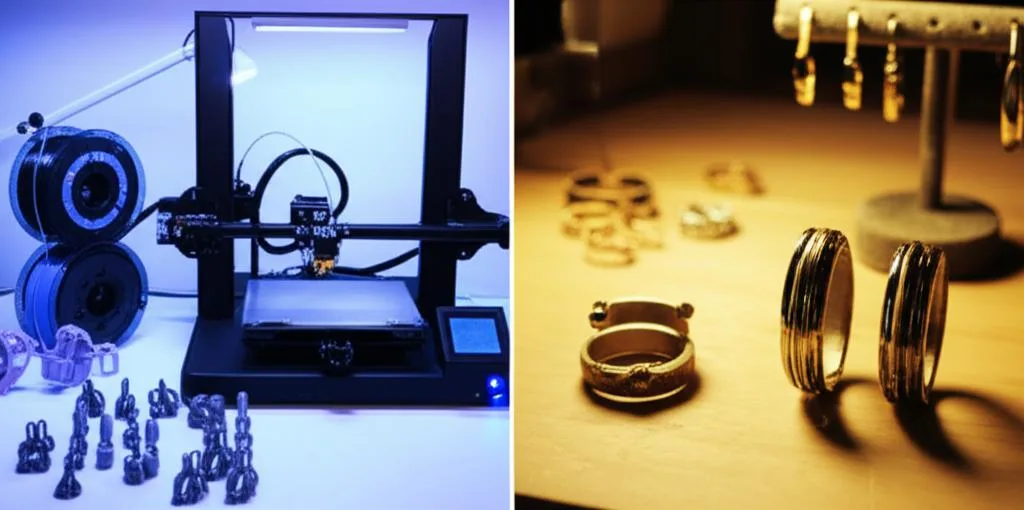
To summarize the nuances of each approach, let’s objectively compare them across several critical dimensions. This comparison aims to provide a clear picture of the trade-offs, enabling you to identify the model that best fits your entrepreneurial profile and objectives for your personalized jewelry venture.
It is important to remember that these are general observations, and specific costs and experiences can vary widely based on location, market conditions, chosen equipment, and the specific service providers involved. The ‘best’ option is not universal; it is the one that aligns most effectively with your individual business goals, financial capacity, technical aptitude, and desired level of involvement in the production process.
The table below offers a structured comparison:
| Factor | Approach 1: Fully In-House Production | Approach 2: Hybrid Model (In-House Design, Outsourced Production) | Approach 3: Fully Outsourced (Design & Production) |
|---|---|---|---|
| Initial Investment (Approx.) | High ($1,000 – $10,000+ for printer, software, full post-processing, tools) | Medium ($500 – $3,000 for software, optional prototype printer, basic tools) | Low ($50 – $500 for e-commerce setup, marketing) |
| Ongoing Costs (Per Piece) | Low (Materials + your labor time) | Medium (Outsourcing fees + prototyping materials + your labor time) | High (Significant service fees/commissions) |
| Control Over Quality & Design | Highest (Full control over every step) | High (Full design control, but production quality dependent on partner) | Lowest (Limited to service offerings or templates) |
| Technical Skill Required | Very High (CAD, 3D printing, post-processing, jewelry finishing) | Medium-High (CAD, understanding of 3D printing/casting processes) | Low (Basic computer skills, e-commerce management) |
| Time Commitment (Per Piece) | Very High (Hands-on design, print, extensive finishing) | Medium (Design, communication with outsourcer, some QC) | Low (Order management, marketing, customer service) |
| Profit Margin Potential | Highest (After initial investment recoupment) | Medium | Lowest |
| Scalability for High Volume | Challenging (Requires more equipment, staff) | Good (Leverages external capacity) | Excellent (External partners handle volume) |
| Time to Market | Medium (Requires setup, skill acquisition) | Fast (If design skills are present, production is external) | Very Fast (Minimal setup, ready-made production) |
| Inventory Risk | Very Low (True on-demand production) | Very Low (True on-demand production) | Very Low (True on-demand production) |
| Brand Differentiation Potential | Highest (Unique designs, craftsmanship) | High (Unique designs, professional finish) | Lower (Unless marketing/concept is exceptionally unique) |
Conclusion
The landscape of personalized jewelry is ripe with opportunity, and the accessibility of desktop 3D printer technology has undeniably reshaped how a small business can enter and thrive within this niche. From the meticulous craftsmanship enabled by a fully in-house setup to the streamlined efficiency of a completely outsourced model, each approach presents a unique set of advantages and challenges. There is no single ‘correct’ path; rather, the optimal choice is deeply personal and contingent upon your specific circumstances.
When embarking on your venture, consider your budget for initial investment, your willingness to acquire technical skills in CAD and 3D printing, the level of control you wish to maintain over the production process, and your long-term vision for scalability. Do you aspire to be a hands-on artisan, deeply involved in every aspect of creation, or do you prefer to focus on design, marketing, and customer relationships? Your answers to these questions will naturally guide you toward the most suitable production model for your custom 3D print jewelry line.
Ultimately, the power of on-demand production through 3D printing offers unprecedented flexibility, allowing entrepreneurs to create unique, meaningful, and truly personalized pieces for a discerning market. By carefully weighing the cost structures and features of each model, you can lay a solid foundation for a successful and fulfilling journey in the world of personalized jewelry.
Frequently asked questions
Can I print directly in gold or silver with a desktop 3D printer?
No, the desktop 3D printers discussed in this article (SLA, DLP, or FDM) do not print directly in precious metals. For metal jewelry, you print a specialized castable resin pattern on your desktop printer, then send that pattern to a casting service bureau to be burned out and cast in gold, silver, or platinum using the traditional lost-wax casting process.
How much does a service bureau typically charge per piece for casting a 3D printed design?
Service bureau fees vary by material, weight, complexity, and finishing requirements, but the article states costs can range from tens to hundreds of dollars per piece for casting. This ongoing outsourcing fee is the primary ongoing cost in the Hybrid Model (Approach 2) and is significantly higher than the per-piece material cost of producing fully in-house.
What is the most common mistake beginners make when starting in-house production?
The article highlights that post-processing is the most time-intensive and crucial stage for jewelry quality. Beginners often underestimate the labor required for washing, curing, support removal, sanding, and polishing resin prints, and they may overlook the need for proper ventilation and safety equipment when working with resin fumes and solvents.