Designing functional threads for 3D printing can be a challenging yet rewarding endeavor. While it might seem straightforward to simply model a standard thread and print it, the unique characteristics of additive manufacturing require a more nuanced approach. Achieving threads that fit snugly, operate smoothly, and withstand repeated use depends heavily on understanding the intricacies of 3D printing thread design.
Understanding Thread Mechanics in 3D Printing
The success of your 3D printed threads hinges on several factors that differ significantly from traditional machining. Layer adhesion, material shrinkage, and the inherent inaccuracies of the FDM process demand careful consideration. One of the most critical aspects is managing tolerances. Unlike machined parts where a tight fit is often desired, 3D printed threads usually require more clearance between the male and female components. A general rule of thumb is to add a clearance of 0.2mm to 0.4mm (depending on printer accuracy and material) to the thread’s major or minor diameter for a smooth fit, especially for metric threads like M8, M10, or M12.
Key Considerations for Effective 3D Printing Thread Design
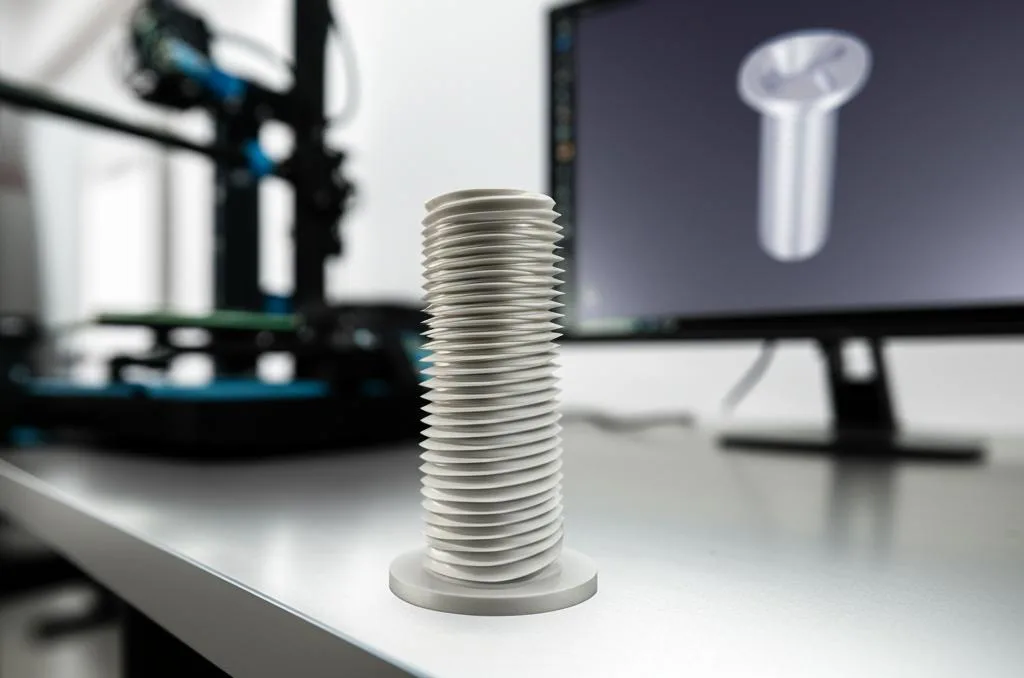
- Thread Profile: While standard V-thread profiles (like those for ISO metric threads) can work, coarser profiles like ACME or Buttress threads often perform better in 3D printing due to their larger surface area and robustness. These profiles are less prone to breaking or stripping due to layer lines. When engaging in 3D Modeling, consider the application and stress the thread will endure.
- Layer Height and Nozzle Size: Printing threads at finer layer heights (e.g., 0.1mm – 0.15mm) can improve their strength and smoothness, but increases print time. A smaller nozzle size can also help capture finer thread details.
- Material Choice: The material plays a crucial role. PLA is good for prototyping, but ABS, PETG, or Nylon offer better strength, durability, and resistance to wear and tear. Flexible materials are generally not suitable for load-bearing threads.
- Orientation and Supports: Printing threads vertically usually yields stronger results as the layers align with the thread axis. However, this may require supports, especially for the underside of external threads or internal threads. Experiment with angles to minimize support requirements while maximizing strength.
- Post-Processing: Sometimes, a tap and die set can be used to clean up 3D printed threads, especially internal ones. This can improve fit and reduce friction, making them more functional. This is a common practice even with well-designed threads.
Mastering 3D printing thread design is an iterative process. It involves understanding the limitations and advantages of your 3D printer, the specific material you’re using, and the demands of your application. With careful 3D Modeling and attention to these design principles, you can consistently produce functional and reliable threaded components for your projects, proving that 3D printed threads can indeed work exceptionally well.
Frequently asked questions
What clearance should I add to a 3D printed thread for a smooth fit?
For metric threads like M8, M10, or M12, add a clearance of 0.2mm to 0.4mm to the thread’s major or minor diameter. The exact value depends on your printer’s accuracy and the material used. This extra space compensates for the inherent inaccuracies of FDM printing, unlike machined parts where tighter fits are standard.
Can I print threads in flexible materials like TPU?
Flexible materials are generally not suitable for load-bearing threads. While you can print them, they lack the strength and resistance to wear needed for repeated use. For functional threads, materials like ABS, PETG, or Nylon offer better durability.
Is it better to print threads vertically or horizontally?
Printing threads vertically typically yields stronger results because the layer lines align with the thread axis. However, this orientation may require supports for the underside of external threads or internal threads. You can experiment with slight angles to reduce support needs while maintaining strength.