

In the relentless pursuit of peak performance, economic viability, and environmental sustainability, the aerospace industry constantly seeks innovative methods to reduce aircraft weight. Every kilogram saved translates directly into substantial, compounding benefits, from significantly improved fuel efficiency and extended range to reduced emissions and increased payload capacity. Traditional manufacturing techniques, while robust and well-established, often face inherent limitations in achieving the intricate, lightweight designs demanded by modern aviation. This is where aerospace 3D printing, also known as additive manufacturing, steps in as a truly transformative technology. It is not merely refining existing processes but fundamentally reshaping how aircraft components are conceived, designed, and produced. This additive manufacturing paradigm offers unprecedented design freedom, enabling engineers to craft parts that are not only dramatically lighter but also stronger, more durable, and highly functionally integrated, often leading to aircraft weight reduction of up to 50% in various critical components.
Why every gram counts in aerospace

The aerospace sector operates on razor-thin margins where efficiency is paramount, and safety is non-negotiable. For an aircraft, weight is arguably the single most significant factor influencing operational costs, environmental impact, and overall performance. A heavier aircraft consumes considerably more fuel, leading to higher expenditure on kerosene, which represents a major operational cost for airlines. This direct and substantial correlation between weight and fuel burn is a powerful, continuous driver for innovation in lightweighting across the entire industry. Beyond the immediate economic implications, reduced fuel consumption directly translates into a significant reduction in greenhouse gas emissions, aligning with global efforts to make aviation more sustainable and meet increasingly stringent environmental regulations.
Furthermore, reduced weight contributes to superior aerodynamic performance, allowing for quicker acceleration, shorter takeoff and landing distances, and improved maneuverability. It also enhances an aircraft’s payload capacity, making it more versatile and profitable for cargo or passenger transport, and potentially extending its operational range, opening up new routes and market opportunities. Consider a long-haul flight: even a small percentage of weight saving per flight, multiplied by thousands of flights over an aircraft’s typical 20-30 year lifespan, yields immense cumulative benefits, justifying substantial investment in advanced manufacturing techniques like aerospace 3D printing. The cumulative effect on an airline’s bottom line and environmental footprint is profound, making lightweighting a strategic imperative.
The paradigm shift: How additive manufacturing redefines design for lightness

One of the most profound contributions of additive manufacturing benefits to aircraft weight reduction lies in its unparalleled design freedom. Unlike traditional subtractive methods, which remove material from a solid block and are constrained by tooling and access, 3D printing builds parts layer by layer, allowing for the creation of highly complex and intricate geometries that are virtually impossible or prohibitively expensive to achieve with conventional machining, casting, or forging. This capability unlocks a new era of design optimization, where form truly follows function without the historical limitations of manufacturing feasibility. Engineers can now design parts that are precisely optimized for their specific load paths and functional requirements, minimizing material usage while maintaining or even enhancing structural integrity and performance.
Topology optimization and generative design for extreme lightweighting
At the heart of this design revolution are sophisticated computational tools like topology optimization and generative design. Topology optimization algorithms analyze the stresses, loads, and boundary conditions a component will experience in its operational environment. Based on these analyses, the software intelligently removes material from areas that are not critical to structural performance, leaving behind only the essential load-bearing framework. This often results in organic, bionic-like structures that mimic natural forms, such as bones or tree branches, which are inherently optimized for exceptional strength-to-weight ratios. Generative design takes this a step further, using AI-driven algorithms to explore thousands, even millions, of design iterations based on specified performance criteria, material properties, and manufacturing constraints. This automated exploration frequently arrives at novel, highly optimized solutions that human designers might not conceive through conventional approaches, pushing the boundaries of aircraft weight reduction to unprecedented levels.
Lattice structures and complex internal geometries
Beyond optimizing external forms, aerospace 3D printing uniquely enables the creation of highly complex internal geometries, most notably lattice structures. These intricate, repeating cellular patterns can replace solid material within a component, dramatically reducing its mass while maintaining high stiffness and strength. Imagine a honeycomb or a foam-like internal structure, but with precisely controlled and optimized geometry. By strategically designing the lattice parameters—such as strut thickness, cell size, cell type (e.g., gyroid, octet truss, body-centered cubic), and orientation—engineers can fine-tune the mechanical properties of different regions within a single part. This allows for highly localized optimization, where critical areas remain robust and dense, while less stressed areas are filled with ultra-lightweight lattice structures. The result is a component that is significantly lighter than its solid counterpart, yet fully capable of meeting or exceeding stringent aerospace performance and safety requirements. This unparalleled ability to precisely control material distribution at a micro-level is a true game-changer for producing lightweight components.
Material innovations: High-performance alloys and polymers for lighter aircraft
While design freedom is crucial, the materials used in aerospace 3D printing are equally vital to achieving significant weight reduction without compromising safety or performance. Additive manufacturing processes are compatible with a growing range of high-performance materials specifically developed or adapted for aerospace applications. These materials possess exceptional strength-to-weight ratios, high temperature resistance, excellent fatigue properties, and durability under the extreme conditions encountered in flight.
Advanced polymers and composites for non-structural and semi-structural parts
For non-structural or semi-structural aerospace applications, advanced polymers and polymer composites offer a compelling lightweighting solution. Materials like ULTEM (PEI), PEEK, and carbon fiber-reinforced thermoplastics can be 3D printed to create components such as interior cabin parts (e.g., seat components, air ducts, overhead bin elements), brackets, specialized tooling, and custom fixtures. These materials are inherently much lighter than metals and can be tailored with specific properties, such as flame retardancy, enhanced stiffness, or acoustic dampening, making them ideal for reducing overall aircraft mass, particularly in the cabin and non-load-bearing areas where hundreds of components can contribute to significant cumulative weight savings. Their ability to be printed on demand also supports lean manufacturing principles and reduces logistical burdens.
High-strength metal alloys for critical structural components
For critical structural components and parts exposed to high stresses or temperatures, metal additive manufacturing benefits from the use of high-strength alloys like titanium, aluminum, and nickel-based superalloys. Titanium alloys, renowned for their excellent strength-to-weight ratio, corrosion resistance, and biocompatibility, are extensively used in aerospace for landing gear components, airframe structures, engine parts, and even satellite components. 3D printing titanium allows for the creation of intricate, optimized geometries that would be cost-prohibitive or impossible with traditional machining, further enhancing its lightweighting potential. Similarly, new aluminum alloys (e.g., Scalmalloy, A205) developed specifically for additive processes offer comparable strength to traditional aerospace aluminum with the added benefit of complex geometric freedom. Nickel-based superalloys, while denser, are crucial for high-temperature engine components like turbine blades and combustor liners. 3D printing these materials allows for the integration of complex internal cooling channels and optimized structures that reduce material usage while dramatically improving thermal efficiency and component lifespan, indirectly contributing to overall system efficiency and weight optimization.
Part consolidation: Streamlining complexity and reducing mass
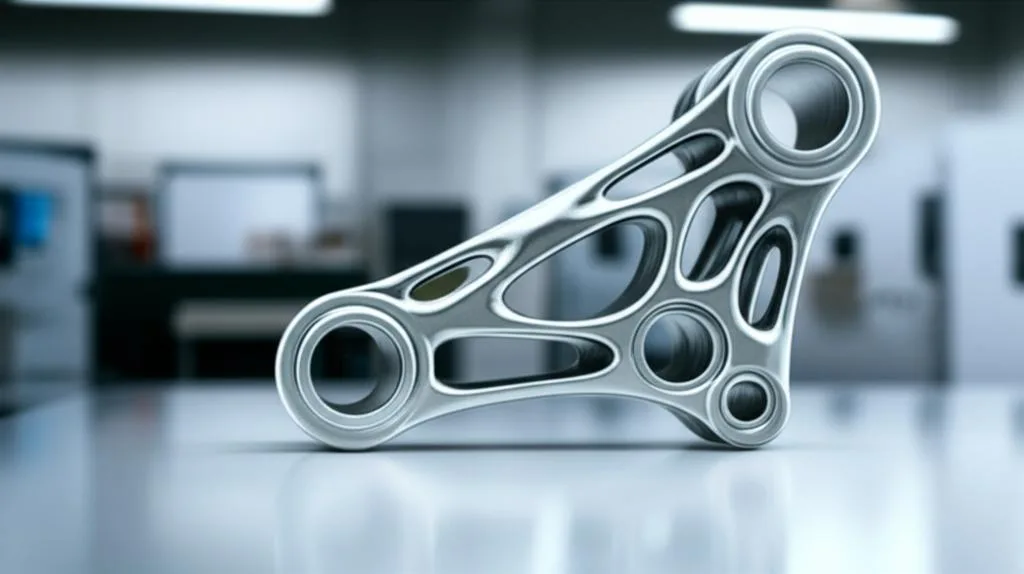
Beyond optimizing individual components, aerospace 3D printing excels at part consolidation, a strategic approach that significantly contributes to overall aircraft weight reduction. In traditional manufacturing, complex assemblies are often created by joining numerous smaller parts using fasteners (rivets, bolts), welds, or adhesives. Each fastener and interface adds not only its own weight but also manufacturing complexity, potential points of failure, and requires additional labor for assembly, inspection, and maintenance. Additive manufacturing fundamentally changes this paradigm by allowing engineers to design and print entire sub-assemblies as a single, monolithic unit.
For instance, a complex bracket that previously required multiple machined pieces, several separate attachment points, and dozens of rivets can now be designed and 3D printed as one integrated structure. This consolidation not only eliminates the weight of the fasteners and joint material but also removes the need for precision alignment during assembly, reduces the inventory of individual parts, and simplifies the supply chain. The resulting consolidated part is often inherently lighter due to optimized internal structures and the absence of stress concentrations at connection points, which are common in multi-part assemblies. Furthermore, integrating multiple functions into a single part can lead to enhanced performance, fewer potential failure modes, and a streamlined repair process. This holistic approach to design and manufacturing is a powerful driver for achieving substantial, systemic weight savings across the entire aircraft, reducing both direct mass and the associated logistical burden.
The ripple effect: Beyond the component – broader benefits of weight reduction
The immediate advantage of producing lightweight components through aerospace 3D printing is the direct mass saving. However, the impact of aircraft weight reduction achieved through this technology extends far beyond the individual part, creating a cascading effect across the entire operational lifecycle of an aircraft. These broader additive manufacturing benefits underscore the transformative potential of the technology for the aerospace industry as a whole:
- Enhanced fuel efficiency: As previously emphasized, a lighter aircraft requires less thrust to achieve and maintain flight, leading directly to significantly reduced fuel consumption. This is arguably the most significant economic and environmental benefit, translating into lower operating costs for airlines, especially given volatile fuel prices, and a smaller carbon footprint.
- Reduced emissions: Lower fuel burn directly correlates with a substantial reduction in greenhouse gas emissions (CO2, NOx) and other pollutants, aligning with global efforts to make aviation more sustainable and meet increasingly strict environmental regulations.
- Increased payload and range: For a given aircraft type, weight savings can be converted into either increased cargo or passenger capacity, directly boosting revenue potential for airlines, or an extended operational range, opening up new, longer routes and logistical possibilities that were previously uneconomical or impossible.
- Improved performance and agility: Lighter aircraft can achieve higher speeds, climb faster, and demonstrate greater agility and responsiveness, contributing to overall flight performance, potentially enabling new design paradigms for future aircraft, and enhancing safety margins.
- Simplified logistics and maintenance: Part consolidation reduces the number of unique parts that need to be stocked, managed, and maintained in inventory. Fewer parts mean simpler assembly processes, fewer potential points of failure, and streamlined repair and replacement procedures, leading to lower maintenance costs and significantly reduced aircraft downtime, which is critical for airline profitability.
- Reduced lead times and supply chain resilience: In many cases, 3D printing can significantly reduce the lead time for producing complex, custom, or low-volume components compared to traditional methods, especially for spare parts or prototypes. This on-demand manufacturing capability enhances supply chain resilience, reduces reliance on distant suppliers, and aids in faster aircraft development and deployment.
These interconnected advantages demonstrate that the value of aerospace 3D printing in lightweighting is not just about the component itself, but about revolutionizing the entire aerospace ecosystem, delivering tangible benefits across economic, environmental, and operational fronts.
Challenges and the path forward for aerospace 3D printing
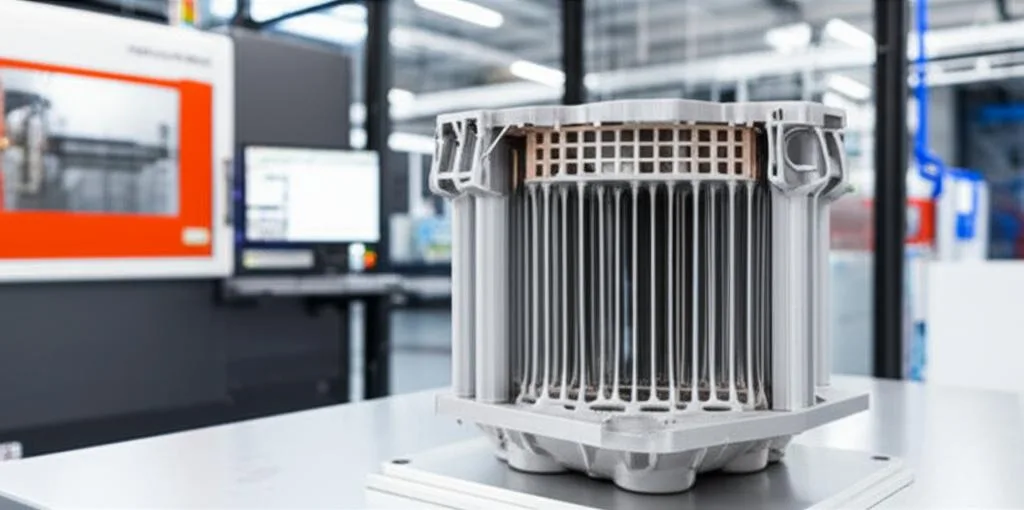
While the benefits of aerospace 3D printing for weight reduction are undeniably compelling, the technology, like any nascent innovation, faces ongoing challenges as it matures and seeks broader adoption in a highly regulated industry. Key hurdles include the relatively high initial capital cost of some advanced additive manufacturing machines and the specialized, often expensive, aerospace-grade materials. Furthermore, the aerospace sector demands incredibly stringent qualification and certification processes for flight-critical parts, which can be time-consuming and costly, requiring extensive testing and validation to ensure reliability, repeatability, and long-term performance under extreme conditions (e.g., fatigue, creep, fracture toughness).
The development of robust post-processing techniques to ensure precise surface finish, dimensional accuracy, and optimal mechanical properties also remains an area of active research. Scalability of production for very large components, as well as the speed of printing for mass production of smaller parts, are also considerations, though significant progress is being made. Additionally, a new skillset, known as Design for Additive Manufacturing (DfAM), is crucial for engineers to fully leverage the capabilities of 3D printing and overcome the inherent challenges of the process itself.
However, continuous and rapid advancements in printer technology (e.g., multi-laser systems, larger build volumes), material science (e.g., new alloys, improved powder characteristics), process control, and sophisticated simulation tools are rapidly addressing these hurdles. As the industry gains more experience and confidence, and as regulatory frameworks adapt and become more standardized, the adoption of additive manufacturing benefits in aerospace is set to accelerate significantly. The trajectory is clear: 3D printing is not just a niche technology for prototyping or specialized parts, but a foundational pillar for the next generation of lighter, more efficient, more sustainable, and ultimately, more capable aircraft.
In conclusion, the ability of aerospace 3D printing to achieve up to 50% aircraft weight reduction is a profound testament to its disruptive and transformative potential. By empowering engineers with unparalleled design freedom through sophisticated topology optimization and intricate lattice structures, leveraging advanced lightweight materials with superior performance characteristics, and enabling significant part consolidation, additive manufacturing is fundamentally altering the economics and performance of flight. The ripple effect of these substantial weight savings—from enhanced fuel efficiency and dramatically reduced emissions to improved payload capacity, extended range, and simplified logistics—positions 3D printing as an indispensable technology in the ongoing, global quest for more sustainable, cost-effective, and high-performing aviation. As the technology continues to mature and integrate deeper into the aerospace supply chain, its role in shaping the future of air travel will only continue to expand, making lighter, more efficient, and environmentally responsible aircraft a tangible and widespread reality.