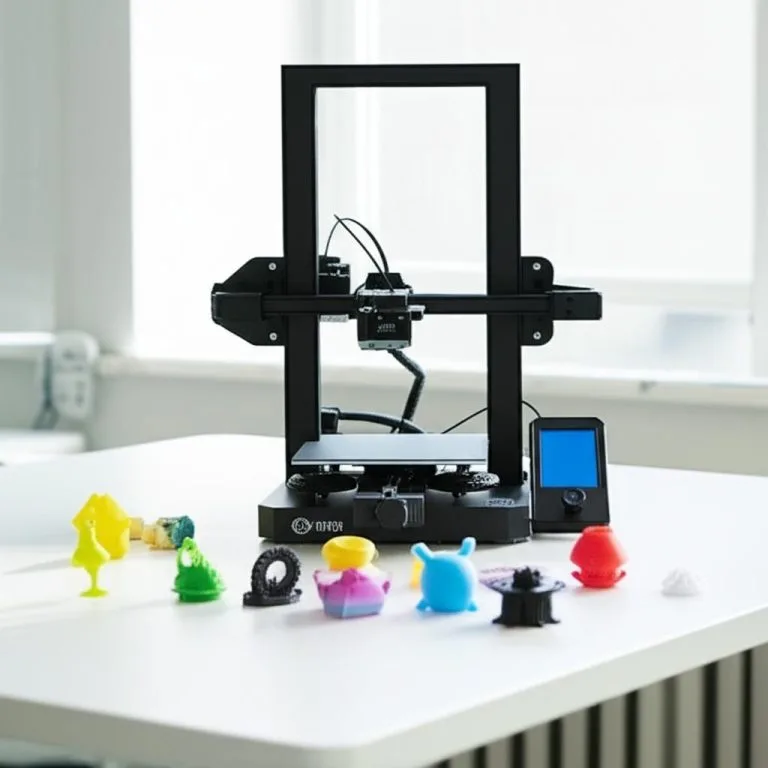
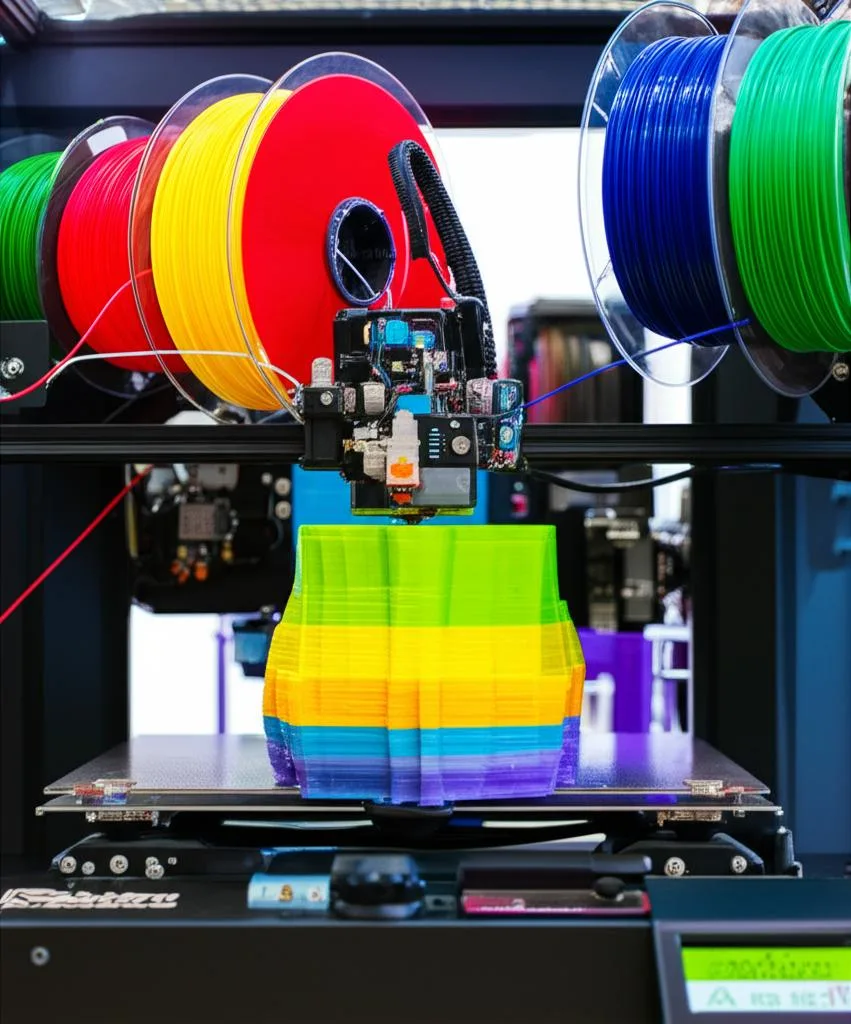
The evolution of 3D printing multi-color printing has opened up a world of possibilities, moving beyond monochromatic designs to create intricate, vibrant models. For enthusiasts and professionals alike, the ability to produce objects with multiple colors or materials in a single print is a game-changer. This article delves into the leading technologies enabling multi-color capabilities: Multi-Material Unit (MMU), Independent Dual Extruder (IDEX), and Mosaic Manufacturing’s Palette system. Understanding these technologies is crucial for anyone looking into Hardware and Modifications to enhance their 3D printing experience.
Multi-Material Unit (MMU)
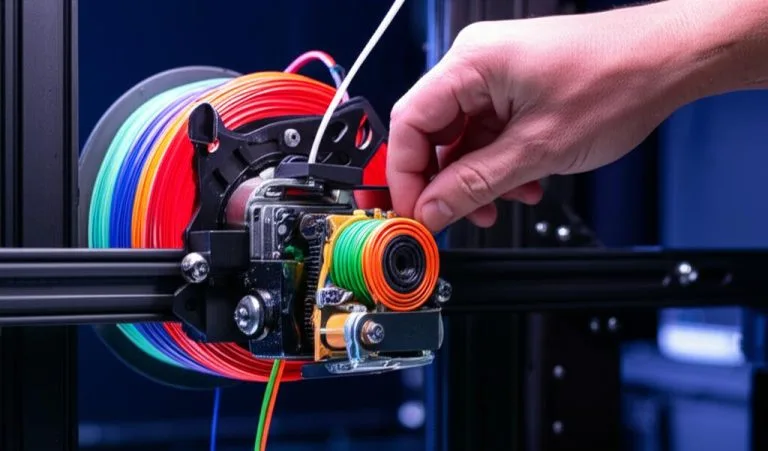
Prusa’s Multi-Material Unit (MMU) is a popular solution, particularly for users of Prusa i3 MK3S+ printers. The MMU operates by automatically loading and unloading different filaments into a single hotend as needed. This approach allows for up to five different materials or colors to be used in one print. While ingenious, it requires precise calibration and can sometimes be prone to filament loading/unloading issues, which have been significantly improved in later iterations. The primary advantage lies in its cost-effectiveness compared to dedicated multi-extruder systems, and it’s a fantastic way to experiment with 3D printing multi-color printing without buying a new printer.
Independent Dual Extruder (IDEX)
IDEX systems stand apart with two entirely independent extruders, each with its own hotend. This unique configuration offers several significant benefits. Firstly, it allows for true multi-color or multi-material printing without the need for filament changes at the nozzle, leading to cleaner transitions and less waste (purge blocks are often smaller or eliminated entirely). Secondly, IDEX printers can often operate in ‘duplication mode’ or ‘mirror mode,’ where both extruders print the same part simultaneously, effectively doubling print output. This makes IDEX a powerful tool for productivity, though the added mechanical complexity and cost are factors to consider for Hardware and Modifications.
Mosaic Manufacturing’s Palette
The Palette system, developed by Mosaic Manufacturing, takes a different approach to 3D printing multi-color printing. Instead of managing multiple extruders or filament paths on the printer itself, the Palette processes up to eight different filaments externally. It precisely cuts and splices short segments of different filaments together to create a single, multi-color strand of filament. This “spliced” filament is then fed into a standard single-extruder 3D printer. The brilliance of the Palette lies in its compatibility; it can turn almost any single-extruder FDM printer into a multi-color machine. While it introduces an additional step and requires careful calibration for accurate color changes, it offers unparalleled versatility in terms of the number of colors and materials that can be used. It represents a significant advancement in democratizing complex multi-color designs.
Choosing Your Multi-Color Path
When considering Hardware and Modifications for multi-color 3D printing, your choice depends on your budget, existing equipment, and specific needs. MMU is excellent for Prusa users seeking an integrated solution. IDEX offers speed and precision for those requiring true independent extrusion and potential for batch production. The Palette provides maximum compatibility and color options for users with single-extruder printers. Each system has its learning curve, but all pave the way for creating visually stunning and functionally diverse 3D prints, pushing the boundaries of what’s possible with 3D printing multi-color printing.
Frequently asked questions
Can I use the Mosaic Palette with any brand of 3D printer, or only certain models?
The Palette is designed to work with almost any standard single-extruder FDM printer. It splices filament externally and feeds it into your printer, so as long as your printer accepts standard 1.75mm filament and can be controlled by the Palette software, it should be compatible.
Does an IDEX system waste less filament than an MMU or Palette when printing multiple colors?
Yes, IDEX systems typically produce less waste because each extruder has its own hotend, eliminating the need for purge blocks or filament changes at the nozzle. This leads to cleaner color transitions and significantly less material purged compared to MMU or Palette systems, which must flush out the previous color from a single nozzle.
Is the Prusa MMU upgrade worth it if I already own a Prusa i3 MK3S+?
For Prusa i3 MK3S+ owners, the MMU is a cost-effective way to experiment with multi-color printing without buying a new printer. However, be prepared for a learning curve: the article notes it requires precise calibration and can have filament loading/unloading issues, though later iterations have improved reliability.