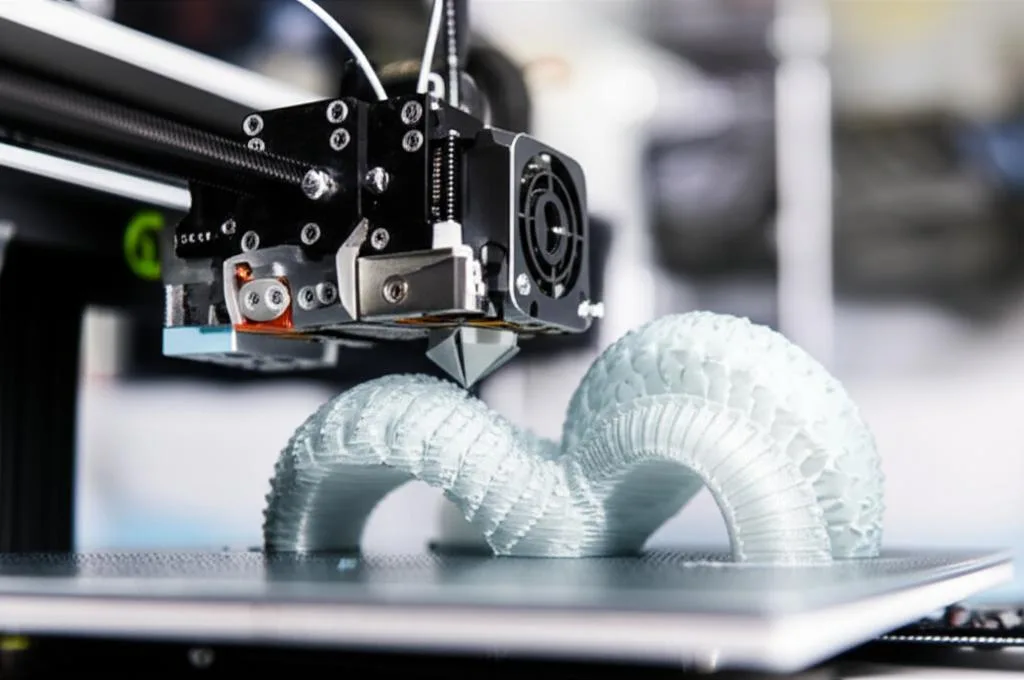
3D printing has revolutionized prototyping and manufacturing, enabling the creation of intricate designs. However, printing complex geometries, especially those with overhangs or intricate internal structures, often necessitates the use of support materials. Traditional support structures, typically made from the same material as the main print, can be challenging to remove, often leaving behind unsightly marks or damaging the printed part. This is where dual extrusion 3D printing combined with advanced support materials truly shines.
The Challenge of Overhangs and the PVA Solution
Overhangs and bridges are common hurdles in FDM 3D printing. Without proper support, these features can sag, leading to failed prints or poor surface quality. While standard supports work to a degree, their manual removal is a tedious process, especially for delicate or highly detailed models. The introduction of water-soluble support materials, particularly Polyvinyl Alcohol (PVA), has transformed this aspect of 3D printing. The ability to utilize 3D printing of PVA soluble supports with a dual extruder system allows for a seamless workflow and superior print quality.
How PVA Soluble Supports Work
PVA is a synthetic polymer that is highly soluble in water. In dual extrusion setups, one nozzle prints the primary model material (like PLA or PETG), while the second nozzle prints the PVA support. After the print is complete, the entire object is submerged in water. The PVA material simply dissolves away, leaving behind the perfectly formed main print with no residue or need for manual scraping, cutting, or sanding. This method ensures pristine surface finishes, even on the most intricate and hard-to-reach areas.
Advantages of PVA in Dual Extrusion
- Clean Removal: As PVA dissolves completely in water, there’s no risk of damaging the printed part during support removal. This is especially crucial for thin walls, delicate features, and internal geometries that would be impossible to clean otherwise.
- Complex Geometries: PVA enables the creation of incredibly complex parts with internal cavities, intricate lattice structures, or interlocking components that would be impossible with traditional supports.
- Improved Surface Finish: The contact points between PVA and the model are minimal and dissolve away cleanly, resulting in a much smoother surface finish on the supported areas compared to break-away supports.
- Time Saving: Eliminates the labor-intensive post-processing associated with manual support removal, freeing up valuable time.
Considerations for Using PVA
While incredibly beneficial, working with PVA requires some attention. PVA is highly hygroscopic, meaning it readily absorbs moisture from the air. Proper storage in a dry environment (e.g., a sealed bag with desiccant) is crucial to prevent moisture absorption, which can lead to printing issues like bubbling, stringing, and clogs. Optimized printing profiles for temperature and retraction are also important for successful PVA extrusion. Many suppliers of Materials and Filaments offer high-quality PVA specifically formulated for 3D printing, often including recommendations for storage and usage.
Conclusion
Dual extrusion 3D printing with PVA soluble supports represents a significant leap forward in additive manufacturing. It solves one of the most persistent challenges in FDM printing, allowing designers and engineers to push the boundaries of complexity and achieve unparalleled surface quality. By leveraging the power of water-soluble supports, the possibilities for intricate and functional 3D printed parts are virtually limitless, making it an essential technique for advanced users and professional applications.
Frequently asked questions
How long does it take for PVA supports to dissolve in water?
Dissolution time varies based on water temperature and support thickness, typically ranging from a few hours to overnight. Using warm water (around 35–40°C) and gently agitating the water can speed up the process, but the article notes that PVA dissolves completely with no residue.
Can I use PVA supports with a single extruder printer?
No, PVA requires a dual extrusion system because one nozzle prints the model material (e.g., PLA or PETG) while the second nozzle prints the PVA support. The article specifically describes this setup, so a single-extruder printer cannot automatically switch between two different filaments during a print.
What happens if my PVA filament absorbs moisture before printing?
Moisture absorption causes printing problems like bubbling, stringing, and clogs. The article emphasizes that PVA is highly hygroscopic and must be stored in a dry environment, such as a sealed bag with desiccant, to avoid these issues and maintain print quality.