The landscape of architectural design is undergoing a profound transformation, driven by advancements in digital fabrication techniques. Among these, 3D printing, or additive manufacturing, stands out as a game-changer, particularly in the realm of facade design. No longer confined to uniform panels and repetitive modules, building exteriors are evolving into dynamic, expressive canvases capable of showcasing unprecedented levels of detail and complexity. This shift allows architects to move beyond the limitations of traditional construction, opening doors to intricate ornamentation and complex forms that were once prohibitively expensive or simply impossible to realize.
The dawn of additive manufacturing in facades
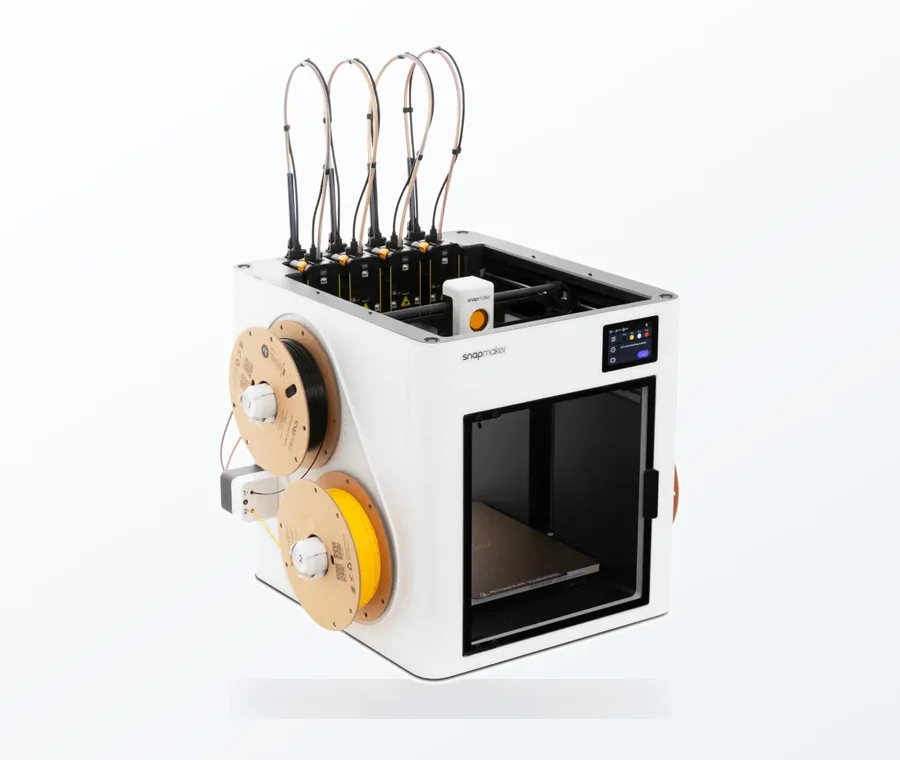
The consumer toolchanger 3D printer: the SnapSwap 4-toolhead system swaps heads in 5 seconds for true multi-color and multi-material printing, with smart calibration and auto filament loading.
- 4 toolheads · 5 s swap
- Up to 500 mm/s · 20,000 mm/s²
- 270 mm cube build volume
- Multi-color & multi-material
Additive manufacturing has fundamentally altered the paradigm of how we conceive and construct building envelopes. By building objects layer by layer from a digital model, 3D printing bypasses many of the constraints inherent in subtractive or formative manufacturing processes. For facades, this means an unparalleled ability to produce bespoke building components that perfectly match specific design intentions. From concept to reality, the technology facilitates a seamless transition, enabling the creation of unique, high-performance skins that define a building’s identity and interaction with its environment.
Unlocking design freedom: Complex architectural elements
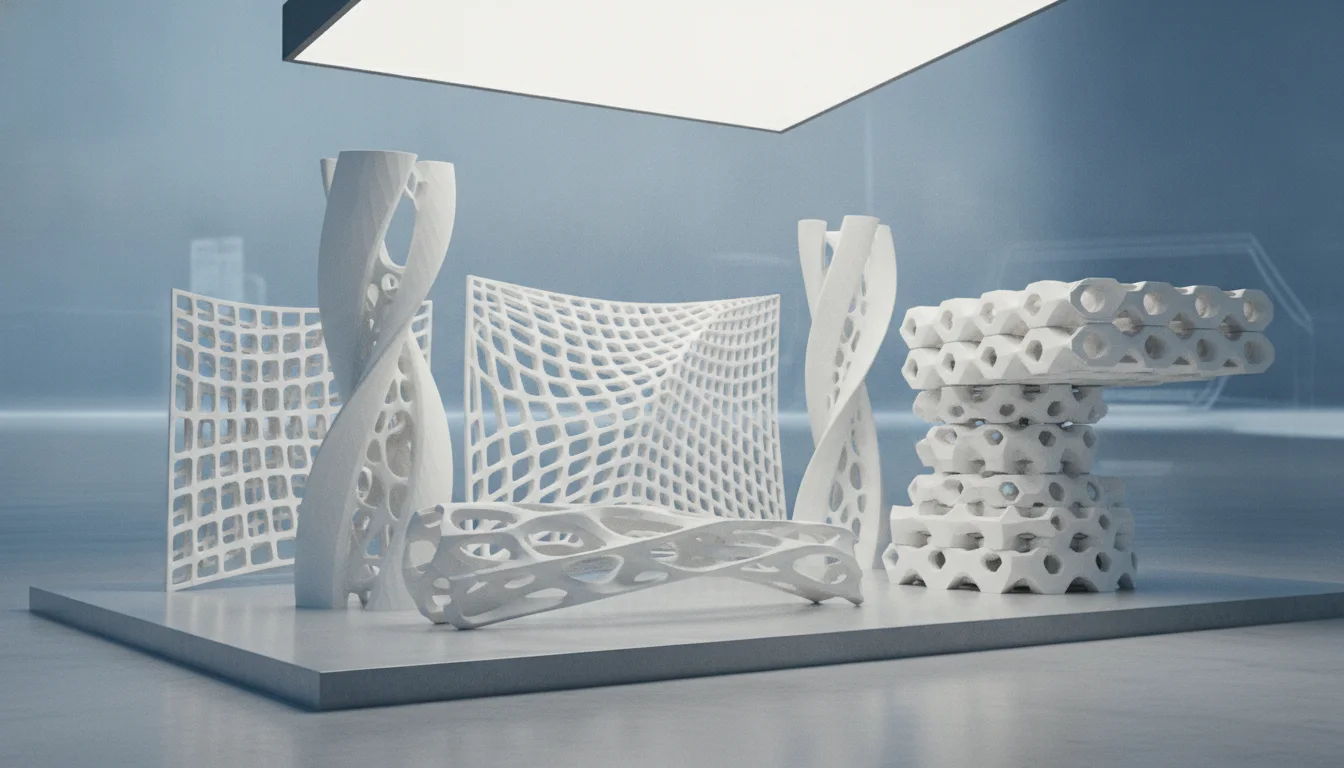
One of the most compelling advantages of 3D printed facades lies in their capacity to unlock extraordinary design freedom. Architects are no longer limited by standard molds or the labor-intensive carving of traditional materials. Instead, they can envision and execute designs featuring:
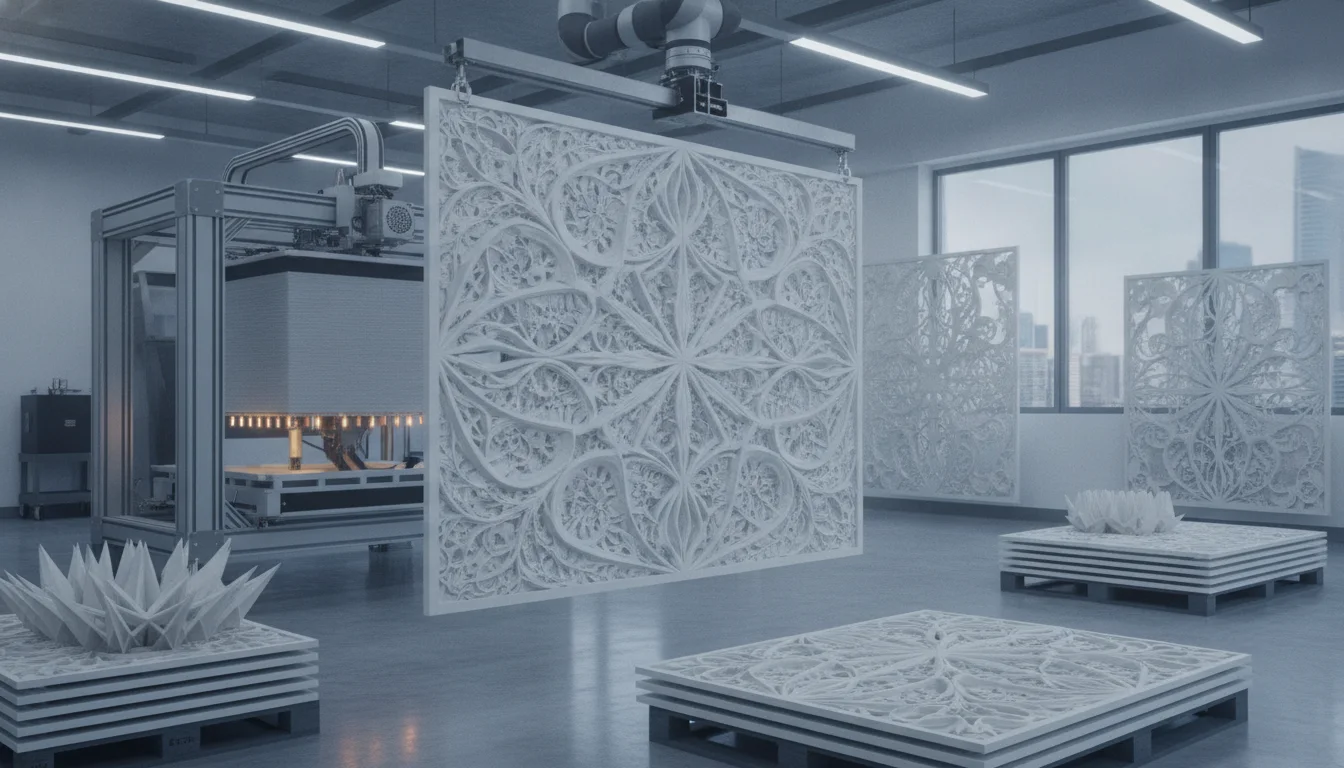
- Intricate geometries and organic forms: The technology excels at producing non-standard, flowing shapes, curvilinear elements, and complex tessellations that mimic natural patterns or futuristic visions.
- Customization and personalization: Each facade element can be unique, allowing for highly personalized building exteriors that respond to specific site conditions, solar paths, or aesthetic preferences. This makes truly bespoke building components a tangible reality.
- Integrated functionality: Beyond aesthetics, 3D printing allows for the integration of multiple functions within a single facade component, such as optimized shading devices, ventilation channels, or even embedded sensors, enhancing building performance.
This capability to produce complex architectural elements without a significant increase in marginal cost per unique part represents a paradigm shift from mass production to mass customization.
Materials and methods for 3D printed facades
The versatility of 3D printing extends to the wide array of materials it can process, each offering distinct properties suitable for facade applications. The choice of material and printing method heavily influences the aesthetic, structural integrity, and cost-effectiveness of the final facade.
- Polymers and composites: Materials like UV-resistant plastics, reinforced polymers, and fiber-reinforced composites are popular due to their lightweight nature, durability, and ability to be easily processed into complex shapes. Technologies like Fused Deposition Modeling (FDM) and Stereolithography (SLA) are often employed for these.
- Concrete and cementitious mixtures: Large-scale concrete 3D printing offers the ability to create robust, structurally sound facade elements with unique textures and patterns. This method is particularly promising for load-bearing or large-format panels.
- Metals: For high-strength, intricate metal components, technologies like Binder Jetting or Directed Energy Deposition (DED) can be used with materials such as aluminum, stainless steel, or even copper alloys, providing distinct additive manufacturing aesthetics.
- Recycled and sustainable materials: The push for sustainability has also led to the development of printable materials derived from recycled plastics, bio-based polymers, and local earth composites, reducing the environmental footprint of facade production.
Each material and method brings its own set of advantages and considerations regarding structural performance, weather resistance, fire safety, and maintenance requirements.
Cost structures: A comparative analysis
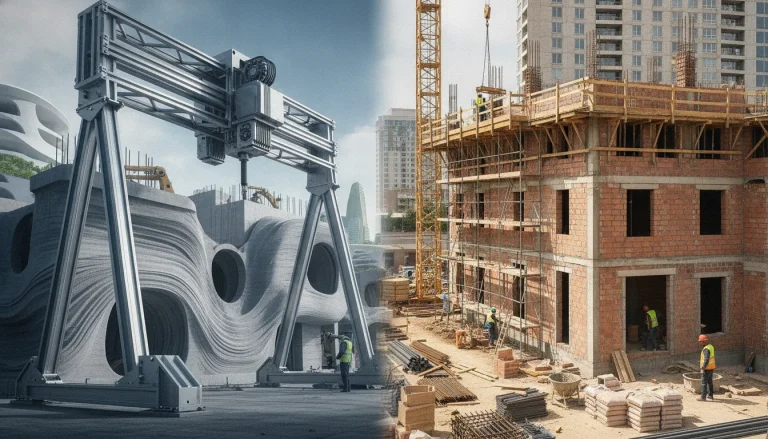
Understanding the cost implications of 3D printed facades versus traditional methods is crucial for informed decision-making. It’s not simply a matter of unit price, but a holistic view encompassing design flexibility, tooling, labor, and waste.
Traditional facade production
Traditional methods often involve:
- High tooling and mold costs: For complex or custom shapes, the upfront cost of creating molds can be substantial, making unique designs expensive for small batches.
- Labor-intensive fabrication: Skilled labor is often required for cutting, shaping, assembling, and finishing components, contributing significantly to overall costs.
- Material waste: Subtractive processes (e.g., cutting from large sheets) often generate considerable material waste.
- Logistical complexities: Managing the procurement and installation of numerous standardized or custom-fabricated parts.
3D printed facades
Conversely, 3D printed facades present a different cost profile:
- Reduced tooling costs: As parts are printed directly from digital models, the need for expensive molds or specialized tooling is largely eliminated, especially for custom or low-volume components.
- Material costs: These can vary widely depending on the chosen material, but the additive nature of the process often leads to less material waste.
- Design and digital modeling investment: While fabrication labor might be reduced, there’s a higher upfront investment in computational design, modeling, and optimization expertise.
- Printing infrastructure: For in-house production, the initial capital expenditure for large-format 3D printers can be significant. Outsourcing to service bureaus can mitigate this.
- Post-processing and finishing: Depending on the material and desired aesthetic, post-processing steps like sanding, painting, or coating can add to the cost.
The cost-effectiveness of 3D printed facades often shines when dealing with high complexity, extensive customization, or projects where speed to market is critical. For highly standardized, repetitive components, traditional methods might still hold a cost advantage. The true value proposition of 3D printing often lies in the ability to achieve unique additive manufacturing aesthetics and performance benefits that are otherwise unattainable or financially unfeasible.
Features and advantages of 3D printed facades
The consumer toolchanger 3D printer: the SnapSwap 4-toolhead system swaps heads in 5 seconds for true multi-color and multi-material printing, with smart calibration and auto filament loading.
Beyond the economic considerations, the inherent features of 3D printed facades offer compelling advantages:
- Unprecedented design versatility: Architects can realize highly complex, organic, and intricate designs, including delicate ornamentation and custom textures, pushing the boundaries of aesthetic expression.
- Lightweighting: Optimized internal geometries can significantly reduce the weight of facade elements, leading to savings in structural support and transportation.
- Enhanced performance: The ability to print complex internal structures allows for integrated insulation, improved thermal bridges, passive shading elements, and better ventilation, contributing to energy efficiency.
- Waste reduction: As an additive process, 3D printing minimizes material waste compared to subtractive manufacturing techniques, aligning with sustainable construction practices.
- Faster prototyping and iteration: Design changes can be implemented rapidly in the digital model and new prototypes printed quickly, accelerating the design development phase.
- Mass customization at scale: Each facade panel can be uniquely designed and printed without incurring additional tooling costs, enabling truly bespoke building components.
- Restoration and heritage: 3D printing offers a precise method for replicating intricate historical facade elements for restoration projects, ensuring authenticity while leveraging modern technology.
Challenges and considerations
While the potential of 3D printed facades is immense, there are practical challenges to consider:
- Scalability and print size: Printing very large facade panels can be time-consuming and requires specialized, large-format printers, which are not universally available.
- Material certification and durability: Ensuring the long-term performance, weather resistance, fire safety, and structural integrity of novel 3D printed materials in facade applications requires rigorous testing and certification.
- Post-processing and assembly: Depending on the finish and complexity, significant post-processing (sanding, painting, sealing) and on-site assembly might still be required.
- Design expertise: Architects and engineers require specialized computational design skills to optimize models for 3D printing, understand material behaviors, and manage digital workflows.
- Initial investment and adoption curve: The upfront cost for advanced 3D printing equipment and the learning curve for integrating these technologies into existing construction workflows can be significant.
The future of facade design with additive manufacturing
The trajectory of 3D printed facades points towards a future where building envelopes are not just protective skins but active, intelligent, and aesthetically diverse components of our urban fabric. As materials science advances, printing technologies become more efficient, and design software grows more intuitive, the adoption of additive manufacturing in facade construction is set to broaden significantly. We can anticipate more widespread use of integrated smart functionalities, self-healing materials, and facades that actively respond to environmental changes. The ability to create complex architectural elements with unparalleled precision and customization will undoubtedly continue to inspire a new generation of architects and redefine the very essence of architectural ornamentation and form.
Ultimately, the decision to employ 3D printed facades hinges on a careful evaluation of project-specific goals, desired aesthetic outcomes, performance requirements, and budget constraints. By objectively comparing the cost structures and features with traditional methods, stakeholders can make informed choices, leveraging additive manufacturing to push the boundaries of design and construction in an increasingly complex and demanding architectural landscape.
Frequently asked questions
Is a 3D printed facade more expensive than a traditional facade?
It depends on the design complexity. For highly complex, customized, or low-volume components, 3D printing is often more cost-effective because it eliminates expensive mold and tooling costs. For highly standardized, repetitive panels, traditional methods may still hold a cost advantage, as the article notes that the value proposition of 3D printing often lies in achieving unique aesthetics and performance that are otherwise unfeasible.
What materials are commonly used for 3D printed building facades?
The article lists several material categories: polymers and composites (like UV-resistant plastics and fiber-reinforced materials), concrete and cementitious mixtures for large-format panels, metals such as aluminum or stainless steel, and recycled or sustainable materials like bio-based polymers and local earth composites. The choice depends on the required structural performance, weather resistance, and desired aesthetic.
Can 3D printing be used to restore historic architectural ornamentation?
Yes. The article explicitly mentions that 3D printing offers a precise method for replicating intricate historical facade elements for restoration projects, ensuring authenticity while leveraging modern technology. This makes it a viable option for recreating complex, non-standard ornamentation that would be difficult or expensive to produce with traditional methods.