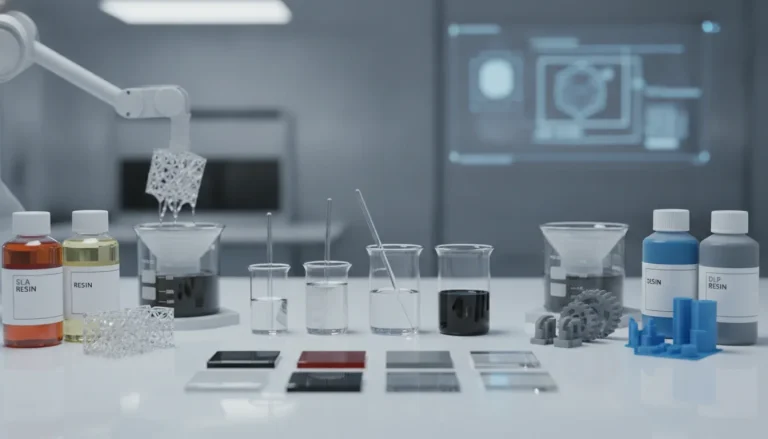
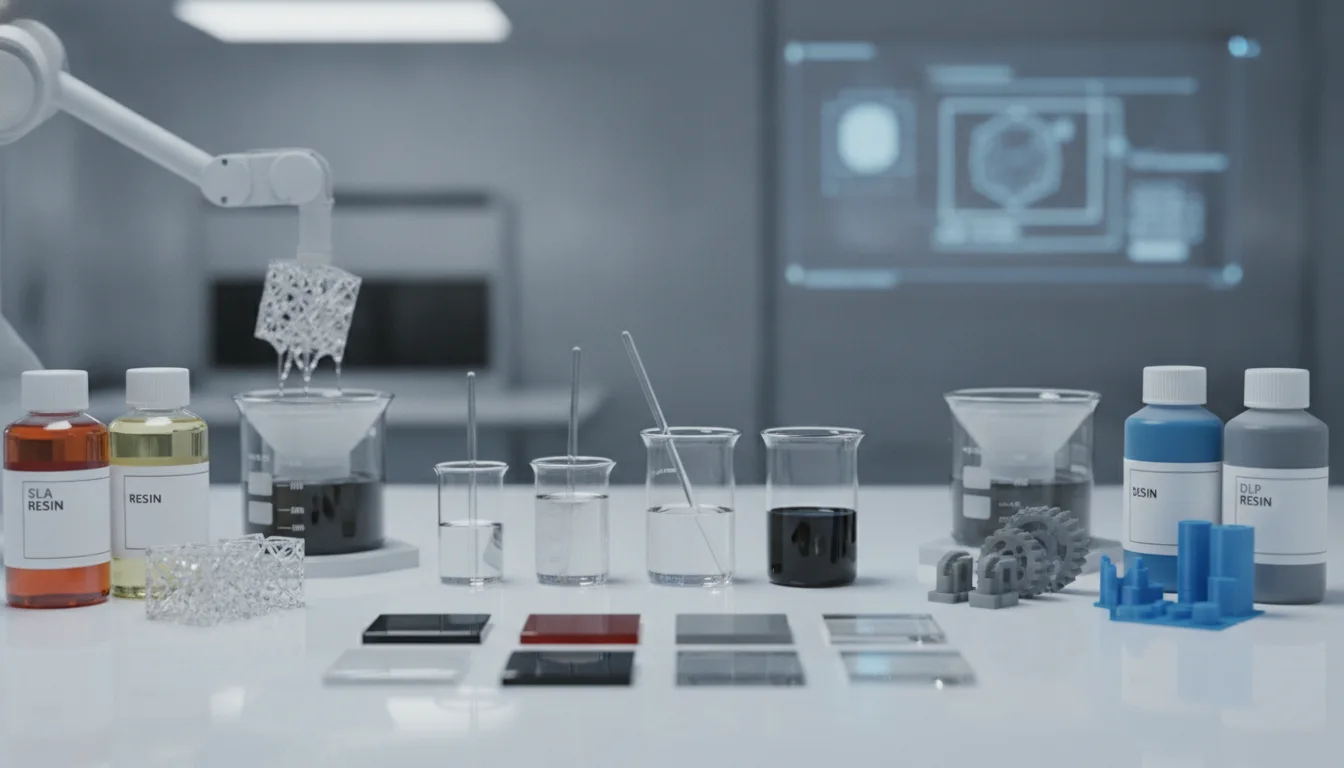
Stereolithography (SLA) and Digital Light Processing (DLP) are two prominent additive manufacturing technologies renowned for their ability to produce highly detailed and accurate parts. Both methods rely on photopolymer resins that cure when exposed to specific wavelengths of light. However, the vast array of available 3D printing materials, each with unique characteristics, can make selecting the optimal resin a complex undertaking. Understanding the diverse SLA resin types and DLP resin properties is paramount for achieving desired print outcomes, whether you’re creating a delicate prototype or a robust functional component.
Understanding SLA and DLP resin technology
A retro-styled turntable and add-on speaker system with concrete and wood enclosure options. Currently running on Kickstarter.
SLA and DLP printers operate on similar principles: a liquid photopolymer resin is selectively cured by a light source, layer by layer, to form a solid object. The primary distinction lies in the light source and curing mechanism. SLA typically uses a UV laser to trace each layer, while DLP employs a digital light projector to flash an entire layer image at once. This difference can influence print speed and resolution, but the fundamental interaction between light and resin remains consistent. The choice of resin dictates a part’s final mechanical, thermal, optical, and chemical properties, making it a critical factor in the success of any project.
Key material properties to consider
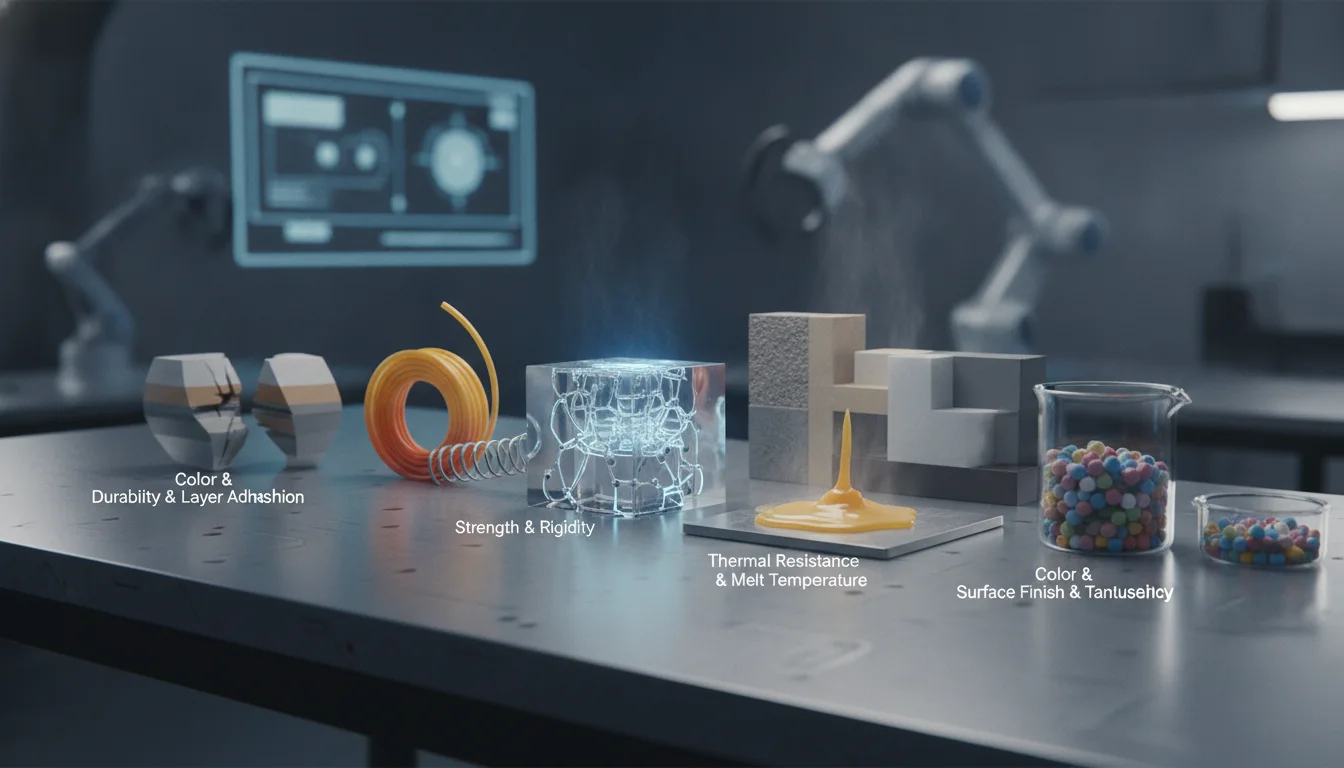
When evaluating different SLA resin types or DLP resin properties, a comprehensive understanding of their material characteristics is essential. These properties dictate how a printed part will perform under various conditions and for specific applications.
Mechanical properties
- Tensile Strength: Measures the maximum stress a material can withstand while being pulled or stretched before breaking. High tensile strength resins are suitable for parts that will experience significant pulling forces.
- Flexural Strength: Indicates a material’s resistance to deformation under bending stress. Parts requiring stiffness and resistance to bending will benefit from resins with high flexural strength.
- Impact Resistance: Describes a material’s ability to absorb energy and deform plastically without fracturing under sudden force. For parts that might be dropped or subject to sudden impacts, a high impact resistance is crucial.
- Hardness: A material’s resistance to indentation, scratching, or abrasion. Measured by scales like Shore D, hardness is important for parts requiring wear resistance or a rigid surface.
Thermal properties
- Heat Deflection Temperature (HDT): The temperature at which a material deforms under a specified load. Resins with a high HDT are necessary for parts that will operate in elevated temperature environments, preventing warping or softening.
Optical properties
- Transparency/Clarity: The ability of light to pass through a material without scattering. Essential for applications like lenses, light guides, or visual prototypes where clarity is key.
- Color: While many resins come in standard colors, some specialty resins offer unique color options or the ability to be custom-pigmented.
Chemical properties
- Chemical Resistance: A material’s ability to withstand degradation when exposed to various chemicals, solvents, or environmental factors. Important for parts used in industrial settings or medical devices.
- Biocompatibility: The ability of a material to interact with biological systems without causing an adverse response. Crucial for medical, dental, and food-contact applications, often requiring specific ISO certifications.
Curing properties
- Viscosity: The resin’s resistance to flow. Lower viscosity resins are easier to clean and flow better into intricate details, while higher viscosity resins might offer different print characteristics.
- Reactivity: How quickly and effectively the resin cures under light exposure. This impacts print speed and the required post-curing process.
Common SLA resin types and their applications

The market offers a diverse range of SLA resin types, each engineered for specific performance characteristics and applications. Understanding these categories is vital for making an informed choice.
Standard resins
These are general-purpose resins, often the most affordable option. They typically offer a good balance of detail, smooth surface finish, and ease of printing. While they excel at capturing intricate features, they usually have lower mechanical properties compared to specialized resins, making them prone to brittleness.
- Properties: Good detail resolution, smooth surface finish, relatively low cost, often brittle.
- Applications: Visual prototypes, concept models, figurines, general-purpose non-functional parts where aesthetics are prioritized over mechanical strength.
- Cost Structure: Generally the lowest initial cost per liter. Post-processing is straightforward.
Tough/durable resins
Engineered to withstand stress and strain, durable resin options are designed to be less brittle than standard resins. They offer improved impact strength and flexural properties, making them suitable for parts that need to endure mechanical loads or repeated handling.
- Properties: High impact strength, improved flexural strength, moderate elongation, less brittle.
- Applications: Functional prototypes, snap-fit assemblies, jigs and fixtures, enclosures, end-use parts requiring some degree of robustness.
- Cost Structure: Moderate initial cost, typically higher than standard resins. Post-processing is similar to standard resins.
Flexible/elastic resins
As the name suggests, flexible resin materials mimic rubber-like properties, allowing parts to bend and compress without breaking. They are characterized by high elongation at break and low Shore hardness.
- Properties: High elongation at break, rubber-like feel, low Shore hardness, good tear resistance.
- Applications: Grips, gaskets, seals, wearable prototypes, living hinges, compressible buttons, overmolding.
- Cost Structure: Moderate to higher initial cost. May require specific print settings or supports due to their flexibility.
High-temperature resins
These resins are formulated to maintain their mechanical integrity at elevated temperatures, offering a significantly higher HDT than standard or tough resins. This makes them invaluable for applications where heat resistance is critical.
- Properties: Very high HDT, good stiffness at elevated temperatures, often brittle at room temperature.
- Applications: Molds for casting (e.g., silicone, low-temp injection molding), jigs and fixtures for production lines, functional parts exposed to heat (e.g., automotive under-hood components, electronic housings).
- Cost Structure: Higher initial cost. May require specific post-curing profiles to achieve full thermal properties.
Castable resins
Specifically designed for investment casting processes, castable resins burn out cleanly with minimal ash residue. This allows for the creation of intricate patterns that can then be used to cast metal parts.
- Properties: Clean burnout, low ash content, good detail resolution, often brittle.
- Applications: Jewelry patterns, dental crowns and bridges (for investment casting), intricate metal prototypes.
- Cost Structure: Higher initial cost due to specialized formulation. Requires specific post-processing for optimal burnout.
Clear/transparent resins
Transparent resin options are formulated to produce parts that are optically clear, or can be polished to achieve a high degree of transparency. They are ideal for applications where light transmission and visibility are crucial.
- Properties: High light transmission, can be polished to optical clarity, good detail.
- Applications: Lenses, light pipes, fluidic devices, visual prototypes requiring internal visibility, models for airflow or liquid flow analysis.
- Cost Structure: Moderate to higher initial cost. Post-processing can be more labor-intensive to achieve desired clarity (sanding, polishing, clear coating).
Dental/biocompatible resins
These specialized resins are engineered to meet strict biocompatibility standards (e.g., ISO 10993) for medical and dental applications. They come in various formulations for specific uses within these fields.
- Properties: Biocompatible (ISO 10993 certified), specific mechanical properties for dental/medical use (e.g., rigidity for surgical guides, durability for temporary crowns).
- Applications: Dental models, surgical guides, temporary crowns and bridges, orthodontic appliances, hearing aids, anatomical models for pre-surgical planning.
- Cost Structure: Significantly higher initial cost due to stringent testing and certification. Requires careful handling and often specific post-processing protocols to maintain biocompatibility.
Specialty resins
Beyond these common types, the market also offers a range of specialty SLA resin types, such as ceramic-filled resins for high stiffness and heat resistance, ESD (Electrostatic Discharge) safe resins for electronics applications, and even dissolvable support resins. These cater to very niche requirements and often come with a premium price tag.
Cost structure considerations for SLA and DLP resins
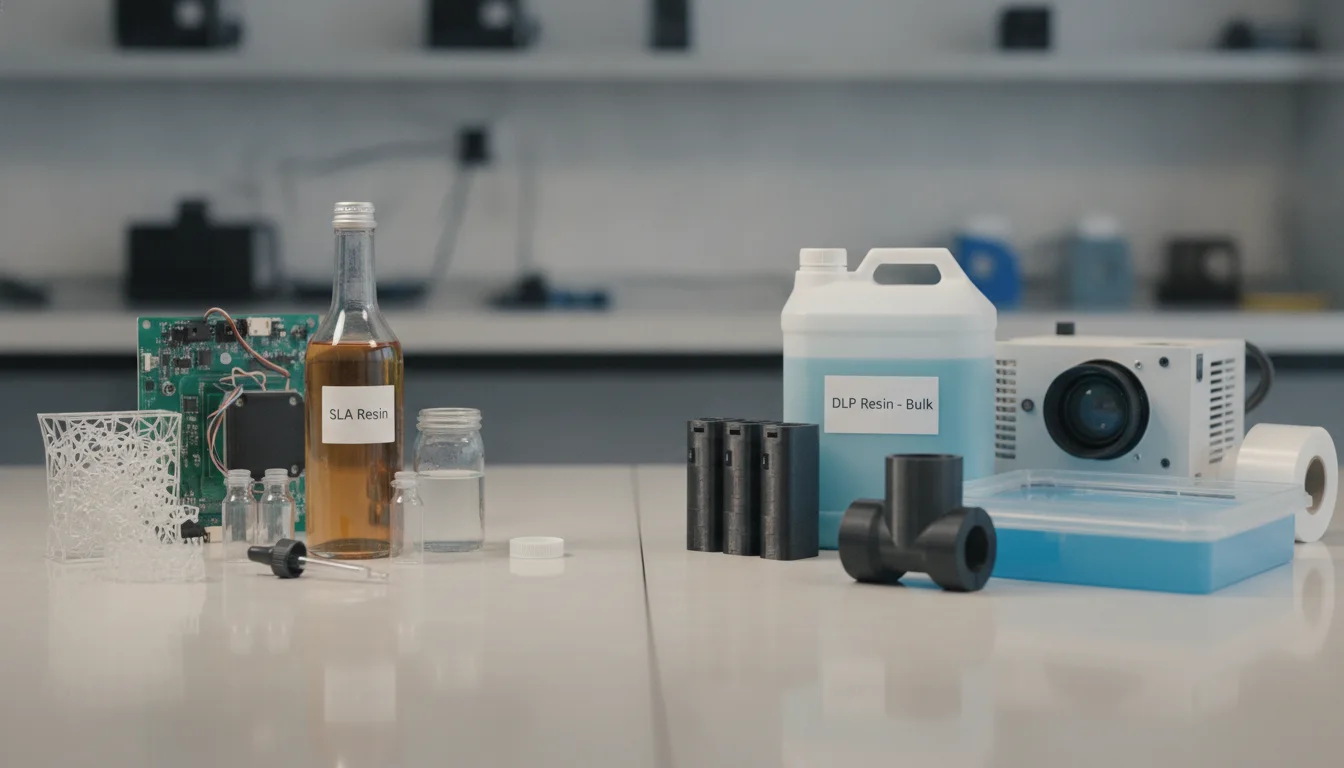
While the initial purchase price of a resin bottle is a significant factor, a holistic view of the cost structure involves several other elements. Understanding these can help in making a more economical choice over the lifespan of a project or production run.
Initial resin cost
The price per liter of resin varies dramatically. Standard resins are typically the most economical, while highly specialized materials like biocompatible, high-temperature, or castable resins command a premium due to their complex formulations and certification processes. Bulk purchasing might offer discounts, but requires careful consideration of shelf life.
Post-processing costs
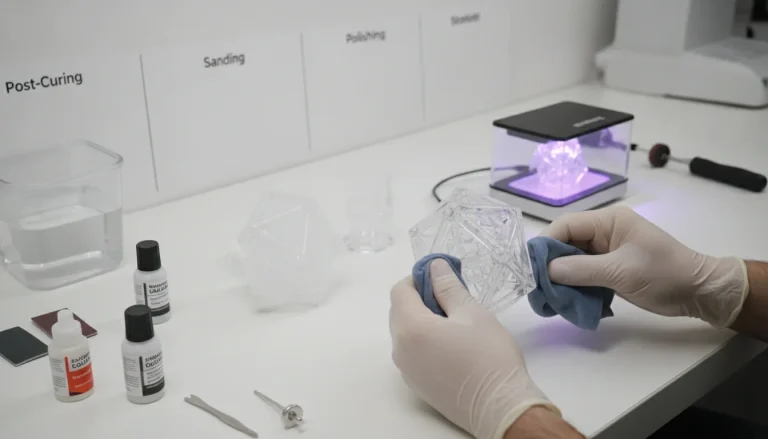
All SLA and DLP prints require post-processing, which includes washing and post-curing. The type of resin can influence these costs:
- Washing Solvents: Isopropyl Alcohol (IPA) is common, but some resins may require specific cleaning agents, which could be more expensive or require special handling. The volume of solvent used and its disposal are ongoing costs.
- Curing Equipment: While many resins cure with basic UV light boxes, some specialized resins might benefit from or require specific wavelengths or intensity for optimal properties, potentially necessitating dedicated post-curing units.
- Labor: The time spent on support removal, washing, and post-curing contributes to the overall cost. Some resins are easier to process than others. For transparent resins, extensive sanding and polishing can add significant labor.
Print failure rates
Some advanced SLA resin types can be more challenging to print successfully, especially those with very specific viscosity or curing profiles. Higher failure rates translate directly to wasted material and increased labor for reprinting, thereby raising the effective cost per part. Factors like ambient temperature, humidity, and printer calibration can disproportionately affect certain resin types.
Printer compatibility
Many resin manufacturers produce materials optimized for specific 3D printer brands or models. While open-source systems allow for a wider range of third-party resins, proprietary systems often limit users to specific, sometimes more expensive, branded resins. This can impact your long-term material cost choices.
Shelf life and storage
Resins have a finite shelf life and require specific storage conditions (cool, dark place, sealed container). Improper storage can lead to premature degradation, rendering the resin unusable and representing a wasted investment. Large volume purchases need to account for consumption rates within the resin’s viable period.
Matching resin to project needs: A decision framework

Choosing the right resin is a multi-faceted decision. By systematically evaluating your project’s requirements against the available DLP resin properties and SLA resin types, you can arrive at an optimal solution.
Define your application
Start by clearly articulating the purpose of your printed part. Is it a visual prototype, a functional component, a mold, or a medical device? This fundamental question will narrow down the potential resin categories.
Identify key performance requirements
Based on your application, prioritize the essential material properties. For example:
- If the part needs to be handled frequently or assembled, mechanical properties like toughness and flexural strength are paramount.
- For parts exposed to heat, HDT becomes a critical factor.
- If optical clarity is needed, a transparent resin is a must.
- For medical or dental use, biocompatibility is non-negotiable.
Consider post-processing
Evaluate the time and resources you are willing to dedicate to post-processing. Some resins achieve their full properties only after extensive washing and post-curing, or require significant manual finishing for aesthetic reasons. This can add substantial cost and labor to the overall project.
Evaluate budget constraints
While it’s tempting to opt for the cheapest resin, consider the total cost of ownership, including potential print failures and post-processing. Sometimes, investing in a slightly more expensive resin that perfectly matches your requirements can lead to fewer iterations, higher success rates, and ultimately, lower overall project costs.
Test and iterate
For critical applications, it’s often prudent to perform small-scale tests with a few promising resin types. Printing test pieces allows you to validate mechanical properties, surface finish, and overall printability before committing to a larger production run. This iterative approach can save significant time and material in the long run.
The landscape of 3D printing materials continues to evolve rapidly, offering an ever-expanding palette of SLA resin types and DLP resin properties. By meticulously evaluating your project’s specific demands against the nuanced characteristics and comprehensive cost implications of various resins, you can make an informed decision. This strategic approach not only optimizes your 3D printing workflow but also ensures that your final printed parts meet the exact performance and aesthetic criteria required for success.
Frequently asked questions
Can you mix different resin types together to get combined properties?
Mixing different resin types is generally not recommended. Resins are chemically formulated with specific photoinitiators and stabilizers; mixing them can alter curing properties unpredictably, leading to incomplete curing, poor mechanical performance, or print failure. Always use a resin as formulated by the manufacturer for reliable results.
Do I need a special washing solvent for high-temperature or flexible resins?
Most SLA and DLP resins, including high-temperature and flexible types, can be washed with standard isopropyl alcohol (IPA). However, some specialty resins may require specific cleaning agents recommended by the manufacturer. Always check the resin’s technical data sheet for approved solvents to avoid damaging the part or compromising its final properties.
How long can I store an opened bottle of resin before it goes bad?
An opened bottle of resin typically has a shelf life of 6 to 12 months when stored properly in a cool, dark, sealed container. Factors like exposure to UV light, temperature fluctuations, and contamination can accelerate degradation. If the resin becomes significantly thicker, has separated layers that won’t remix, or has visible solids, it is likely no longer usable for reliable printing.