
The landscape of additive manufacturing, commonly known as 3D printing, has expanded dramatically, moving beyond prototyping into functional end-use parts across diverse industries. However, a significant hurdle for many advanced applications remains the material’s ability to withstand aggressive chemical exposures. From industrial pipelines carrying corrosive fluids to medical devices requiring sterilization, and automotive components exposed to fuels and oils, the demand for truly chemical resistant 3D printing solutions is paramount. This guide delves into the intricate world of material selection for additive manufacturing in harsh environments, exploring the properties, trade-offs, and considerations necessary to ensure material compatibility and part longevity. Understanding the nuances of chemical resistance is not just about choosing a material; it’s about safeguarding performance, ensuring safety, and optimizing operational integrity in challenging conditions.
Understanding chemical resistance in 3D printing

Chemical resistance refers to a material’s ability to withstand degradation when exposed to specific chemical agents. In the context of 3D printing, this is a multifaceted challenge, influenced by several factors beyond the inherent properties of the base polymer.
Factors influencing resistance
- Polymer Structure and Composition: The molecular makeup of a polymer dictates its resistance. Highly cross-linked, amorphous polymers often exhibit better resistance to solvents, while crystalline structures can offer greater impermeability.
- Additives and Fillers: Reinforcing fibers (e.g., carbon fiber, glass fiber) or other additives can impact chemical resistance, sometimes positively by creating a more tortuous path for chemicals, or negatively if they react with the environment.
- Processing Conditions: The specific 3D printing process (FDM, SLA, SLS, etc.) and its parameters can influence the final part’s density, porosity, and surface finish, all of which play a role in how chemicals interact with the material.
- Post-Processing: Curing, annealing, or applying protective coatings can significantly alter the chemical resistance profile of a printed part.
- Environmental Factors: Temperature, pressure, duration of exposure, and concentration of the chemical agent are critical variables that can drastically change a material’s performance.
The spectrum of chemical exposure is broad, encompassing strong acids (e.g., sulfuric acid), bases (e.g., sodium hydroxide), various organic solvents (e.g., acetone, toluene), oils, fuels, and even aggressive cleaning agents. Each chemical class presents a unique challenge, necessitating a targeted approach to material selection.
Key material categories for chemical resistant 3D printing
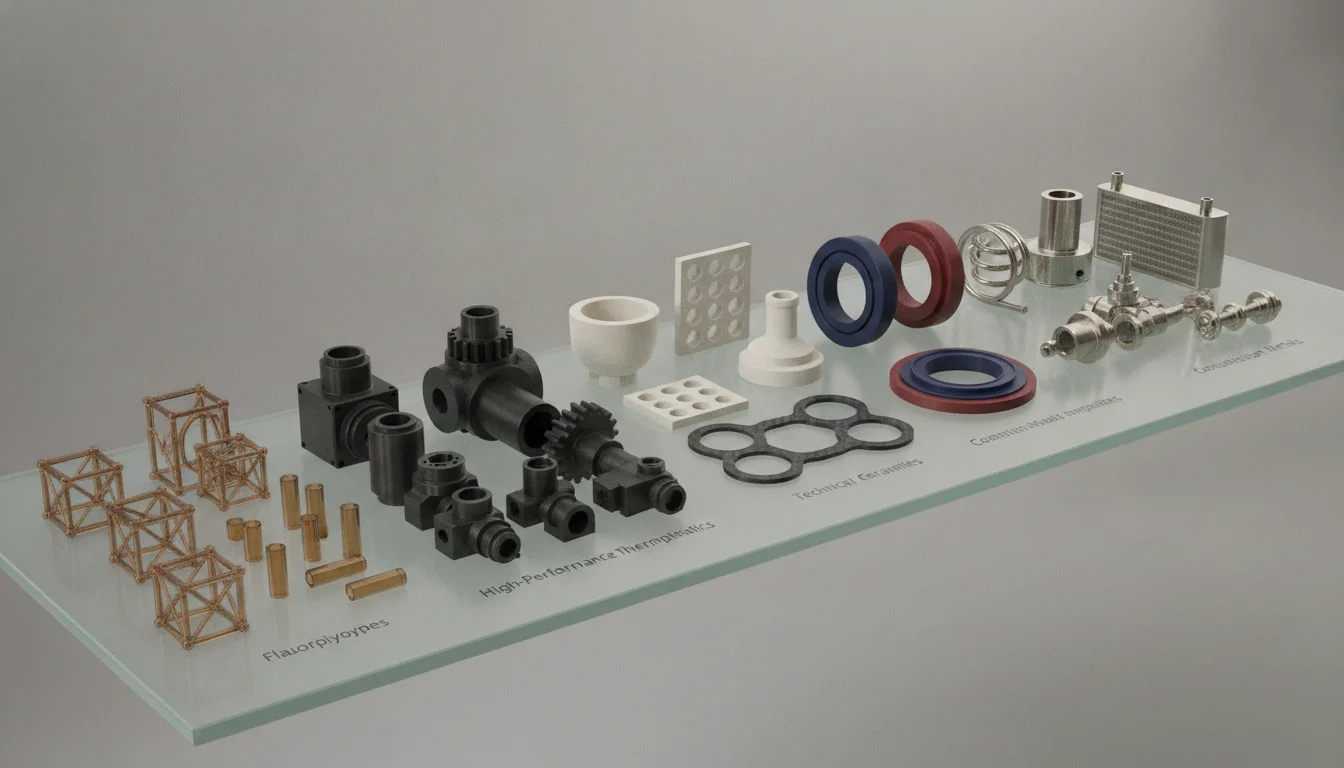
Selecting materials for chemical resistant 3D printing requires a deep dive into specific polymer families, each offering distinct advantages and limitations.
High-performance polymers for extreme conditions
- Polyether Ether Ketone (PEEK) and Polyether Ketone Ketone (PEKK): Often considered the gold standard for high-performance applications, PEEK and PEKK offer exceptional chemical resistance across a broad spectrum of aggressive chemicals, including many acids, bases, and organic solvents. They also boast outstanding thermal stability and mechanical properties. However, printing these materials typically requires specialized, high-temperature additive manufacturing systems and the raw material itself carries a premium cost, making them a significant investment.
- Polyphenylsulfone (PPSU) and Polysulfone (PSU): These amorphous thermoplastics provide very good chemical resistance, particularly to hot water, steam, and many common solvents, making them suitable for medical and aerospace applications. While offering excellent high-temperature performance, they are generally more accessible to print than PEEK/PEKK, though still requiring capable machines and representing a higher material cost than engineering-grade plastics.
- Polyvinylidene Fluoride (PVDF): A semi-crystalline fluoropolymer, PVDF is renowned for its excellent resistance to a wide range of chemicals, including strong acids, bases, and halogens, even at elevated temperatures. It also exhibits good UV and weather resistance. PVDF is a strong candidate for applications in the chemical processing industry. While printable on some FDM platforms, it can be challenging due to its semi-crystalline nature, and the material cost is notably higher than commodity plastics.
- Fluoroelastomers (e.g., FKM-like materials): For applications requiring flexibility and chemical resistance, such as seals, gaskets, and O-rings, FKM-like materials are invaluable. They offer exceptional resistance to fuels, oils, solvents, and many aggressive chemicals over a wide temperature range. While 3D printing FKM-like materials is an emerging field, specialized resins for SLA/DLP or modified FDM filaments are becoming available, though often at a significant cost and with specific processing requirements.
Engineering polymers for balanced performance
- Polypropylene (PP): A widely used commodity plastic, polypropylene offers excellent broad chemical resistance to many acids, bases, and organic solvents, particularly at room temperature. Its low cost makes it an attractive option where its mechanical properties and lower temperature resistance are sufficient. However, 3D printing PP can be challenging due to its high tendency to warp, requiring careful process control and often heated build chambers. Its mechanical properties are generally lower than high-performance polymers.
- Nylon (Polyamide – PA): Various grades of nylon (e.g., PA6, PA12) are popular in 3D printing. They offer good resistance to many common solvents, oils, and fuels. However, nylons can be susceptible to strong acids and bases, and their moisture absorption can affect both mechanical properties and chemical resistance over time. Nylon materials are relatively cost-effective and printable on a range of FDM and SLS systems.
- Acrylonitrile Butadiene Styrene (ABS) and Acrylonitrile Styrene Acrylate (ASA): While not typically considered “highly” chemical resistant, ABS and ASA offer decent resistance to dilute acids and bases, and some oils. They are often chosen for their mechanical properties, ease of printing, and cost-effectiveness. However, they are highly susceptible to many common organic solvents (like acetone), which can be used for post-processing but also limits their application in solvent-rich environments.
Composite materials and others
Fiber-reinforced composites, such as carbon fiber-filled PEEK or nylon, can enhance mechanical strength and stiffness, and in some cases, slightly improve chemical resistance by reducing the matrix material’s exposure or by increasing the part’s overall integrity. For extreme chemical resistance, particularly against very strong acids or bases at high temperatures, ceramic and metal 3D printing offer inherent advantages. However, these technologies typically involve significantly higher equipment and material costs, as well as more complex post-processing steps.
Assessing material compatibility for harsh environments
Choosing a material solely based on its general chemical resistance rating can be misleading. A thorough assessment involves considering the complete environmental profile to ensure proper material compatibility for harsh environments.
Key considerations for material compatibility
- Specific Chemical Identification: Precisely identify the chemical agents, their concentrations, and whether they are pure or mixtures. A material resistant to a dilute acid might fail in a concentrated solution.
- Temperature and Pressure: Chemical reactions accelerate at higher temperatures, and increased pressure can force chemicals into material pores. A material’s resistance at room temperature may drastically diminish under elevated thermal or pressure loads.
- Duration of Exposure: Intermittent exposure is vastly different from continuous immersion. Long-term exposure can lead to creep, swelling, or degradation even with seemingly resistant materials.
- Mechanical Stress: Parts under mechanical load (tension, compression, bending) while exposed to chemicals can be more susceptible to stress cracking or accelerated degradation. This is known as environmental stress cracking.
- Surface Finish and Porosity: Rougher surfaces or porous internal structures common in some 3D printing processes can provide more surface area for chemical attack and pathways for penetration. Post-processing techniques like vapor smoothing or sealing can mitigate this.
- Regulatory Compliance: For industries like medical, food and beverage, or aerospace, material selection must also account for specific regulatory approvals and certifications regarding chemical exposure and leachables.
Effective material compatibility assessment often involves rigorous testing under conditions that closely mimic the end-use environment. This iterative process is crucial for validating the chosen material and printing solution.
Cost structures and practical implications in chemical resistant 3D printing
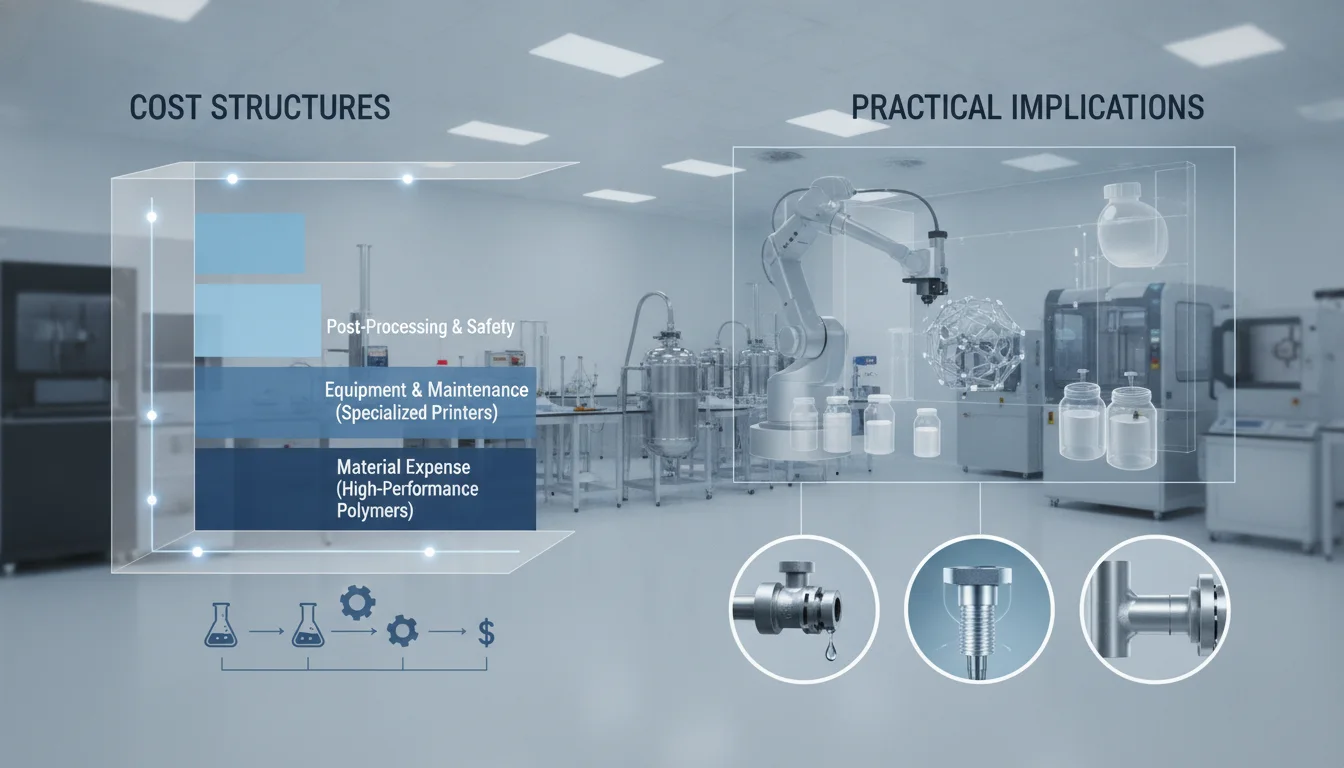
The pursuit of chemical resistant 3D printing solutions involves a careful balancing act between performance requirements and economic realities. The overall cost structure is influenced by several factors beyond just the raw material price.
Material cost implications
Generally, high-performance polymers like PEEK, PEKK, PPSU, PVDF, and specialized FKM-like resins command significantly higher prices per kilogram compared to engineering polymers such as polypropylene or nylon. This difference can be orders of magnitude, directly impacting the cost of each printed part. For applications where chemical resistance is critical, this higher material investment is often justified by the extended lifespan and reliability of the component, potentially reducing downtime and replacement costs in the long run.
Additive manufacturing technology and equipment costs
- FDM/FFF (Fused Deposition Modeling/Fused Filament Fabrication): More common engineering plastics like polypropylene and nylon can be printed on relatively accessible FDM machines. However, printing high-performance polymers like PEEK or PEKK requires industrial-grade FDM systems with high-temperature extruders, heated build chambers, and advanced thermal management, which represent a substantial capital investment.
- SLA/DLP (Stereolithography/Digital Light Processing): These resin-based technologies offer excellent surface finish and fine details. Specialized chemically resistant resins are available, but they are typically more expensive than standard resins. The equipment itself ranges from desktop models to industrial systems, with corresponding cost variations.
- SLS (Selective Laser Sintering): SLS is often used for nylon (PA12) and offers good mechanical properties and isotropic parts without support structures. While suitable for some chemical resistance applications, SLS systems represent a higher initial investment compared to many FDM printers.
The choice of printing technology is not merely about capability; it directly influences the upfront equipment cost, operational expenses (power consumption, inert gas for some processes), and maintenance requirements.
Post-processing and validation expenses
Many 3D printed parts, especially those requiring superior chemical resistance, necessitate post-processing. This can include thorough cleaning, UV curing (for resin-based prints), annealing to improve crystallinity and reduce internal stresses, or applying protective coatings. Each of these steps adds to the overall cost and complexity of the manufacturing process. Furthermore, for critical applications, extensive testing and validation of the printed part’s chemical resistance and mechanical integrity are indispensable. This includes immersion tests, accelerated aging, and performance under simulated operational conditions, which can be a significant financial and time investment.
Lead time and scalability
The overall cost-effectiveness also depends on production volume and lead time. For low-volume, highly customized parts, 3D printing with expensive, chemical-resistant materials might be the only viable option, justifying the higher per-part cost. For larger production runs, traditional manufacturing methods with chemically resistant materials might become more competitive, though 3D printing still offers advantages in design complexity and speed to market for initial batches.
Specific chemical resistance profiles of key materials
A closer look at how specific materials stand up to different chemical classes can further inform selection.
- Acid resistance:
- Excellent: PVDF, PEEK, Polypropylene (especially to dilute acids).
- Good: PPSU, some Nylons (to dilute acids).
- Limited: ABS, ASA.
- Solvent resistance:
- Excellent: PEEK, PPSU, FKM (to a broad range of organic solvents, fuels, oils).
- Good: Some Nylons (to common organic solvents, oils, greases).
- Fair/Limited: Polypropylene (resistance varies greatly by solvent type), ABS, ASA (highly susceptible to many common solvents like acetone, MEK).
- Base Resistance:
- Excellent: Polypropylene, PVDF, PEEK.
- Good: PPSU, some Nylons.
- Limited: ABS, ASA.
- Oil and Fuel Resistance:
- Excellent: FKM, PEEK, specific grades of Nylon.
- Good: PPSU.
- Limited: Polypropylene (can swell with some fuels), ABS, ASA.
It is crucial to consult detailed chemical compatibility charts provided by material manufacturers, as resistance can be highly specific to the exact chemical, its concentration, and the operating temperature.
Choosing the right solution: a strategic framework

Navigating the complexities of chemical resistant 3D printing demands a structured approach. The “best” solution is always contextual, depending on a confluence of factors.
A framework for informed decision-making
- Define the Chemical Environment: Start by exhaustively listing all chemical agents, their concentrations, exposure duration (intermittent, continuous), and the operating temperature and pressure ranges. This is the bedrock of material selection.
- Specify Mechanical and Thermal Requirements: What structural integrity is needed? Will the part be under constant load? What are the maximum and minimum operating temperatures? These factors narrow down the material and printing technology choices.
- Consider Printing Technology and Accessibility: Evaluate available 3D printing technologies. Do you have access to high-temperature FDM for PEEK, or are you limited to more common FDM or SLA systems? This will directly influence material options and associated costs.
- Assess Cost Implications Holistically: Look beyond just the material price. Factor in equipment investment, operational costs, post-processing, and the crucial expense of testing and validation. Weigh these against the cost of part failure, downtime, and replacement.
- Prioritize Safety and Compliance: For critical applications, ensure the chosen material and process meet all relevant industry standards, regulatory requirements, and safety protocols. This might involve biocompatibility, fire retardancy, or specific chemical resistance certifications.
- Embrace Iterative Testing and Prototyping: Rarely is the perfect solution found on the first try. Develop prototypes, subject them to simulated conditions, and refine your material and process choices based on real-world performance data. This mitigates risks and optimizes the final outcome.
The adage “measure twice, cut once” is particularly apt in chemical resistant 3D printing. Thorough research, precise definition of requirements, and rigorous testing are indispensable for success in harsh environments.
Conclusion

The quest for reliable chemical resistant 3D printing solutions is a testament to the evolving capabilities of additive manufacturing. While the challenges are significant, the growing array of high-performance polymers and specialized processes offers unprecedented opportunities to create functional parts that can endure the most aggressive environments. From the robust solvent resistance of PEEK and FKM to the acid resistance of PVDF and the versatile, cost-effective properties of polypropylene, material selection is a critical decision that underpins the success of any application in harsh environments. By adopting a comprehensive and analytical approach, carefully weighing material properties against environmental demands, cost structures, and technological capabilities, engineers and designers can unlock the full potential of additive manufacturing to solve complex industrial challenges. The future of chemical resistant 3D printing lies in continued material innovation, process refinement, and a deeper understanding of material-environment interactions.
Frequently asked questions
Can I use acetone smoothing on ABS parts intended for solvent exposure?
No. While acetone vapor smoothing is a common post-processing technique for ABS, the article explicitly notes that ABS is “highly susceptible to many common organic solvents (like acetone).” Using acetone smoothing on a part destined for solvent-rich environments would be counterproductive, as the acetone itself attacks the material. For parts that need both chemical resistance and a smooth surface, consider a material like PPSU or apply a protective coating after printing.
Is polypropylene a cost-effective drop-in replacement for PEEK in chemical resistance applications?
Only in limited, low-temperature scenarios. Polypropylene is significantly cheaper than PEEK and offers excellent resistance to many acids and bases at room temperature, as noted in the article. However, PEEK provides “exceptional chemical resistance across a broad spectrum” including organic solvents, and “outstanding thermal stability,” where polypropylene’s lower temperature resistance and tendency to warp during printing make it unsuitable for demanding thermal or solvent-exposed environments.
Does carbon fiber filling always improve a material’s chemical resistance?
Not necessarily. The article states that fiber reinforcement can “slightly improve chemical resistance by reducing the matrix material’s exposure or by increasing the part’s overall integrity.” However, it also warns that additives can impact chemical resistance “negatively if they react with the environment.” The chemical resistance of a composite is still largely governed by the base polymer (e.g., PEEK or nylon), so you must verify compatibility of the entire composite system with the specific chemical.