Venturing into the world of resin 3D printing (SLA/DLP) opens up incredible possibilities for intricate and highly detailed models. However, it also introduces a critical consideration: the need for robust resin printer ventilation. Unlike FDM printing, resin printing involves liquid photopolymer resins that can emit volatile organic compounds (VOCs) and other airborne particulates during the printing and post-processing stages. Ensuring proper air quality in your workspace is not just about comfort; it’s a fundamental aspect of maintaining a safe workspace and protecting your long-term health.
Many beginners initially rely on simply opening a window, but this often falls short of providing adequate fume extraction. This article delves into various ventilation solutions, offering an objective comparison of their cost structures, features, and effectiveness. Our goal is to equip you with the knowledge to make an informed decision, tailored to your specific needs, budget, and workspace constraints, without dictating a ‘best’ or ‘cheapest’ option.
Understanding the challenge: volatile organic compounds (VOCs) and your health
Before exploring solutions, it’s crucial to understand why ventilation is so important. The resins used in SLA/DLP printers contain various chemicals, many of which can off-gas as VOCs. These compounds are released into the air as gases from certain solids or liquids and can include a range of chemicals, some of which may have short- and long-term adverse health effects. Common symptoms of exposure can range from eye, nose, and throat irritation, headaches, and nausea, to more severe issues with prolonged or high-level exposure. Furthermore, the uncured resin itself, and even the cured prints before a thorough wash, can continue to emit these fumes. Effective fume extraction is therefore paramount to mitigate these risks.
While some resins are marketed as ‘low odor’ or ‘plant-based’, this doesn’t necessarily mean they are free of VOCs or entirely safe for unventilated use. The key is to minimize exposure to all airborne contaminants, ensuring that your air quality remains at a healthy level throughout your printing endeavors.
Initial considerations: basic approaches and their limitations
Many users start with basic methods, which, while better than nothing, often have significant limitations:
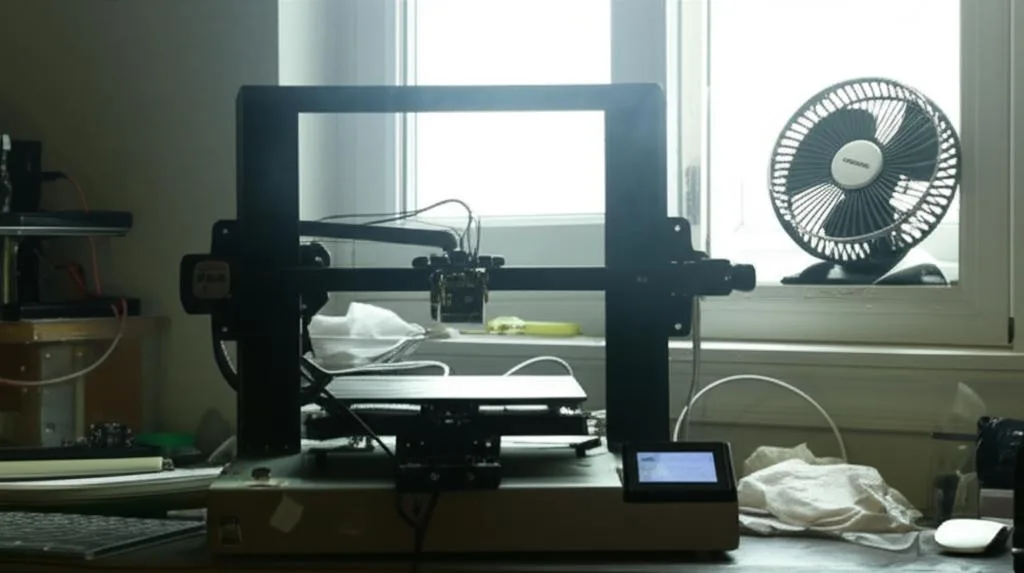
- Opening a window: This is the simplest approach and certainly helps dilute airborne contaminants. However, its effectiveness is highly dependent on external weather conditions, wind direction, and the size of the room. It often doesn’t create a consistent airflow for targeted fume extraction directly from the printer, meaning fumes can still spread throughout the room before being diluted. It also compromises climate control in your workspace.
- Small desktop air purifiers: Some users place small air purifiers near their printer. While these devices can filter particulates and some VOCs, they are typically designed for general room air purification, not for handling the concentrated fumes directly at the source. Their filtration capacity for heavy VOC loads from resin printing is often insufficient, and filters can saturate quickly, leading to high ongoing costs and diminished effectiveness. They also don’t provide active exhaust, merely recirculating filtered air within the room.
These methods can serve as a starting point or a supplement, but for a truly safe workspace, a more dedicated and active ventilation system is generally recommended.
Dedicated ventilation systems: an objective comparison
Moving beyond basic measures, several dedicated solutions offer more robust resin printer ventilation. Each comes with its own set of features, complexities, and cost considerations.
1. The DIY enclosure with an exhaust fan (e.g., grow tent setup)
This is a popular and often cost-effective solution for hobbyists. It involves enclosing your resin printer within a contained space, typically a small grow tent or a custom-built cabinet, and using an exhaust fan to pull air out of the enclosure and vent it outdoors.
Cost structure analysis:
- Initial components: The cost is primarily driven by the grow tent itself (relatively inexpensive, ranging from $50-$200 depending on size), an inline duct fan (e.g., AC Infinity, Vivosun – $80-$200), ducting ($20-$50), and potentially a carbon filter ($50-$150). A window vent kit might add another $30-$70.
- Ongoing costs: The primary ongoing cost is the replacement of the activated carbon filter, which needs to be changed periodically (e.g., every 6-12 months, depending on usage) to maintain effective VOC absorption.
Features:
- Containment: The enclosure effectively contains fumes at the source.
- Active exhaust: An inline fan creates negative pressure, actively pulling fumes out.
- Filtration potential: Combining the fan with an activated carbon filter significantly improves air quality by scrubbing VOCs before exhausting the air, or for recirculating filtered air if direct exhaust isn’t feasible (though direct exhaust is always preferred).
- Scalability: Can be adapted for multiple printers or larger setups.
- Light and temperature control: Grow tents often block light and can help manage temperature fluctuations.
Pros and cons:
- Pros: Highly customizable, generally cost-effective for the level of protection, excellent fume extraction when properly sealed and vented, relatively easy to assemble for most DIY enthusiasts.
- Cons: Requires some assembly and planning, takes up floor space, aesthetic might not suit all workspaces, potential for leaks if not sealed correctly.
2. Purpose-built fume hood/workstation
These are dedicated units designed specifically for laboratory or workshop use, offering a more integrated and often more powerful solution for fume extraction.
Cost structure analysis:
- Initial investment: Significantly higher than DIY options, ranging from several hundred to thousands of dollars, depending on size, features, and brand. This includes the hood structure, integrated fan, and filtration system.
- Ongoing costs: Primarily filter replacement (activated carbon, sometimes HEPA), which can be more expensive than standard inline carbon filters due to proprietary designs.
Features:
- Professional aesthetic and integration: Often designed to blend into a professional workshop, with integrated lighting, power outlets, and sometimes a dedicated work surface.
- Optimized airflow: Engineered for efficient capture and removal of fumes.
- Advanced filtration: May include multi-stage filtration (e.g., pre-filters, HEPA, activated carbon) for superior air quality.
- Quieter operation: Often designed with noise reduction in mind.
- Turnkey solution: Less DIY effort required for setup.
Pros and cons:
- Pros: High efficacy, professional appearance, often quieter, comprehensive filtration, minimal setup effort. Provides a very safe workspace.
- Cons: High initial cost, less flexible for customization, typically larger footprint, proprietary filters can be expensive.
3. External exhaust (direct venting) system
This solution focuses solely on removing contaminated air directly to the outside, without necessarily filtering it first. It typically involves an exhaust fan, ducting, and a direct vent through a window or wall.
Cost structure analysis:
- Initial components: Moderate cost, mainly for a powerful inline duct fan ($80-$200), ducting ($20-$50), and a robust window or wall vent kit ($30-$100). Installation might require professional help if a wall penetration is needed.
- Ongoing costs: Minimal, as there are typically no filters to replace if the air is exhausted directly outdoors. The primary cost would be electricity for the fan.
Features:
- Direct removal: Most effective method for completely removing VOCs from the indoor environment, as they are expelled outside.
- Simplicity: Fewer components than filtered systems, potentially less maintenance.
- High airflow: Can achieve very high rates of air exchange.
Pros and cons:
- Pros: Highly effective at removing fumes from the workspace, no filter replacement costs (for VOCs), relatively simple conceptually. Creates a very safe workspace by preventing recirculation.
- Cons: Requires external access (window or wall), can lead to heat loss/gain from the workspace, does not filter the air being exhausted (which might be a concern depending on local regulations or proximity to neighbors), does not purify incoming air, can create negative pressure issues if not balanced with make-up air.
4. Air purifiers with activated carbon (as a primary or supplemental solution)
While mentioned as a basic approach, high-capacity air purifiers with substantial activated carbon filters can be considered as a primary solution for smaller setups or as a supplementary measure in larger ones. They are designed to recirculate and clean the air within a room.
Cost structure analysis:
- Initial unit cost: Varies widely, from $150 to $600+, depending on brand, CADR (Clean Air Delivery Rate), and filter capacity. Look for units specifically designed to target VOCs, typically featuring large amounts of activated carbon.
- Ongoing costs: Frequent and potentially expensive filter replacements. Activated carbon filters have a finite absorption capacity for VOCs and will saturate. HEPA filters also require replacement.
Features:
- Ease of use and portability: Simply plug and play, can be moved between rooms.
- No ducting required: Ideal for spaces where external venting is not possible.
- General air quality improvement: Filters general airborne particulates and odors in the room.
Pros and cons:
- Pros: Convenient, portable, improves general air quality, no installation hassle.
- Cons: Does not remove fumes from the environment, only filters them internally. Less effective for highly concentrated fumes directly at the source compared to active exhaust. High ongoing filter replacement costs due to rapid saturation when dealing with significant VOCs. Not a true fume extraction solution in the sense of expelling contaminants.
Key considerations for any resin printer ventilation system
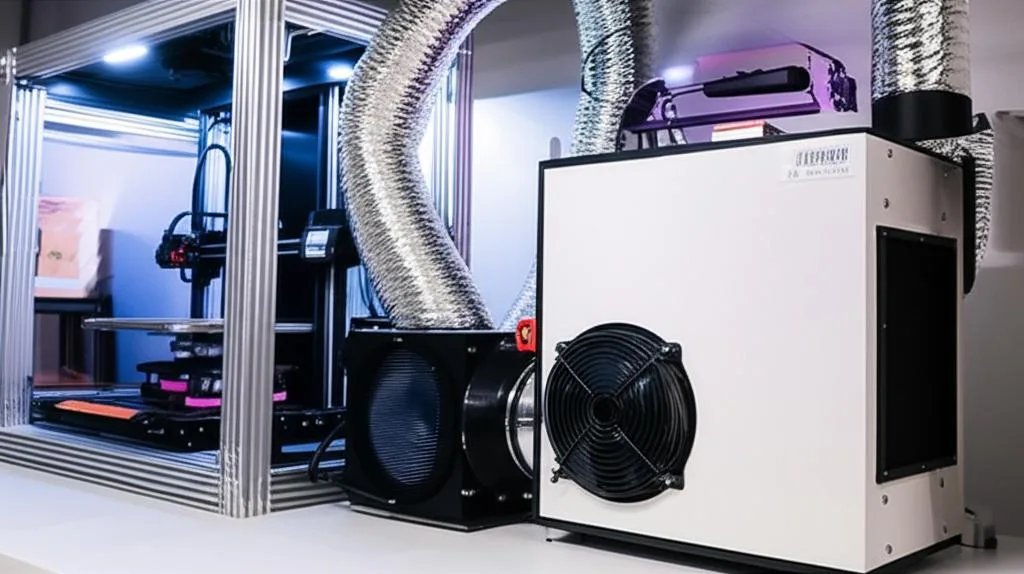
Regardless of the system you lean towards, several factors are universal in ensuring its effectiveness:
Airflow (CFM): The fan’s cubic feet per minute (CFM) rating is crucial. For an enclosure, you want enough airflow to achieve several air changes per hour. A common recommendation is to calculate the volume of your enclosure (L x W x H in feet) and aim for a fan that can exchange the air at least 60 times per hour (CFM = Volume * 60). For example, a 2x2x3 ft enclosure (12 cubic feet) would need a fan of at least 720 CFM (though this is often overkill for hobby setups; more practical advice suggests 100-200 CFM for a typical grow tent setup).
Filter types: For VOCs, activated carbon is the gold standard. Ensure any filter you choose has a substantial amount of high-quality activated carbon. HEPA filters are excellent for particulate matter but do not capture gaseous VOCs.
Sealing and containment: The effectiveness of any exhaust system hinges on proper containment. Ensure your enclosure is as airtight as possible, and all ducting connections are sealed to prevent leaks. This ensures all contaminated air passes through your filtration/exhaust system.
Noise levels: Fans can be noisy. Consider fans with EC motors (electronically commutated) or those designed for quiet operation if your workspace is in a living area. Fan silencers can also be added to ducting.
Placement: Position the exhaust port of your enclosure or fume hood as close to the printer’s opening as possible to capture fumes before they dissipate. For an enclosure, the fan should ideally pull air from the top, as many VOCs are heavier than air or mix quickly.
Maintenance: All systems require maintenance, primarily filter replacement for those with filtration. Neglecting this will severely reduce the system’s effectiveness and compromise your air quality.
Conclusion: empowering your decision for a safe workspace
Creating an effective resin printer ventilation system is an essential investment in your health and the longevity of your hobby. While the initial thought of ‘beyond the window’ might seem daunting, the options available cater to a wide range of budgets and technical abilities. Whether you opt for the customizable and cost-effective grow tent setup with an exhaust fan, a professional-grade fume hood, or a direct external exhaust system, the underlying goal remains the same: to ensure superior air quality and a truly safe workspace.
By objectively comparing the features and cost structures presented here, you are now better equipped to evaluate which solution aligns best with your specific circumstances. Consider your available space, the frequency of your printing, your budget, and your comfort level with DIY projects. With careful planning, you can establish a robust fume extraction system that allows you to enjoy the incredible capabilities of resin 3D printing without compromising your well-being.
Frequently asked questions
Can I just use an air purifier with a HEPA filter instead of activated carbon for resin fumes?
No. HEPA filters capture solid particulates like dust and uncured resin particles, but they do not remove gaseous volatile organic compounds (VOCs) emitted by resin. For VOCs, you need a filter with a substantial amount of activated carbon. Even then, a recirculating air purifier is less effective than an active exhaust system because it does not remove contaminated air from the room.
Is a 3D printer enclosure with a carbon filter enough, or do I still need to vent outside?
While a carbon filter in an enclosure will reduce odor and absorb some VOCs, it is not a substitute for venting outdoors. Carbon filters have a finite absorption capacity and will saturate quickly under heavy use, especially if the enclosure is not sealed well. Direct external exhaust is always the preferred method for completely removing VOCs from your workspace and maintaining a safe environment.
My grow tent enclosure is 2x2x3 feet. What CFM fan do I actually need?
The article notes that while a theoretical calculation for 60 air changes per hour gives 720 CFM, that is overkill for hobby setups. A more practical recommendation for a typical grow tent of that size is a fan rated between 100 and 200 CFM. This provides sufficient negative pressure and air exchange to effectively capture and exhaust fumes without being excessively noisy or expensive.