In an era where consumer goods often come with a significant price tag, the advent of 3D printing has introduced a fascinating alternative for procuring household items. Far from being a mere hobbyist pursuit, personal fabrication through 3D printing presents a unique avenue for individuals to potentially influence their household expenditure. This guide offers an objective exploration into the cost structures and feature comparisons between acquiring items via traditional retail channels and producing them at home with a 3D printer. The aim is to provide a framework for readers to independently assess where 3D printing might align with their financial goals and practical needs, contributing to what some refer to as ‘DIY savings’ or ‘home upgrades’.
Understanding the economic landscape of 3D printing for home use

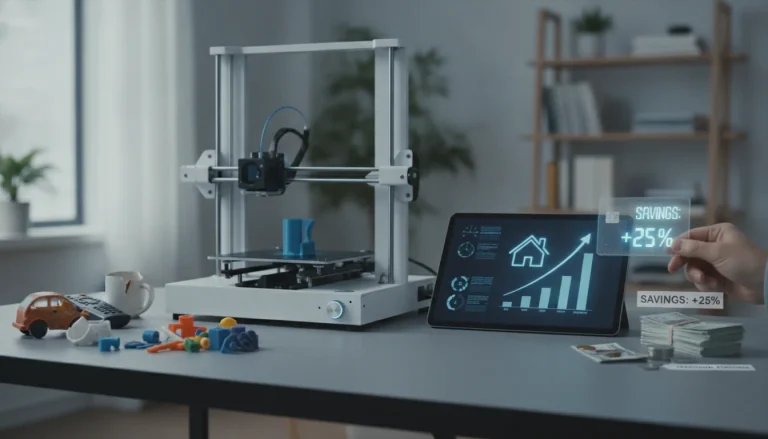
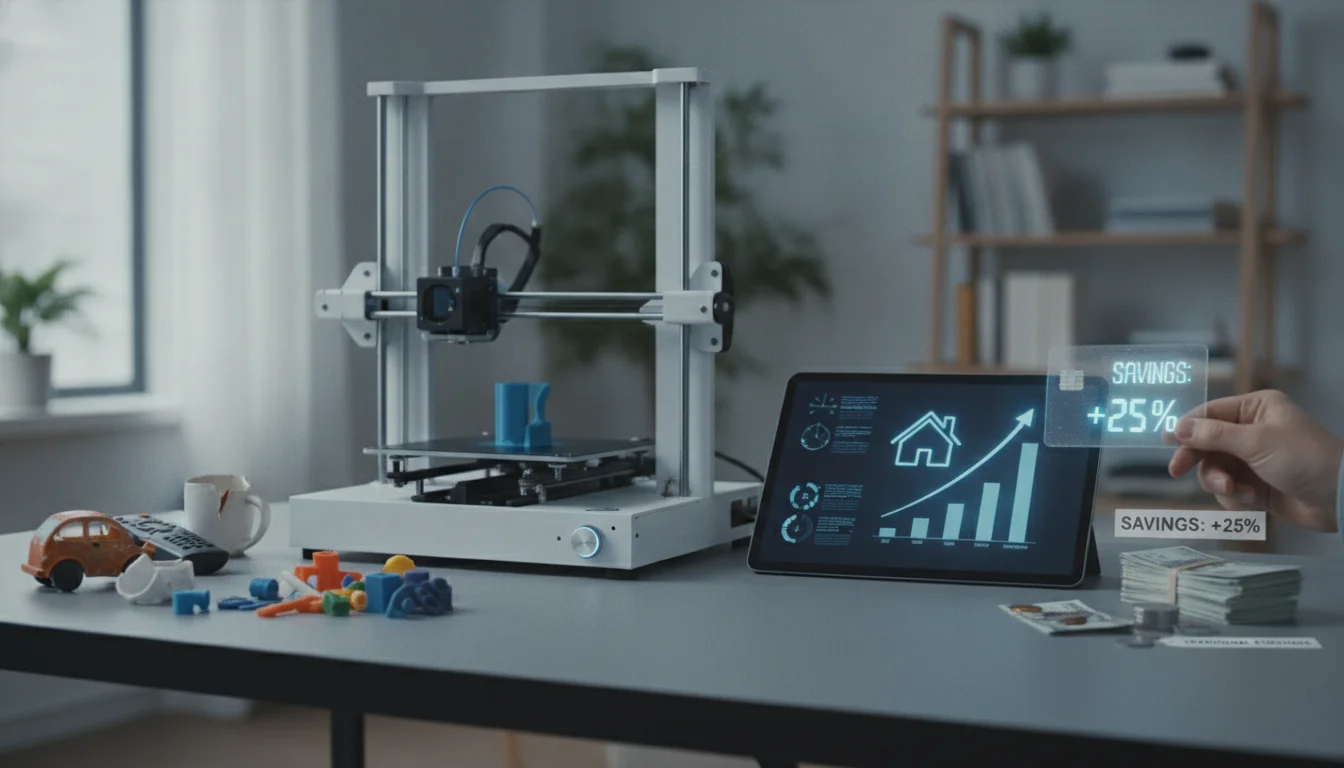
Before delving into specific applications, it’s crucial to understand the foundational economics of home 3D printing. The initial outlay for a 3D printer can range from a few hundred to over a thousand dollars, depending on its capabilities, build volume, and brand reputation. This represents a significant upfront investment, which must be amortized over the lifespan and utility of the printer. Beyond the hardware, ongoing costs include filament (the raw material, typically plastic spools), electricity consumption during printing, and occasional maintenance or replacement parts for the printer itself. The cost of filament varies widely by material type (PLA, PETG, ABS, etc.) and quality, but a kilogram spool often falls within the $20-$30 range, capable of producing numerous small to medium-sized objects.
Conversely, the cost of purchasing household items typically involves the retail price, which encapsulates manufacturing, shipping, marketing, and retailer markups. While seemingly straightforward, this price often reflects the convenience of immediate availability and guaranteed quality, alongside the absence of any personal time investment in production. The decision to embark on ‘save money 3D printing’ therefore necessitates a comparative analysis of these factors, evaluating the initial capital expenditure against potential long-term savings and the value placed on customization and self-sufficiency.
Comparing acquisition strategies for common household goods
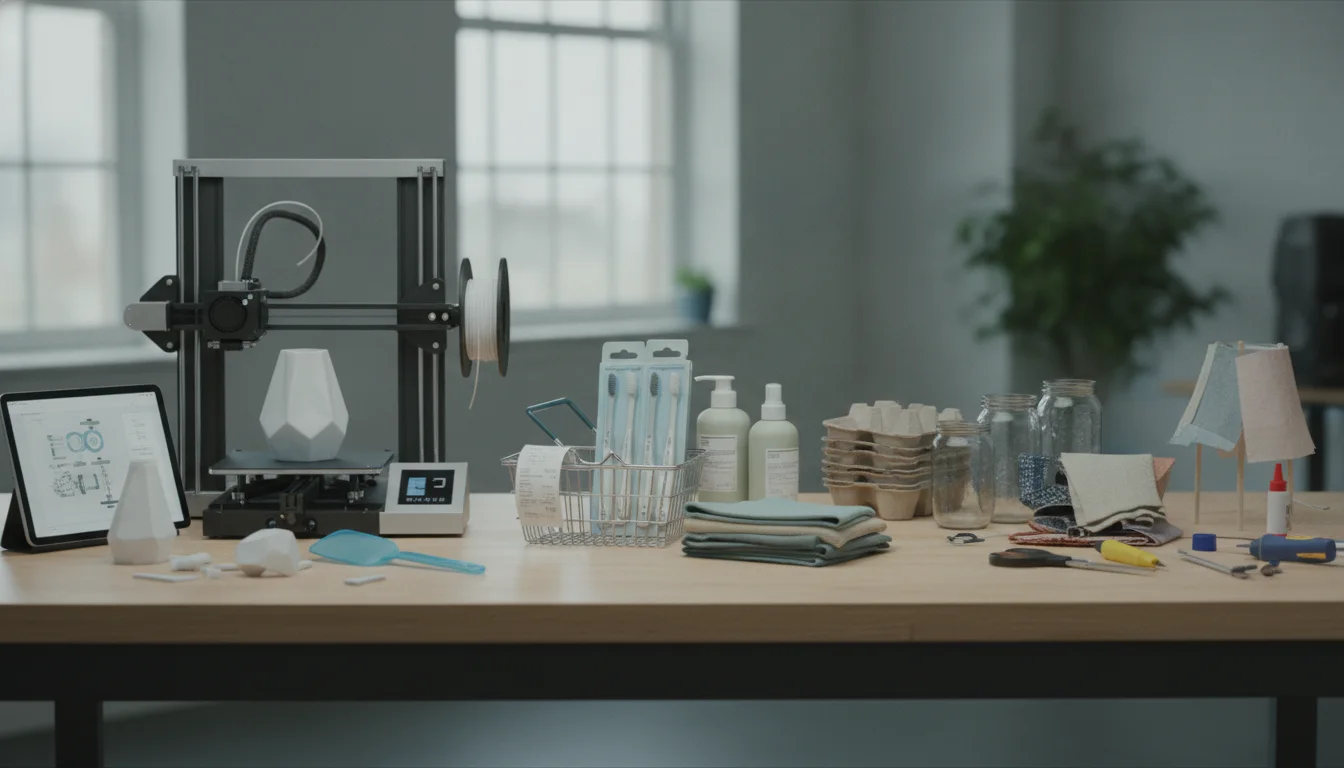
The utility of 3D printing in a domestic setting spans a surprising array of items. By examining several categories, we can draw a clearer picture of the varying cost-effectiveness and feature benefits.
Repair and replacement parts: a case for custom fabrication
One of the most compelling arguments for ‘save money 3D printing’ emerges in the realm of repairs. Consider a small, specialized plastic component, such as a knob for an old appliance, a vacuum cleaner attachment, or a bracket for a piece of furniture. Sourcing an exact replacement part from the original manufacturer can often be challenging, expensive, or even impossible if the product is discontinued. In such scenarios, the alternative might be to replace the entire appliance or furniture piece, incurring a substantially higher cost.
- Retail purchase considerations: High cost for niche parts, potential unavailability, forced replacement of entire item.
- 3D printing considerations: Filament cost (often negligible, mere cents to a few dollars), electricity cost, time for design (if not readily available online) and printing. Requires an existing printer and design skills or access to design repositories.
The feature benefit of 3D printing here is the ability to custom-fit, potentially improve upon the original design’s weak points, and extend the life of existing items, aligning with principles of sustainability and ‘DIY savings’.
Organizational solutions: tailoring to your space
From kitchen drawer dividers to garage tool holders and cable management clips, organizational items are ubiquitous. Retail options are plentiful but often come in standard sizes and configurations, which may not perfectly suit specific needs or spaces.
- Retail purchase considerations: Standardized sizes, potentially higher unit cost for specialized organizers, limited customization.
- 3D printing considerations: Ability to create perfectly sized and shaped inserts, modular systems, and bespoke solutions. Filament and power costs are low for small items. Initial design time or locating suitable pre-made designs is required.
The ‘cost-effective printing’ aspect here lies in avoiding the purchase of multiple ill-fitting items or compromising on optimal organization. The customization feature of 3D printing offers a unique value proposition for ‘home upgrades’ that are precisely tailored.
Home decor and accessories: personalizing your environment
Decorative items such as vases, planters, unique display stands, or even custom lampshades can significantly impact a home’s aesthetic. High-end or uniquely designed decor can be quite expensive in retail stores.
- Retail purchase considerations: Premium pricing for designer or artisanal items, limited selection for truly unique pieces.
- 3D printing considerations: Freedom to experiment with various designs, colors, and textures using different filaments. Filament costs can range from a few dollars for a small vase to more for larger, intricate items. The value is in personalized aesthetics and the ability to iterate designs.
While some printed decor might lack the finish of professionally manufactured goods, the ability to produce truly unique, personalized pieces at a fraction of the retail cost for similar bespoke items makes this an interesting area for ‘budget household items’ and ‘home upgrades’.
Kitchen gadgets and utilities: specialized tools on demand
The kitchen often requires specific tools or gadgets that might be used infrequently or are difficult to find. Examples include custom bag clips, specialized utensil holders, unique bottle openers, or even small jigs for food preparation.
- Retail purchase considerations: Niche kitchen gadgets can be surprisingly expensive, especially for single-purpose tools. Availability might be limited to specialty stores.
- 3D printing considerations: Low material cost for small, functional prints. The ability to create highly specific tools that solve a particular problem, often with designs available for free online. Considerations include food safety for certain plastics if direct food contact is involved.
For those seeking ‘DIY savings’ on highly specific or infrequently used kitchen aids, 3D printing can be a valuable resource, providing customized functionality without the retail markup.
Personalized gifts and toys: value beyond monetary cost
Creating personalized gifts or unique toys offers a different angle on ‘save money 3D printing’. While a store-bought gift might have a clear price tag, a custom-printed item carries the added value of thoughtfulness and uniqueness.
- Retail purchase considerations: Generic gifts, cost varies widely but personalization often adds significant expense.
- 3D printing considerations: Material cost for a printed gift or toy is usually low. The primary investment is time for design and printing. The feature benefit is the ability to create truly one-of-a-kind items, tailored to the recipient’s interests, which can often be perceived as having greater sentimental value than a comparable retail item.
This category highlights how 3D printing can offer value that transcends pure monetary savings, contributing to meaningful ‘budget household items’ in the context of gift-giving.
Office and workspace enhancements: ergonomic and efficient setups
A well-organized and ergonomic workspace can significantly improve productivity and comfort. 3D printing allows for the creation of custom pen holders, monitor stands, cable organizers, headphone stands, and even specialized mounts for peripherals.
- Retail purchase considerations: Ergonomic accessories and custom organizational solutions can be costly, and off-the-shelf options may not perfectly fit a specific desk setup or aesthetic.
- 3D printing considerations: Low material cost for most accessories. The ability to design and print items that precisely fit the user’s space, equipment, and workflow. This can lead to a more efficient and comfortable workspace, representing a form of ‘home upgrades’ through custom solutions.
The ‘cost-effective printing’ here is not just about the monetary value of the items themselves, but also the potential for improved productivity and well-being, which are harder to quantify but nonetheless valuable.
Home improvement prototypes and fixtures: iterating towards perfection
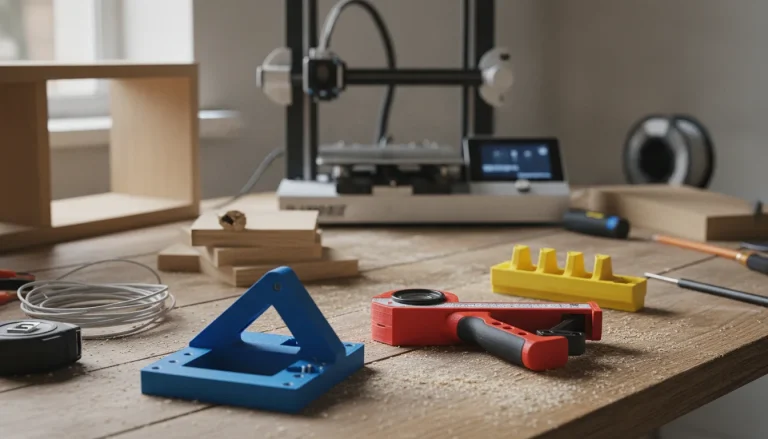
For DIY enthusiasts, 3D printing can be an invaluable tool for creating prototypes, jigs, and custom fixtures for home improvement projects. This could include specialized guides for cutting wood, custom brackets for shelving, or unique light switch covers.
- Retail purchase considerations: Standard jigs and fixtures may not exist for specific project needs, requiring improvisation or costly custom fabrication. Standard fixtures might not match a particular aesthetic.
- 3D printing considerations: Low cost for prototyping and iterating designs before committing to final materials. Ability to create highly specific tools that simplify complex tasks or unique fixtures that perfectly match a home’s design. This offers significant ‘DIY savings’ by reducing errors and material waste in larger projects.
The feature of rapid prototyping and custom fabrication makes 3D printing a powerful ally in achieving precise and personalized ‘home upgrades’ that might otherwise be prohibitively expensive or impossible to source.
Factors influencing cost-effectiveness and value
The actual financial benefits of ‘save money 3D printing’ are highly dependent on several variables:
- Initial investment vs. frequency of use: A high-end printer might only become ‘cost-effective’ if used regularly to produce items that would otherwise be expensive to purchase.
- Filament choice: Basic PLA is inexpensive, but specialized filaments (e.g., carbon fiber infused, flexible, or high-temperature resistant) can be significantly more costly, altering the cost-benefit ratio.
- Design availability and complexity: Utilizing free, pre-existing designs (from platforms like Thingiverse or Printables) drastically reduces the ‘cost’ of design. Creating complex custom designs requires time and potentially specialized software skills.
- Print time and electricity: Larger or more detailed prints can take many hours, consuming electricity. While typically a minor cost, it’s a factor in the overall equation.
- Failed prints: The learning curve for 3D printing can result in failed prints, wasting filament and time. This hidden cost should be considered, particularly for beginners.
- Durability and material properties: A 3D-printed item might not possess the same strength, finish, or longevity as a mass-produced equivalent, depending on the material and print settings. This impacts the long-term value and potential for future replacements.
Conclusion
The decision to embrace 3D printing as a strategy to ‘save money 3D printing’ on ‘budget household items’ is a nuanced one, requiring a careful assessment of individual circumstances. While the initial investment in a 3D printer can be substantial, the potential for ‘DIY savings’ through producing repair parts, custom organizational solutions, unique decor, and specialized tools is evident. The ability to create personalized ‘home upgrades’ and functional items on demand offers a value proposition that extends beyond mere monetary cost, encompassing customization, convenience, and a sense of self-sufficiency.
Ultimately, the ‘cost-effective printing’ approach is not about unequivocally replacing all retail purchases, but rather about strategically identifying opportunities where 3D printing offers a superior blend of cost, functionality, and personalization. By objectively comparing the features and cost structures of both methods, individuals can make informed decisions, leveraging this technology to reshape their household expenditure and enhance their living spaces in innovative ways.
Frequently asked questions
Does the electricity cost of running a 3D printer significantly eat into the savings from printing household items?
For most small to medium household prints, electricity cost is a minor factor. Larger or multi-day prints will add a few dollars to your power bill, but this is typically far outweighed by the filament cost and the retail price of the item you are replacing. The article notes electricity is a factor in the overall equation, but it is usually negligible compared to the cost of the part itself or the markup on retail goods.
If I am new to 3D printing, how much should I budget for failed prints and learning mistakes?
Failed prints are a hidden cost the article warns about, especially for beginners. You should expect to waste some filament and time while dialing in your printer’s settings and learning design basics. A reasonable budget is to set aside the cost of one or two extra filament spools (around $40–$60) to cover initial trial-and-error before you start reliably producing usable household items.
Are 3D-printed kitchen gadgets safe for direct food contact?
The article specifically flags food safety as a consideration for kitchen gadgets and utilities. Standard PLA filament is not considered food-safe due to its porous surface that can harbor bacteria, and most home printers cannot guarantee a non-toxic print environment. For items that contact food, you should either use certified food-grade filaments (like PETG or specific PP) and apply a food-safe sealant, or use your prints for non-contact tools like bag clips or utensil holders.