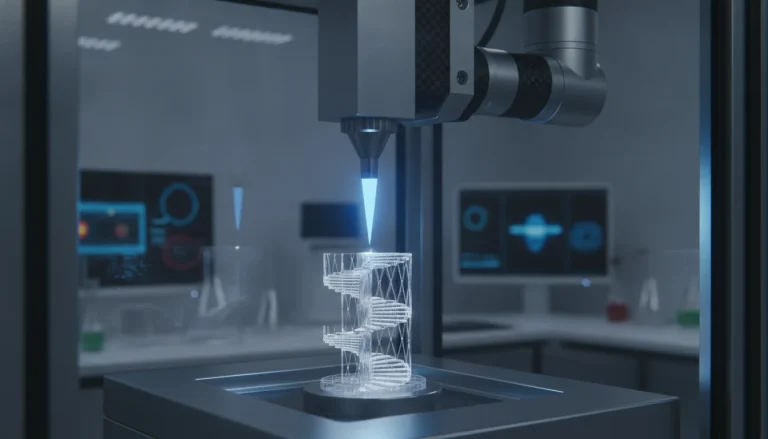

In the rapidly evolving landscape of advanced manufacturing, industries are constantly seeking innovative solutions to enhance efficiency, reduce costs, and extend the lifespan of critical components. Traditional repair and fabrication methods often present limitations, from thermal distortion in welding to extensive post-processing in conventional machining. This is where cold spray additive manufacturing (CSAM) emerges as a truly transformative technology, offering a distinct approach to material deposition that promises near net-shape precision and superior material integrity for both industrial repair and the fabrication of new components.
Understanding cold spray additive manufacturing
The consumer toolchanger 3D printer: the SnapSwap 4-toolhead system swaps heads in 5 seconds for true multi-color and multi-material printing, with smart calibration and auto filament loading.
- 4 toolheads · 5 s swap
- Up to 500 mm/s · 20,000 mm/s²
- 270 mm cube build volume
- Multi-color & multi-material
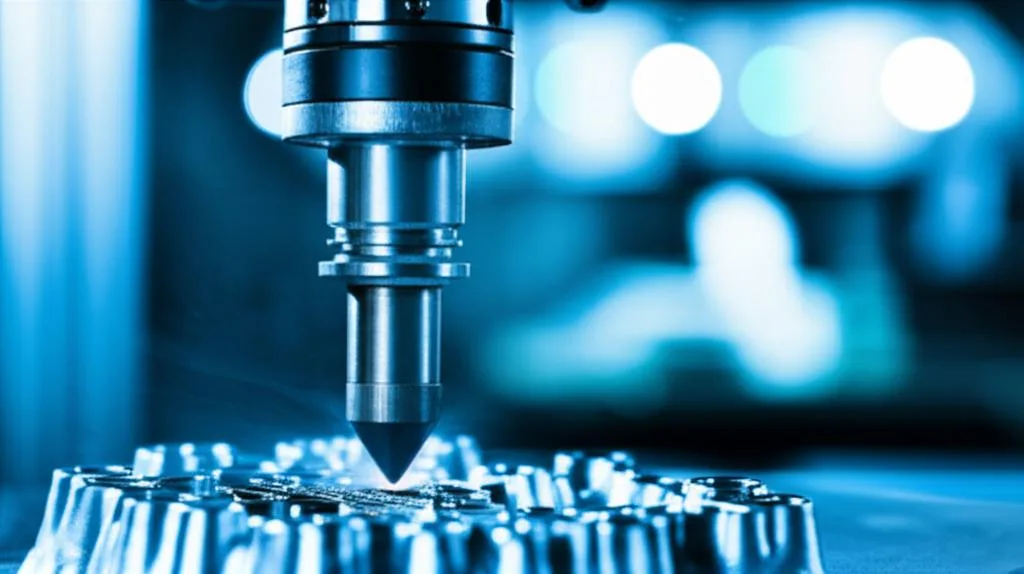
Cold spray additive manufacturing is a solid-state material deposition process, fundamentally different from fusion-based 3D printing techniques that rely on melting and solidification. At its core, CSAM involves accelerating fine metallic or composite powders to supersonic velocities through a de Laval nozzle using a heated, high-pressure gas (typically nitrogen or helium). Upon impact with a substrate, the kinetic energy of the particles is so great that they plastically deform and bond metallurgically to the surface and to each other, forming a dense, high-quality coating or build-up.
The key differentiator of cold spray is the absence of significant heat input to the substrate or the deposited material. The temperature of the gas stream is typically below the melting point of the powder material. This crucial aspect prevents many of the issues associated with high-temperature processes, such as thermal distortion, phase changes, oxidation, and residual stresses, thereby preserving the intrinsic properties of the original material and the deposited layers. This characteristic makes it a particularly attractive solution for repairing heat-sensitive components or for depositing materials that are challenging to weld.
Key features and advantages of cold spray
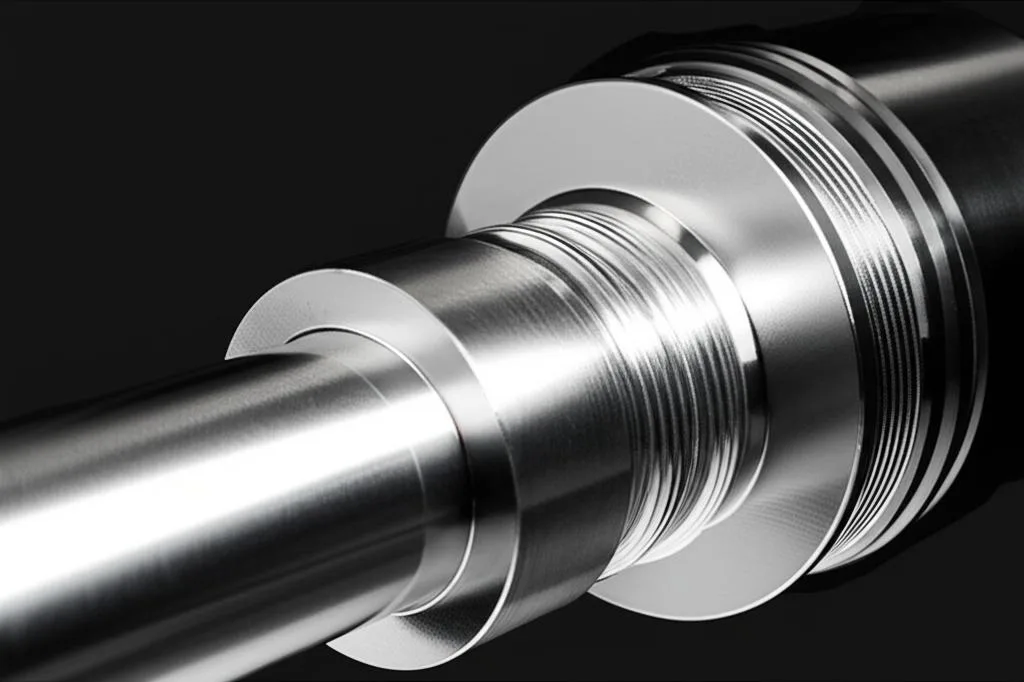
The unique solid-state nature of cold spray confers a host of benefits that make it a compelling choice for a wide array of industrial applications. These features directly impact the quality, performance, and longevity of repaired or newly fabricated parts.
Near net-shape precision and reduced post-processing
One of the most significant advantages of cold spray additive manufacturing is its ability to achieve near net-shape precision. This means that components can be built or repaired very close to their final desired dimensions, significantly reducing the amount of subsequent machining or finishing required. For complex geometries, this translates into substantial savings in material waste, labor, and lead times. The precision offered by CSAM minimizes the need for extensive material removal, streamlining the entire manufacturing or repair workflow and making it a highly efficient process.
High-density parts and superior material properties
The high kinetic energy of the impacting particles results in densely packed layers with minimal porosity, producing high-density parts. This is critical for applications demanding structural integrity, wear resistance, and corrosion protection. Furthermore, because the process avoids melting, the deposited material retains its original microstructure and mechanical properties, including hardness, strength, and fatigue resistance. This stands in stark contrast to fusion-based methods, where thermal cycles can alter material properties, create heat-affected zones, and introduce undesirable residual stresses.
Versatile material deposition capabilities
Cold spray is remarkably versatile in terms of the materials it can process. It is adept at material deposition of various metals and alloys, including aluminum, copper, titanium, nickel-based superalloys, and steels. Beyond single-material deposition, CSAM excels in creating functionally graded materials and depositing dissimilar metals that are otherwise incompatible with traditional welding techniques. This capability opens doors for designing components with tailored properties, such as a wear-resistant surface on a lightweight substrate, or for repairing parts with materials that closely match the original composition.
Applications in industrial repair and component fabrication
The robust capabilities of cold spray make it invaluable for two primary application areas: industrial repair and the fabrication of new components.
- Industrial Repair: CSAM is increasingly used to restore worn, corroded, or damaged components across various sectors, including aerospace, automotive, oil and gas, and marine. It can repair critical parts like turbine blades, engine blocks, hydraulic rods, and molds, extending their operational life and preventing costly replacements. The ability to perform repairs on-site or with minimal disassembly further enhances its appeal, reducing downtime and maintenance costs.
- Component Fabrication: For new component manufacturing, cold spray facilitates the creation of complex geometries, lightweight structures, and parts with enhanced surface properties. It is particularly beneficial for producing parts that benefit from localized material enhancement, such as wear-resistant coatings or thermal barriers, or for building components from materials that are difficult to process with other additive manufacturing techniques.
Cost structure considerations for cold spray additive manufacturing
When evaluating the adoption of cold spray additive manufacturing, understanding its cost structure is essential. While the initial investment can be significant, the long-term operational efficiencies and quality benefits often present a compelling return on investment.
Initial investment and setup costs
The upfront cost for a complete cold spray system includes the spray gun, powder feeder, gas heating unit, control system, and a robotic arm for automation. Depending on the system’s capabilities and level of automation, this investment can vary widely. Additionally, facilities may need upgrades for gas supply (high-pressure nitrogen or helium), ventilation, and safety measures. These initial capital expenditures are a primary factor in the total cost of ownership.
Operational costs
Key operational costs include:
- Gas Consumption: Nitrogen and helium are the primary carrier gases, and their consumption rates, particularly for helium, can be a significant ongoing expense. The choice of gas often depends on the material being sprayed and the desired particle velocity.
- Powder Material: The cost of the metallic or composite powders varies significantly based on material type, purity, and particle size distribution. While CSAM boasts high material utilization compared to some subtractive processes, powder cost remains a notable factor.
- Energy Consumption: Heating the gas and running the system components require electrical energy.
- Labor: While highly automated systems reduce manual labor during the deposition process, skilled operators and technicians are required for setup, programming, maintenance, and quality control.
- Maintenance: Regular maintenance of nozzles, powder feeders, and gas heaters is necessary to ensure optimal performance and longevity of the equipment.
Cost savings through efficiency and reduced post-processing
Despite the initial investment and operational costs, cold spray offers substantial opportunities for cost savings:
- Reduced Material Waste: The near net-shape capability minimizes the amount of material that needs to be removed through subsequent machining, leading to less scrap and more efficient material utilization.
- Lower Post-Processing Costs: Because parts are produced closer to their final dimensions and with superior material properties, the need for extensive, costly post-processing steps like heat treatment, stress relieving, or complex machining is often significantly reduced or eliminated.
- Extended Component Lifespan: For industrial repair, CSAM can restore expensive components to their original specifications, preventing premature replacement and the associated costs and downtime.
- Faster Time to Market/Repair: The efficiency of the process, combined with reduced post-processing, can shorten lead times for both new component fabrication and critical repairs, leading to quicker operational recovery.
Cold spray additive manufacturing in the broader context of metal 3D printing
While cold spray falls under the umbrella of metal 3D printing, it occupies a unique niche compared to fusion-based technologies like Powder Bed Fusion (PBF) or Directed Energy Deposition (DED). Unlike these methods, which involve melting and solidifying metal, CSAM’s solid-state process offers distinct advantages for specific applications. For instance, PBF excels at intricate, complex geometries with high resolution but often requires extensive support structures and post-processing for stress relief. DED can build larger parts and perform repairs, but its high heat input can still induce thermal stresses and alter material properties.
Cold spray, by contrast, is particularly well-suited for depositing temperature-sensitive materials, repairing large or heat-sensitive components, and creating functionally graded materials without the metallurgical changes associated with melting. Its ability to create high-density parts with preserved material properties makes it ideal for structural applications where integrity and performance are paramount. The choice between CSAM and other metal AM techniques often hinges on the specific material, part geometry, required properties, and the criticality of thermal effects.
Challenges and the future outlook
Despite its numerous advantages, cold spray additive manufacturing is not without its challenges. Ensuring optimal adhesion between the deposited material and the substrate, particularly for certain material combinations, can require careful surface preparation and process parameter optimization. The surface finish, while generally good, may still require minor finishing for applications demanding extremely tight tolerances or aesthetic perfection. Research and development efforts are continuously addressing these aspects, focusing on new powder formulations, advanced process control, and hybrid systems that combine cold spray with other manufacturing techniques.
The future of cold spray additive manufacturing looks bright. As the technology matures, and as industries recognize its unique capabilities for achieving near net-shape precision, creating high-density parts, and enabling cost-effective material deposition, its adoption is expected to grow significantly. From enhancing the durability of aerospace components to repairing critical infrastructure, CSAM is poised to play an increasingly vital role in advanced manufacturing, pushing the boundaries of what’s possible in industrial repair and component fabrication.
Frequently asked questions
How does cold spray compare in cost to welding or laser cladding for repairing a worn shaft?
Cold spray avoids the thermal distortion and heat-affected zones common in welding and laser cladding, which can reduce or eliminate costly post-repair heat treatment and straightening. However, it has high upfront capital costs for the system and significant ongoing expenses for carrier gases like helium. For high-value parts where preserving base material properties is critical, the reduced post-processing and extended lifespan often offset the higher initial operational costs.
Can cold spray deposit two different metals in a single layer, like a copper-aluminum transition joint?
Yes, cold spray is well-suited for creating functionally graded materials and depositing dissimilar metals that are typically incompatible with fusion welding. The solid-state bonding process avoids the formation of brittle intermetallic compounds that would occur if the metals were melted together. This makes it possible to build transition joints between materials like copper and aluminum directly during the deposition process.
What is the typical surface finish of a cold spray deposit, and does it always need machining afterward?
The article notes that the surface finish is “generally good” but may still require minor finishing for applications demanding extremely tight tolerances or aesthetic perfection. While the near net-shape capability drastically reduces the amount of material removal needed compared to traditional methods, a final machining pass is often still required for critical mating surfaces. The key advantage is that this post-processing is minimal, not that it is eliminated entirely.