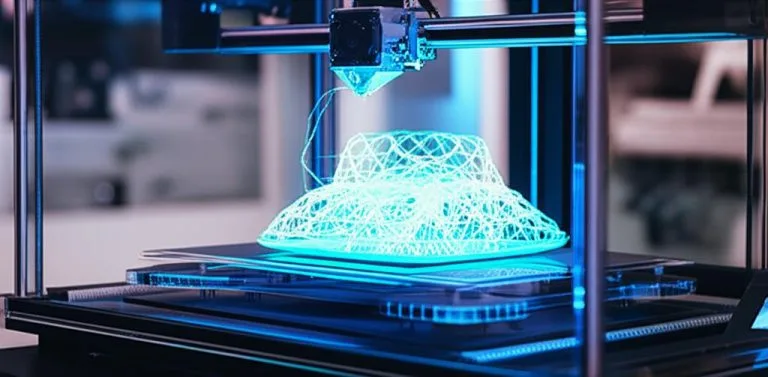

In an era increasingly defined by environmental consciousness, the consumer goods sector faces mounting pressure to adopt more sustainable practices. Traditional manufacturing and retail models, often reliant on mass production, extensive supply chains, and a ‘take-make-dispose’ linear approach, contribute significantly to global waste and carbon emissions. However, a transformative technology is emerging as a powerful ally in this battle: 3D printing. Often hailed for its prototyping capabilities and customisation potential, sustainable 3D printing is now at the forefront of driving eco-friendly products and revolutionising retail towards a more sustainable future.
The environmental footprint of traditional consumer goods
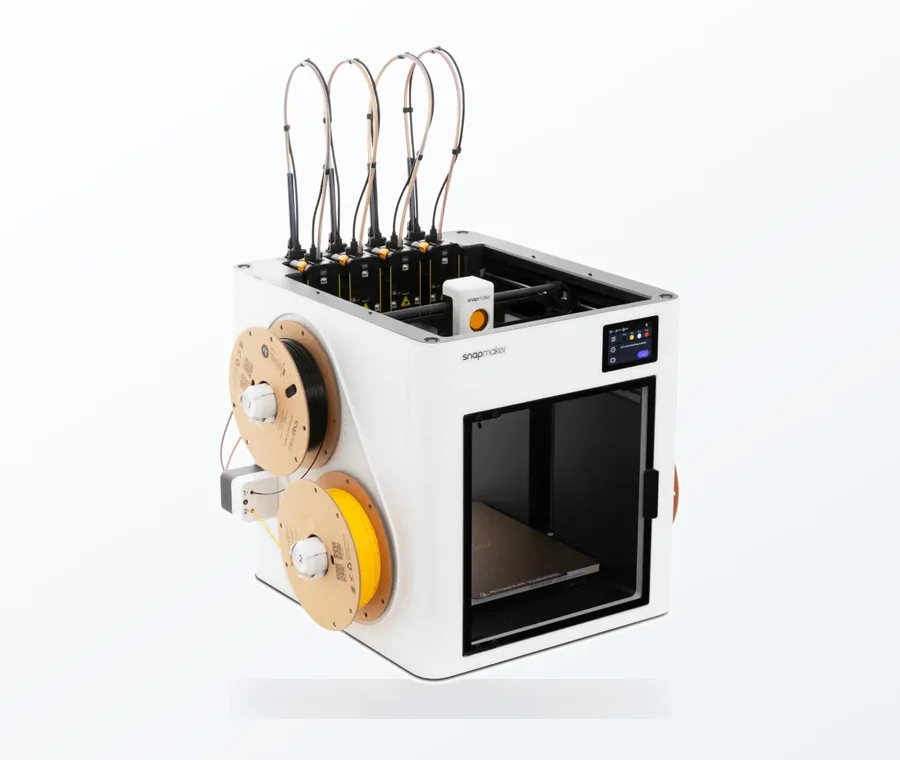
The consumer toolchanger 3D printer: the SnapSwap 4-toolhead system swaps heads in 5 seconds for true multi-color and multi-material printing, with smart calibration and auto filament loading.
- 4 toolheads · 5 s swap
- Up to 500 mm/s · 20,000 mm/s²
- 270 mm cube build volume
- Multi-color & multi-material
Before delving into the solutions offered by additive manufacturing, it’s crucial to understand the challenges inherent in conventional consumer goods production. Mass manufacturing often involves:
- Overproduction: Factories frequently produce more goods than demand dictates, leading to vast quantities of unsold inventory that eventually become waste.
- Complex Global Supply Chains: Raw materials are sourced from one continent, processed in another, manufactured in a third, and sold globally. This intricate web necessitates extensive transportation, burning fossil fuels and contributing to greenhouse gas emissions.
- Material Waste: Subtractive manufacturing methods (e.g., cutting, carving) inherently generate significant material scrap, which is often discarded.
- Packaging Excess: To protect goods during transit and enhance shelf appeal, products are often encased in multiple layers of non-recyclable or difficult-to-recycle packaging.
- Planned Obsolescence: Many products are designed with a limited lifespan, encouraging consumers to frequently replace items, thereby accelerating the accumulation of waste.
These issues collectively paint a picture of an industry ripe for disruption, where the pursuit of efficiency and cost-effectiveness often comes at a steep environmental price. The imperative for waste reduction is clear, and 3D printing presents a compelling alternative.
Sustainable 3D printing: A paradigm shift for eco-friendly products
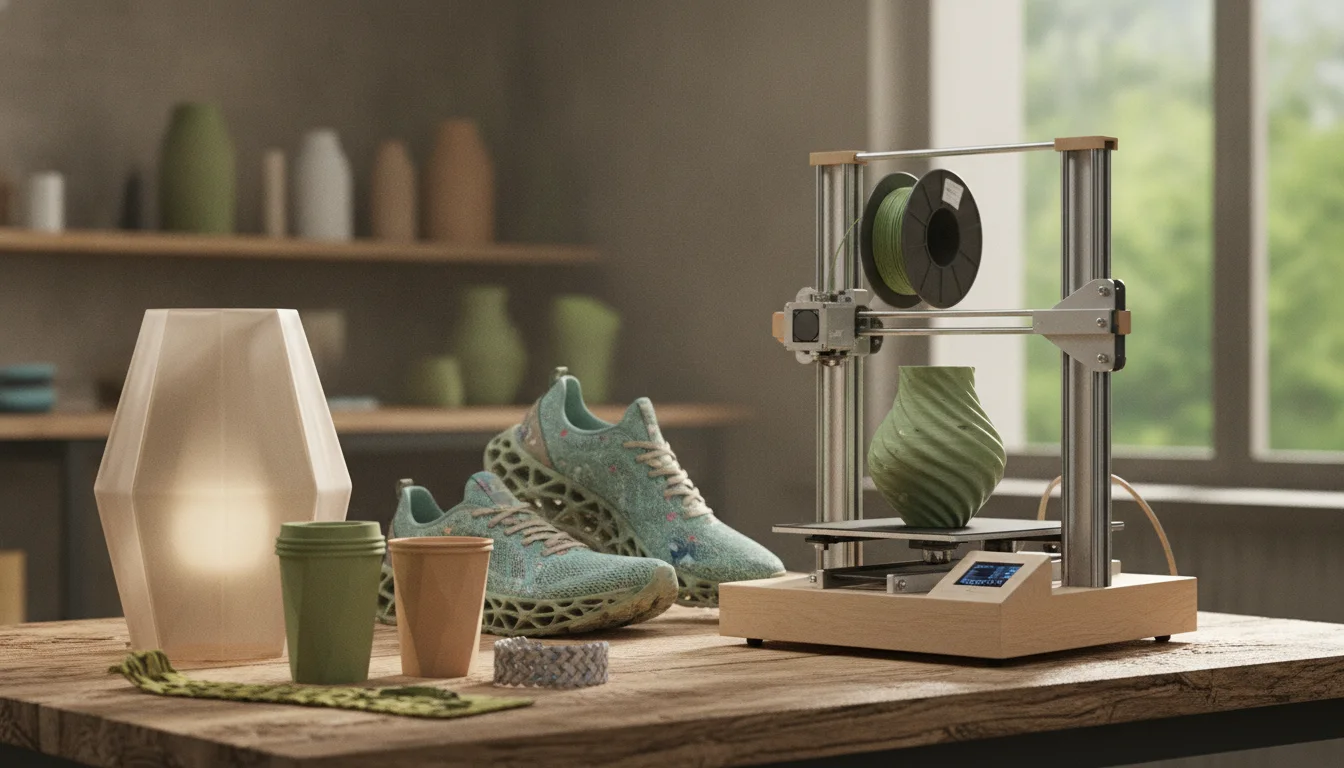
Additive manufacturing, or 3D printing, fundamentally changes how products are made. Instead of removing material from a larger block, it builds objects layer by layer, directly from a digital design. This inherent process offers several significant advantages for sustainability:
On-demand manufacturing and reduced inventory
One of the most impactful features of 3D printing is its ability to facilitate on-demand production. Instead of manufacturing thousands of units in anticipation of future sales, retailers and manufacturers can print items only when they are ordered. This dramatically reduces the need for large inventories, thereby cutting down on:
- Storage Costs: Less warehouse space is required, reducing energy consumption for lighting, heating, and cooling.
- Overstock Waste: The risk of unsold goods becoming obsolete or being discarded is virtually eliminated.
- Capital Tie-up: Resources are not locked into inventory, allowing for greater financial flexibility.
This shift from ‘make-to-stock’ to ‘make-to-order’ is a cornerstone of a more sustainable retail model, ensuring that resources are only expended when there is a confirmed demand.
Optimized material usage and waste reduction
The additive nature of 3D printing inherently leads to greater material efficiency compared to traditional methods. By building objects layer by layer, only the necessary material is used, significantly reducing scrap and offcuts. For intricate designs, this efficiency becomes even more pronounced. Furthermore, advancements in materials science are paving the way for truly green manufacturing:
- Recycled Filaments: Many 3D printing materials, particularly plastics, are now available in recycled forms, giving new life to waste plastics that would otherwise end up in landfills or oceans.
- Biodegradable Materials: Filaments made from plant-based polymers like PLA (polylactic acid) offer a compostable alternative for certain consumer goods, reducing their end-of-life environmental impact.
- Local Sourcing: As 3D printing becomes more decentralised, the potential to source raw materials locally or even produce them from local waste streams grows, further closing the loop.
- Material Customisation: The ability to precisely control material composition allows for the creation of components with specific properties, potentially reducing the need for multiple materials or complex assemblies.
Localized production and shortened supply chains
The decentralised nature of 3D printing allows for production closer to the point of consumption. Imagine a future where a consumer orders a custom part, and it’s printed at a local micro-factory or even at home. This vision radically shortens supply chains, leading to:
- Reduced Transportation Emissions: Fewer goods need to be shipped across continents, leading to a substantial decrease in the carbon footprint associated with logistics.
- Faster Delivery: Localized production means quicker access to products, enhancing customer satisfaction.
- Resilience: Less reliance on global supply chains makes the system more robust against disruptions like pandemics or geopolitical events.
This localized model not only benefits the environment but also fosters local economies and creates new employment opportunities within communities.
Fostering a circular economy with 3D printing
The ultimate goal of sustainability is to move beyond a linear ‘take-make-dispose’ model towards a circular economy, where products and materials are kept in use for as long as possible, waste is minimised, and resources are regenerated. 3D printing is uniquely positioned to accelerate this transition:
- Repair and Replacement Parts: Instead of discarding a broken appliance, consumers can 3D print a replacement part, extending the product’s lifespan and reducing electronic or household waste. This is particularly valuable for older products where original parts are no longer manufactured.
- Product Customisation and Personalization: When consumers have a hand in designing or customising their products, they tend to value them more, leading to increased longevity and reduced impulse purchases. This fosters a deeper connection with eco-friendly products.
- Recycling and Remanufacturing: Used 3D printed objects can be collected, shredded, and re-extruded into new filament, creating a truly closed-loop system for certain materials. This concept is already being explored by several innovative companies.
- Design for Disassembly and Recycling: Designers can leverage 3D printing’s capabilities to create products that are easier to disassemble and recycle at the end of their life, ensuring that valuable materials can be recovered and reused.
Addressing challenges and future outlook
While the sustainability benefits of 3D printing are compelling, it’s important to acknowledge existing challenges:
- Energy Consumption: Some 3D printing processes, particularly industrial-scale systems, can be energy-intensive. However, ongoing advancements in machine efficiency and the increasing adoption of renewable energy sources for manufacturing facilities are mitigating this concern.
- Material Limitations and Cost: While sustainable filaments are growing in variety, they can sometimes be more expensive or have different mechanical properties than conventional materials, limiting their widespread adoption for all applications. Research and development are continuously addressing these limitations.
- Scalability for Mass Production: For truly high-volume production of identical items, traditional injection molding often remains more cost-effective and faster. However, 3D printing excels in mass customisation and shorter production runs, filling a crucial niche in the market.
- Post-processing Waste: Some 3D printing methods require support structures that need to be removed and discarded after printing, generating a form of waste. Innovations in design software and multi-material printing are helping to minimise this.
Despite these hurdles, the trajectory for sustainable 3D printing is overwhelmingly positive. As technology advances, materials become more diverse and affordable, and energy efficiency improves, additive manufacturing is poised to play an even more critical role in the transition to a circular economy. Collaboration between designers, engineers, material scientists, and consumers will be key to unlocking its full potential.
Conclusion
The consumer toolchanger 3D printer: the SnapSwap 4-toolhead system swaps heads in 5 seconds for true multi-color and multi-material printing, with smart calibration and auto filament loading.
The consumer goods landscape is undergoing a profound transformation, driven by both environmental necessity and evolving consumer expectations for eco-friendly products. 3D printing stands out as a pivotal technology capable of addressing many of the sustainability challenges inherent in traditional manufacturing and retail. By enabling on-demand production, optimising material usage, facilitating localized manufacturing, and fostering principles of the circular economy, 3D printing offers a tangible pathway to significantly reduce waste and emissions.
While not a panacea, its unique features present a compelling vision for a future where products are not only functional and aesthetically pleasing but also produced with minimal environmental impact. As businesses increasingly embrace green manufacturing practices, 3D printing will undoubtedly serve as a cornerstone, shaping a more responsible and sustainable retail ecosystem for generations to come.
Frequently asked questions
Is 3D printing always more energy-efficient than traditional manufacturing?
No. Some 3D printing processes, especially industrial-scale systems, can be energy-intensive compared to methods like injection molding for high-volume runs. However, the article notes that ongoing machine efficiency improvements and the shift to renewable energy are mitigating this, and the overall sustainability benefit comes from eliminating overproduction, reducing transport emissions, and cutting material waste.
Can I recycle failed prints or old 3D printed objects at home?
The article describes that used 3D printed objects can be collected, shredded, and re-extruded into new filament, creating a closed-loop system. However, this currently requires industrial equipment—home recycling of PLA or other common filaments is not yet practical for most consumers. It is best to check with local recycling facilities or specialized filament recycling programs.
What are the main drawbacks of using biodegradable PLA filament for consumer goods?
PLA is a plant-based, compostable material, but the article notes that sustainable filaments can be more expensive and may have different mechanical properties than conventional plastics. PLA is also less heat-resistant and more brittle than materials like ABS or PETG, limiting its use for durable or high-stress parts. Additionally, industrial composting conditions are often required for proper biodegradation.